Showing posts with label Rupert Everett. Show all posts

Saturday, July 26, 2014

Genius In West Sussex

Sometimes it does you good to get out of London's Theatreland and venture into the country's Theatreland instead.

Last Saturday found us on a train chuffing down to Sussex to see what the renovation of the Chichester Festival Theatre were like but primarily it was to see Rupert Everett play the barnstorming role of Salieri in Peter Shaffer's AMADEUS.


I had seen Milos Forman's award-laden screen adaptation but had never seen the play on stage before.  The original directed by Peter Hall at the NT in 1979 with Paul Scofield and Simon Callow was three years before my Paulian conversion to the magic of theatre and I later missed Hall's revival at the Old Vic in 1998.  That version starred David Suchet as Salieri and Michael Sheen as the titular composer.  I am presuming my reason for not going was because if it wasn't Paul Scofield then there was really no point!

But when I heard that Rupert Everett was going to play Salieri to open the new season I knew I had to see it this time.  Chichester is only 90 minutes by train from Victoria so tickets were booked and it was off to a Saturday matinee.  Needless to say a matinee in Chichester can almost guarantee that I will be among the youngest in the audience!


Seeing it the first time on stage made me realise how theatrical the play is, a Shaffer trait.  The aged Salieri almost gives us a commentary on the play itself, signalling when the interval is going to be and what we can expect in the second half - when he has returned from evacuating his bowels!   The sinister opening with the citizens of Vienna in the theatre eerily whispering "Sssssalieriiiii" sets the unsettling tone of the play which culminates in a truly haunting final image.

I am also surprised that in 35 years this is only it's second major revival.  Shaffer's play gives the chance for two actors to play such well-written lead roles and the play always seems to have successful runs.

Salieri (Everett) is a recluse in his Viennese palazzo, a forgotten composer whose operas and compositions were once fashionable but the city is swirling with the rumour that he murdered his fellow composer Mozart (Joshua McGuire) 32 years before.  The decrepit Salieri takes us back to that era when he was the court composer to Emperor Joseph II (Simon Jones) and the rumour sweeping the city then was of the arrival of the gifted young Mozart.

Salieri, a man who as a teenager vowed his life to God for the chance to make music, is appalled to discover that the young man who composes music that Salieri thinks is Heaven-blessed, is an obnoxious, braggart who revels in childish behaviour and scatological humour.  If this is how God chooses to bestow his grace then what has Salieri's vow to be His servant on earth been for?  In a rage against God and life, Salieri sets out to ruin the young composer's chances of advancement, to wreck his musical career, to kill him. 


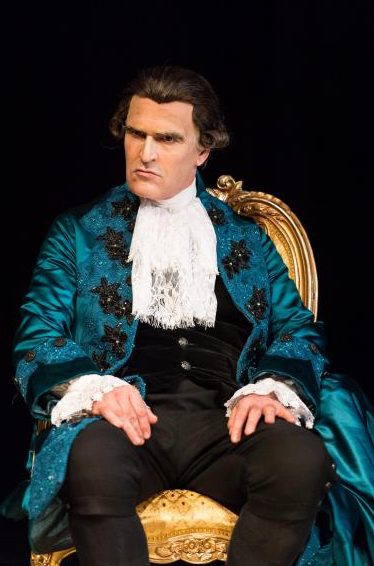
Who better to be our sardonic narrator than Everett?  He was quite magnificent.  Effortlessly moving from the crabby and aged Salieri to his suave and assured younger self with just a wig, two swipes of black across his eyebrows and a change in his voice, he held the attention for the whole length of the play with ease. 

By turns playful, murderous, anguished and self-pitying, he rose to the operatic finale of the play with a power that left me stunned.  His horror at the cruelty of life and God was wonderful to see.  As I watched him I felt grateful that he has decided to embrace the stage again because, as he proved as Oscar Wilde in THE JUDAS KISS, given the right part he is sublime.
  

McGuire's Mozart was less of a success, probably due to Shaffer's unwillingness to show us the soul where his music comes from; if Shaffer wants to show that Mozart could just 'turn it on' and produced music with such passion without having any himself then he has succeeded.  Only in his last scene, composing the music in his head as he dies in his wife's arms, did McGuire connect.

Jessie Buckley was a little revelation as Constanze, the wife who stands by her husband no matter what life throws at them.  She first came to my attention in the BBC series I'LL DO ANYTHING as one of the contestants vying to play Nancy in the revival of OLIVER! and I later found her ineffectual as Anne in the Menier's A LITTLE NIGHT MUSIC.  But last year she impressed as Princess Katherine to Jude Law's HENRY V and here she was very good as the playful wife who becomes a bewildered, hurt woman.  


I liked Simon Jones as the airy, ineffectual Joseph II and could see how marvellous the late and great John Normington would have been in the original production and there was a demonstration in excellent supporting performance from John Standing, Richard Clifford and Timothhy Kightley as the unmoving bastions of accepted music in the court.

Jonathan Church's production was atmospheric and moved at a good pace while losing none of Shaffer's literate script and certainly provided a wealth of memorable moments, helped immeasurably by Simon Higlett's spare set of frosted mirrored doors - encompassing crumbling Vienniese mansions and elegant court life - and Tim Mitchell's evocative lighting.  Fotini Dimou's costumes were a feast for the eyes as Paul Groothuis' sound design was for the ears.


I have heard nothing of a London transfer for the production - it would be a shame if it's short playing time at Chichester could not be extended elsewhere, giving a wider audience the chance to enjoy a fine production and to see how charismatic a stage actor we have in Rupert Everett.

Thursday, January 02, 2014

The Theatre Chrissies are here!

Now for the best part of my Chrissies: the Theatre Awards!

BEST DRAMA/COMEDY
 

GHOSTS by Henrik Ibsen at the Almeida Theatre
 

Nominees: The AMEN CORNER (Olivier, NT); The AUDIENCE (Gielgud);
THE JUDAS KISS (Duke of Yorks); OTHELLO (Olivier, NT)
 
BEST MUSICAL

 
The SCOTTSBORO BOYS at Young Vic

 
Nominees: The BOOK OF MORMON (Prince of Wales); A CHORUS LINE (London Palladium); The COLOR PURPLE (Menier Chocolate Factory); SWAN LAKE (Sadler's Wells)
 
BEST ACTOR


RUPERT EVERETT (The Judas Kiss,  Duke of Yorks)
 
 
Nominees: John Heffernan (Edward II); Rory Kinnear (Othello);
Adrian Lester (Othello); Simon Russell Beale (Privates on Parade)

BEST ACTOR (Musical)
 
 
GAVIN CREEL (The Book of Mormon, Prince of Wales)
 
 
Nominees:  Bertie Carvel (Matilda: The Musical); Jared Gertner (The Book of Mormon);
Jonathan Ollivier (Swan Lake); Kyle Scatliffe (The Scottsboro Boys)

BEST ACTRESS
 
 
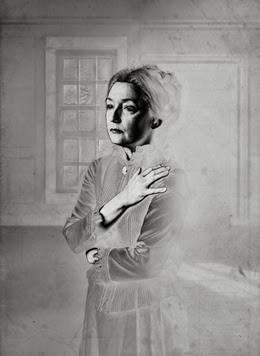
LESLEY MANVILLE (Ghosts, Almeida)
 
 
Nominees: Frances de la Tour (People); Anne-Marie Duff (Strange Interlude);
Marianne Jean-Baptiste (The Amen Corner); Helen Mirren (The Audience)

BEST ACTRESS (Musical)
 
 
CYNTHIA ERRIVO (The Color Purple, Menier Chocolate Factory)
 

 Nominees: Betty Buckley (Dear World); Rosalie Craig (The Light Princess);
Beverley Knight (The Bodyguard); Scarlett Strallen (Candide)

BEST SUPPORTING ACTOR
 
 
CHARLES EDWARDS (Strange Interlude, Lyttelton, NT)
 
 
Nominees: Will Keen (Ghosts); Richard McCabe (The Audience);
Paul Ritter (The Audience);  Peter Sullivan (The Winslow Boy)
 
BEST SUPPORTING ACTOR (Musical)


STEPHEN ASHFIELD (The Book of Mormon, Prince of Wales)
 
 
Nominees: Christian Dante White (The Scottsboro Boys); Colman Domingo (The Scottsboro Boys); James T. Lane (The Scottsboro Boys); Gary Wood (A Chorus Line)
 
BEST SUPPORTING ACTRESS

 
CECILIA NOBLE (The Amen Corner, Olivier, NT)
 
 
Nominees:  Charlene McKenna (Ghosts); Sharon D. Clarke (The Amen Corner);
Haydn Gwynn (The Audience); Cecilia Noble (Once A Catholic)

BEST SUPPORTING ACTRESS (Musical)
 

LEIGH ZIMMERMAN (A Chorus Line, London Palladium)
 
 
Nominees: Jackie Clune (Candide); Nicola Hughes (A Color Purple);
Michela Meazza (Swan Lake); Scarlett Strallen (A Chorus Line)

BEST DIRECTOR
 
 
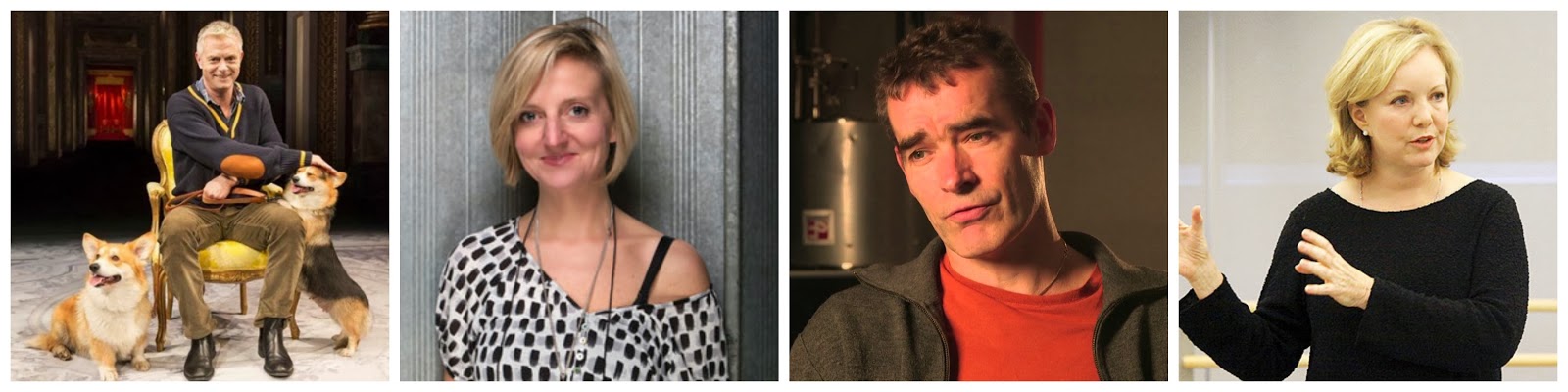
RICHARD EYRE (Ghosts, Almeida)
 
 
Nominees: Stephen Daldrey (The Audience); Marianne Elliott (The Curious Incident of The Dog In The Night Time); Rufus Norris (The Amen Corner); Susan Stroman (The Scottsboro Boys)

BEST DESIGN
 

LEZ BROTHERSTON (Sleeping Beauty, Richmond)
 
 
Nominees: Bunny Christie (The Curious Incident of The Dog In the Night Time);
John Doyle (The Color Purple); Tim Hatley (Ghosts); Rae Smith (The Light Princess)

BEST LIGHTING
 
 
PETER MUMFORD (Ghosts, Almeida)
 
 
Nominees: Ken Billington (The Scottsboro Boys);
Paule Constable (The Light Princess); Paule Constable (Sleeping Beauty);
Paule Constable (The Curious Incident of The Dog In The Night Time)

BEST CHOREOGRAPHY


SUSAN STROMAN (The Scottsboro Boys, Young Vic)
 
 
Nominees: Baayork Lee/Bob Avian/Michael Bennett (A Chorus Line); 
Matthew Bourne (Sleeping Beauty); Matthew Bourne (Swan Lake);
Peter Darling (Matilda: The Musical)

The Chrissies... Art, Music, Cinema, Events

It's the start of a new year so tradition must be upheld to look back on what I enjoyed in the previous 12 months.  After a year of little sensory pleasures 2013 gave me much to savour and enjoy, very little to ignore.
ART
 
From the unknown artists of the Ice Age to the pop age of Roy Lichtenstein, from the 1901 paintings of Picasso to the Profumo scandal of 1963 via George Catlin's paintings of native Americans, it has been a varied and fascinating year for exhibitions.


The Hayward Gallery's LIGHT SHOW collated installations including Ivan Navarro's mirrored, neon-lit telephone box, Carlos Cruz-Diez's chromatic series of single-colour rooms, Leo Villareal's shimmering cascade of white neon on silver and Olafur Eliasson's dizzying Model For A Timeless Garden (fountains of water seemingly frozen in time by neon light);  the National Portrait Gallery's MAN RAY: PORTRAITS showed his astounding experiments in photography; the Victoria & Albert's DAVID BOWIE IS took you on a journey through the ch-ch-ch-ch-changes of the first artist to fully understand how late 20th Century pop would be a real marriage of Sound and Vision while the Royal Academy's exhibition MODERN AMERICAN LIFE opened my eyes to the work of American painter and printmaker George Bellows.

 
But the Art Chrissie goes to A CRISIS OF BRILLIANCE at the Dulwich Picture Gallery which linked the artists Paul Nash, Christopher R.W. Nevinson, Stanley Spencer, Mark Gertler, Dora Carrington and David Bomberg who all attended the Slade Art School in the years 1908 -1912.  Although not a large exhibition, there was plenty to spark a curiosity in artists I had been too quick to overlook in the past, in particular Nevinson.  It also gave me an opportunity to commune with one of my favourite paintings, Carrington's portrait of Lytton Strachey.
 

It was an inspiring exhibition that was exhilarating but also moving as for most of the featured artists the 'crisis of brilliance' that their Slade Professor Henry Tonks accused them of having was never fully resolved.  I would like to take this opportunity to thank Stuart Kirk-Spriggs who has given me a new appreciation of some of the trickier areas of 20th Century art thanks to his inspired teaching. 

MUSIC
 
It's been a good year for gigs, mostly a string of awesome shows under the auspices of Yoko Ono's Meltdown festival on the South Bank.  Somehow - I'm still sure how - Owen managed to get tickets for both of the Siouxsie shows that were much sought after.  It made me remember how good Patti Smith's Meltdown festival had been in 2005.  Maybe all Meltdowns in future should be curated by female singers in their over-50s?

This year I've seen Boy George twice (thinner and bursting with confidence), Liza Minnelli (with the remnants of her voice and hips but glowing with pure star wattage), Petula Clark at 81 dominating the barn of Theatre Royal Drury Lane with class and showmanship, two alternative music queens Sinéad O'Connor and Viv Albertine wowing with passion and humour and an incandescent Pet Shop Boys show that lit up the O2.  Hopefully 2014 will see them back again now we are familiar with the new material.


For her Meltdown show, Marianne Faithfull turned the Queen Elizabeth Hall into an intimate club as she strolled through her back catalogue with guitarist Bill Frisell (she will back in November to celebrate 50 years in music); The B-52s brought their unique lunatic genius to the IndigO2 while, back at Meltdown, Patti Smith brought along the kids Jackson and Jessie to accompany her in an evening of prose and music where she was wonderfully goofy, caustic and relaxed!  And in the afore-mentioned shows, Siouxsie was quite magnificent, encased in a white PVC ensemble as she showcased the entire Banshees KALEIDOSCOPE album from 1980 then plunging into songs from their back catalogue as well as from her solo career.  They were her first shows in 5 years and she owned the stage - as some hapless oaf found out when he foolishly attempted to climb up.


But my Music Chrissie, and I am a bit surprised by this, goes to Amanda Palmer at the Roundhouse.  With her new band the Grand Theft Orchestra she showcased most of her 2012 album THEATRE IS EVIL (sez she) as well as older and some unrecorded songs.  As with the four acts mentioned above, Amanda creates her own unique world when she performs and this time was just as memorable.  What makes each show different is that she is unique in being able to take whatever is happening to her at that precise moment in her life and spin the show around it, making each one moment-specific.

The two great moments were when she sang BIGGER ON THE INSIDE a painfully honest examination of her recent spell of depression and DEAR DAILY MAIL in which she lambasted that ridiculous paper for highlighting her recent Glastonbury gig when her breast popped out of her bra.  She was, quite simply, her.

CINEMA

In rediscovered cinema I am grateful for the National Film Theatre (nope, still can't call it BFI Southbank) in giving me the chance to see three favourite actresses - Jean Seberg, Vivien Leigh, Vanessa Redgrave - on the big screen with screenings of BONJOUR TRISTESSE (in a sparkling new print), THE DEEP BLUE SEA (I've finally seen it!!) and an advance screening of the BBC film THE THIRTEENTH TALE in which Vanessa was excellently paired with Olivia Colman in Christopher Hampton's atmospheric version of Diane Setterfield's novel.  The same cinema also provided the cinematic highspot during Yoko's Meltdown festival when it showed Eisenstein's BATTLESHIP POTEMKIN with the score by the Pet Shop Boys (with Neil on hand to introduce it) - yes comrades, the revolution WILL have a Disco Beat!


I've seen more recent films this year but nothing that totally knocked me out - the most enjoyable being the two Broadway documentaries I saw at the London Film Festival, Dori Berinstein's MARVIN HAMLISCH and Chiemi Karasawa's ELAINE STRITCH: SHOOT ME - equally enjoyable in different variations in the documentary form.

 
EVENTS
 
In the course of any year there are those shows that you can't quite fit into other categories and I had a few of them in 2013.
 
I saw the remarkable Rita Moreno give an insightful talk at the covert racism she faced in the Hollywood of the 50s & 60s while also rubbishing the film she was there to introduce - now that takes guts.  David McAlmont was in the audience to ask her about THE RITZ and I also saw him giving a talk at the National Portrait Gallery.  Tracey Thorn, Derek Jacobi and Ray Davies gave us idiosyncratic glimpses into the process of writing their autobiographies and Simon Russell Beale gave us his memories on working at the National Theatre.
 

In particular I enjoyed a reading of A CHRISTMAS CAROL at the Queen Elizabeth Hall with Griff Rhys Jones as Dickens and an excellently cast Bill Paterson as Scrooge.  The supporing cast included Tim Pigott-Smith as Marley and Janine Duvitski as Mrs. Dibber and as I watched them I wished they could be playing it for real at the National next door.  At the same venue earlier in the year Rupert Everett gave a hugely entertaining and insightful talk about his autobiography VANISHED YEARS while at the Leicester Square Theatre, Patti LuPone gave an odd combination of concert & talk (with Seth Rudetsky) which covered all areas of her acting career.  It gave her ample opportunity to bury a few axes in appropriate backs but the high points were when she simply sang songs from EVITA, THE BAKER'S WIFE, LES MISERABLES, GYPSY and most surprisingly "With One Look" from SUNSET BOULEVARD, the first time she had performed it since being so ingraciously fired from the London production.  The biggest surprise came when at the climax of her final song - "The Ladies Who Lunch" from COMPANY - she punctuated the final "RISE!" with hurling her drink into the first few rows. Guess who got splooshed?  A dryer but wonderful 45 minutes were spent in the company of Imelda Staunton and Jim Carter as they reminisced about their experiences working at the National Theatre which of course included memories of my beloved 1982 production of GUYS AND DOLLS, which was were they first met.


But the Chrissie for Best Event goes to the similar National Histories talk with actress Julie Walters and director Richard Eyre.  A delightful 45 minutes sped by as these two favourite people showed a delightful chemistry as they reminisced about their NT memories.  Of course I would love it as Richard Eyre talked at length about his 1982 production of GUYS AND DOLLS but it was also an emotional moment too when they both talked about Ian Charleson with Eyre obviously moved when talking about how he came to cast Ian as HAMLET in 1989 when they both knew he was dying. 

The lovely thing is by clicking here you can watch the Walters & Eyre talk and here you will find Carter & Staunton's talk.

As an intermission act I will leave you in the capable hands of Amanda Palmer and her riotous song DEAR DAILY MAIL from the Roundhouse gig.  After the interval?  The Theatre Chrissies...


Sunday, July 21, 2013

Revivalists: Act two

Now Constant Reader, it might seem like I only see revivals at the National Theatre but I have actually gone to other theatres... like, in the actual West End.  All have featured fine performances but the actual productions themselves all felt wanting of real conviction.


Having missed David Hare's THE JUDAS KISS at Hampstead I caught up with it finally at the Duke of Yorks, primarily to see Rupert Everett's lauded performance.
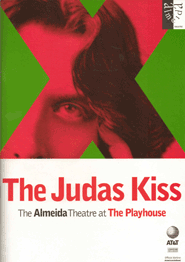

It is 15 years since I climbed the stairs to the Playhouse's peanut gallery to see the original Richard Eyre production which starred a rather out-of-place Liam Neeson as Oscar Wilde and a play-stealing turn from Tom Hollander as Lord Alfred 'Bosie' Douglas.  The play had vaguely stayed with me but I honestly didn't expect it to be revived anytime soon.  But now we had Australian director Neil Armfield's production and I was surprised how much I liked the play.

David Hare's play covers two key moments in the life of Oscar Wilde.  In April 1885, his libel case against the Marquis of Queensbury has collapsed leaving the way clear for his arrest for Gross Indecency.  His former lover Robbie Ross tips him off that the police are delaying his arrest, almost wanting him to flee to France but Wilde refuses.  Ross thinks he is staying to appease 'Bosie' his spoilt lover but Wilde stays because to flee would be to betray his life.

 
The second act takes place two years later in the run-down villa in Naples where the broken Wilde is now living with an unrepentantly petulant Lord Alfred who is shagging his way through the local Italian rough trade and looking to get away.  Again Ross appears to reprimand Wilde and remind him that his wife has threatened to refuse him any access to their sons if he sees 'Bosie' again but again Wilde refuses him.  He cannot live his life by other's demands, no matter the consequences or the obvious ruin that Bosie has led him to.  


Armfield's direction was minimal which may be fine for actors such as Everett and Cal MacAninch (superb at playing the vein-bursting frustration of Robbie Ross) but Freddie Fox as the awful 'Bosie' was left with nothing to do but stamp his foot and rant which got old very quickly.  Compared to Hollander's slyly manipulative portrayal, he was resolutely two-dimensional.


Something which cannot be levelled at Rupert Everett who gave a performance of total star power.  His Wilde, the agent of his own destruction, was played with real charisma - you simply couldn't watch anyone else when he was onstage.  It was the sudden shifts that surprised, the way his resigned and weary façade broke down at the simple generosity of the staff of the Cadogan Hotel where he was hiding.  He really came into his own in the second half as the broken ex-prisoner, shuffling around in his slippers when not huddled in his chair.  His weary, rueful manner giving way to one of total exhaustion, like a character out of Beckett.  After loving his recently published second book of memoir as well as enjoying his performance as Benedict Cumberbatch's brother in the BBC's PARADE'S END, it was great to see Everett triumph on stage too.

Further up St. Martin's Lane another actor was giving life to another revival.  Simon Russell Beale, taking a break from the National Theatre, appeared in the first production of Michael Grandage's season at the Noel Coward theatre PRIVATES ON PARADE.

 
This was a production I was looking forward to, Russell Beale is always worth seeing and I had only ever seen the film version of Peter Nichols' play which was a bit ho-hum.  Sadly the production promised more than it delivered.

At no time did it betray any need to be on that stage at that time.  Yes it's a play about the stupidity of war but it still didn't seem to chime with what's happening now in any other theatres (of war).  It felt more like Michael Grandage wanted Simon Russell Beale to open his theatre season and offered him a big camp role which is anarchic and outrageous but also provides the humanity and heart of the play.


Simon Russell Beale's audience had followed him over the river and there was plenty to drain their blue rinses: the soldiers' knobs got a good airing during the shower scene as well as a featured cameo appearance of Russell Beale's bum.  It must be odd to know that the big shocked reaction you have just heard from the audience is because you flashed your arse.  There was also more effing and jeffing than was probably heard in the whole Malayan conflict, mostly shouted by John Marquez' Corporal Bonny, who did little to dim the memory of Joe Melia's wonderful performance on screen.

It was all very well-directed and presented in the usual Donmar house-style thanks to the set by Christopher Oram and Neil Austin's excellent lighting and there were fine supporting performances from Davina Perera as Sylvia and Harry Hepple as Lance Corporal Charles Bishop but it somehow it just didn't move me.
 

There is no denying however that bestriding them all (usually in black stockings) was Simon Russell Beale as Acting Captain Terri Dennis who simply stole everything that wasn't nailed down with a performance that was outrageously funny and touchingly human.  He's some broad.

I also saw the revival of Terence Rattigan's THE WINSLOW BOY at the Old Vic.  Ever since his centenary those Rattigan productions just keep coming, everything it would seem but the Vivien Leigh screen version of THE DEEP BLUE SEA *fume*.


It was good to finally see the play as I had never seen either of the film versions and even managed to miss the 1989 BBC production which co-starred Emma Thompson as the titular boy's sister Catherine. 

Lindsay Posner directed this revival of Rattigan's 1946 hit play which he based on a real case in 1908 of a teenage boy expelled from a naval college after being accused of stealing a five shilling postal order.  Ronnie Winslow returns home in disgrace but his upstanding father Arthur is compelled to seek justice for him but as the Admiralty's ruling is considered an act of Government it can only be brought to trial by a decree from the.. um, Government.

With the family losing their place in 'good' society and Arthur becoming ill with the stress, their last hope rests with leading barrister Sir Robert Morton who is also a member of the opposition.  Winslow's suffragist daughter Catherine is strongly opposed to his involvement thinking he will only use the case to further his political career and because of his opposition to votes for women. 

In a scene which finally jolted Posner's rather tasteful production into life, Morton visits the house and ruthlessly cross-examines Ronnie in front of his appalled family, seeming to destroy the boy's story.  Morton then reveals he only did it to see how the boy might react to a courtroom and agrees to take on he case.

Through a mixture of guile and oratory Morton succeeds in getting the Government to agree to a court hearing which goes ahead with the Winslow home surrounded by newspaper reporters.  On the day of the trial Morton's ruthless cross-examinations force the Admiralty to withdraw it's charges against Ronnie and the family win the case.  But it's a hollow victory as the family is now near bankruptcy, Arthur's health is ruined as is Catherine's engagement to her Guardsman fiancée.


Any play about an individual trying to seek justice against an impossible bureaucracy will always be topical and Rattigan's play holds up well with it's expert construction.  Posner's production however felt safe and timid with several scenes seeming to tread water until the next entrance cue.  Owen asked me before it started what sort of a play it was and I assured him that at some point a scene would start with the maid turning on the study lamps and drawing the curtains.  And sure enough, there was Violet the loyal maid pulling the curtains and lighting the lamps on Peter McKintosh's rather obvious box set which looked like it belonged to a touring company.

Luckily what Posner was blessed with was a fine cast headed by Henry Goodman's benignly comfortable Arthur Winslow  who is broken by the system he has lived his life upholding.  There was good support from Deborah Findlay as Grace Winslow, ill-equipped to deal with the change wrought on her family and life, and also from Nick Hendrix as their oldest son Dickie who is happy enough learning the new dance steps rather than learn anything in Oxbridge - yes it was a silly-ass part but played with great wit.  Catherine was played by Naomi Frederick and a little more personality wouldn't have gone amiss while Charlie Rowe's Ronnie betrayed a lack of stage experience.  A special mention to Jay Villiers as the family solicitor who quietly loved Catherine.

However the stand-out performance was Peter Sullivan as Sir Robert Morton.  The production's synapses were jolted every time he appeared and his witty, self-assured, disdainful Sir Robert also gave the impression of having a heart under all that veneer.  I've seen Peter Sullivan a few times on stage and here he was finally allowed to take control of the play.  I certainly missed him when he was offstage.

There is a tragic postscript to the story of George Archer-Shee whose story was the inspiration for the play.  The case was won in 1910 but his father Martin, worn down by the two year fight for justice died in 1911.  In 1912, after completing his education, young George emigrated to New York to work on Wall Street.

Two years later in 1914 he returned to enlist in the war, and at the age of only 19, became one of the 17, 873 British soldiers reported missing in action after the first battle of Ypres.