It's not often you see (or hear) a song cycle these days so lucky for all of us there is a new production of SONGS FOR A NEW WORLD by Jason Robert Brown which is currently playing at the St. James Theatre, one of the most uncomfortable theatres in the West End.
I must put my hand up right from the get-go and say that Jason Robert Brown's music leaves me rather cold, it strikes me as neither fish, nor fowl nor good red herring. They aspire to profundity but the blandness of the cabaret-style lyrics offer no real 'moments of being'. The tumbling words suggest Sondheim but with none of the audaciousness, or genius. To paraphrase Virginia Woolf (again) 'he aims to soar but agrees to perch'.
What has stayed in my mind are the show's two female performances. The male performers are Dean John-Wilson (last seen as Ninoy Aquino in HERE LIES LOVE) and Damian Humbley but they both seemed to be lacking heft in their performances. They really should have given Humbley more to do than sit around looking depressed and rumpled in his suit.
Jenna Russell makes an impression with her solos as the sadder-but-wiser woman, although the lengthy, unfunny one she sings standing on a window ledge had me wishing she would jump.
However they were all outshone by Cynthia Erivo who lit up the stage with pure star wattage. It is two years since we first saw her starring in the Menier's acclaimed production of THE COLOR PURPLE. In my blog I said the production cried out for a transfer - well, it never made it to the West End but it is opening on Broadway later this year as Erivo is recreating her role of Celie opposite Oscar winner Jennifer Hudson.
That's a remarkable achievement for a performer who is not that well known outside of theatre circles but Cynthia Erivo is a remarkable talent. I was delighted to hear that she had won the third prize in last year's Ian Charleson Awards for her performance in the Donmar's HENRY IV.
In SONGS FOR A NEW WORLD, Cynthia simply stood and sang, her gloriously warm, honey-like voice filling the room along with her effortless charisma. Winning and sympathetic, Cynthia Erivo gave this rather attenuated show a real heart and soul.
Showing posts with label Cynthia Erivo. Show all posts
Friday, August 07, 2015
Wednesday, October 22, 2014
Screaming Inside: HENRY IV at the Donmar
I am still becalmed after seeing Phyllida Lloyd's all-female production of Shakespeare's HENRY IV at the Donmar on Monday. What is frustrating is I think I can see what her intentions were but they were so smothered with 'concept' that the 400 year old play can hardly be seen under it - especially as it has been filleted down to about 2 hours - 1 hour 50 minutes probably if you take out all the music cues and karaoke singing.
This concept meets you at the door, actually at the door across the road to be precise. Ticketholders are asked to convene at a bar opposite the Donmar and are then alerted by tannoy that they can enter "the secure unit". Along the road we trooped guided by ushers dressed as prison officers doing their damnedest to look 'ard. The whitewashed stone stairs may have been a culture shock to some but personally I was happy to see them again as this was the original entrance to the Donmar in the 1980s and quickly felt the excitement I always did going up them to see Barbara Cook, Nancy LaMott, Elisabeth Welch etc. No such pleasures tonight.
The auditorium is transformed into a fluorescent-lit association room in a woman's prison with uncomfortable-looking plastic chairs dotted about. Indeed the entire stalls seating has been replaced with said plastic seats so thank God I had the presence of mind to book for the circle. Brightly-coloured children's toys and furniture are incongruous additions giving the impression this is also the visit hall.
A door is unlocked and the cast troop in and line up, staring mulishly at the audience, before the signal is given for the play to start. So there's the concept: HENRY IV is being staged by the inmates in a women's prison and during the next two hours it is occasionally interupted when tempers flare between the inmates resulting in the guards appearing to break it up so the play can start again. My problem with the production is that all this distances you from the actual play - an all-female cast, a play-within-a-play, the concepts unfurl like scrims from above to obscure you from the text. Am I supposed to be paying attention to the play or to the action surrounding it?
This is Lloyd's second "Shakespeare in prison" production which is a collaboration between the Donmar and Clean Break Theatre Group - all very laudable - and with JULIUS CAESAR as the first, I can see the link between them as both deal with top-down power and attempts to overthrow that power by force. But while I can see how CAESAR could fit within a prison structure, dealing with the race for power when a leader is assassinated, I felt HENRY IV fitted the structure less well. Yes the major plotline of the HENRY IV PART 1 is Horspur's rebellion against King Henry but where does that leave the more internal, domestic struggle for power between Henry and Falstaff to be the paternal guide for Prince Hal?
This concept meets you at the door, actually at the door across the road to be precise. Ticketholders are asked to convene at a bar opposite the Donmar and are then alerted by tannoy that they can enter "the secure unit". Along the road we trooped guided by ushers dressed as prison officers doing their damnedest to look 'ard. The whitewashed stone stairs may have been a culture shock to some but personally I was happy to see them again as this was the original entrance to the Donmar in the 1980s and quickly felt the excitement I always did going up them to see Barbara Cook, Nancy LaMott, Elisabeth Welch etc. No such pleasures tonight.
A door is unlocked and the cast troop in and line up, staring mulishly at the audience, before the signal is given for the play to start. So there's the concept: HENRY IV is being staged by the inmates in a women's prison and during the next two hours it is occasionally interupted when tempers flare between the inmates resulting in the guards appearing to break it up so the play can start again. My problem with the production is that all this distances you from the actual play - an all-female cast, a play-within-a-play, the concepts unfurl like scrims from above to obscure you from the text. Am I supposed to be paying attention to the play or to the action surrounding it?
What was sadly amusing was that all these strenuous efforts to make it an immersive, 'realistic' experience only made it feel more phony. I have no problem with "director" theatre as long as it all goes to serve the play but here I felt at all times Phyllida Lloyd cramming the play into her concept box with no real connection to the text. In it's favour I will say that it was marvellous compared to the staggeringly awful concept production of EDWARD II seen last year at the National.
Another problem I have with such concepts is that while I have no complaints about all-male or all-female casts all I ask is that the actors can speak the text as if they understand it. There was also the aural nightmare of strident Northen Irish or Scottish accents, no doubt incorporated here to make it all the more 'real'.
The pleasures to be had from the production were soley down to performances that transcended the sheer obviousness of it all and gave us fully-rounded characters that justified their casting no matter what their gender.
Rising above them all was Ashley McGuire who was a wonderful Falstaff, making a memorable first appearance sprawled on a sagging football-shaped beanbag chopping up lines of coke. Looking like a stroppy refugee from a benefits cheat t.v. exposé, her Falstaff was the self-appointed life and soul of any party and was eager to be the centre of attention no matter how big the lies to get her there. She spoke the text with real conviction and gusto, finding a natural rhythm in her cockney accent.
The whole prison concept finally paid off in the final minutes when the newly-crowned Hal disowns Falstaff and bans him from the royal presence. McGuire's angry response brought the guards swarming onto the stage and she was frog-marched away in handcuffs sobbing loudly, the character and the performer's fates mirrored.
Another surprisingly effective performance - cutting a swaith through the concept - was from Sharon Rooney as Hotspur's stressed wife Lady Percy. Only a sob away from hysteria, she was very moving in her two small scenes by totally playing it straight down the line. Her final scene denouncing her father-in-law for wanting to perpetuate the killing by citing revenge felt like the heart of the play and I wondered how Lloyd felt that this moment of pure anguish came from a 'real' female character.
Also standing out in a supporting role was Cynthia Errivo who was so memorable as 'Celie' in the Menier's production of the musical THE COLOR PURPLE last year. Here she more than held her own in two roles: as the conniving Poins from Falstaff's band of miscreants and as the tenacious Earl of Douglass who fights with Hotspur against the crown. She was great in the battle scene, lashing out in a martial arts stylee against unseen opponants and there slithering down to stage level from the platform above. She really is one to watch.
Although it was easy to admire Jude Anouka's Hotspur, ultimately her bull-in-a-china-shop approach to the role was wearying and was played too much on one note, surely one should feel some sorrow when Hotspur is killed in battle? It is noted in the play that there is a duality between Hotspur and Prince Hal, almost two sides of the same coin, but like Anouka's strident performance, Clare Dunne's unrelenting loudness - and in a mind-numbing Northern Irish accent too - made me recoil from both her and the character and felt she showed no real depth to Hal. It was a shame too that not more could have been found for the ususally vibrant Jackie Clune to do but she did impress as the vainglorious Owen Glendower.
Oddly I felt no surprises from Harriet Walter as the haunted and troubled Henry IV, she played the role exactly as I suspected she would. Still there were a few moments when she did deliver; in the confrontation scene between the King and the rebellious Worcester (very well played by Ann Ogbomo) and in the deathbed scene when the King is reconciled with his son but fortells the disaster that will befall the country during the War of The Roses. Walter certainly had the right look: looking like a dessicated, drawn old lag, hidden away from any daylight for years.
Up until now I had never seen HENRY IV on stage, my only experience of it being through two excellent filmed adaptations: Orson Welles' haunting CHIMES AT MIDNIGHT (1966) and Richard Eyre's excellent BBC adaptation for THE HOLLOW CROWN trilogy (2012) so it's a shame I did not feel more disposed towards this production.
I have heard it rumoured that the third in Lloyd's "Shakespeare In The Nick" projects will be KING LEAR... hasn't that poor old bugger suffered enough?
Thursday, January 02, 2014
The Theatre Chrissies are here!
Now for the best part of my Chrissies: the Theatre Awards!
BEST DRAMA/COMEDY
GHOSTS by Henrik Ibsen at the Almeida Theatre
Nominees: The AMEN CORNER (Olivier, NT); The AUDIENCE (Gielgud);
THE JUDAS KISS (Duke of Yorks); OTHELLO (Olivier, NT)
BEST MUSICAL
The SCOTTSBORO BOYS at Young Vic
Nominees:
The BOOK OF MORMON (Prince of Wales);
A CHORUS LINE (London Palladium); The COLOR PURPLE (Menier Chocolate Factory); SWAN LAKE (Sadler's Wells)
BEST ACTOR
RUPERT EVERETT (The Judas Kiss, Duke of Yorks)
Nominees: John Heffernan (Edward II); Rory Kinnear (Othello);
Adrian Lester (Othello); Simon Russell Beale (Privates on Parade)
BEST ACTOR (Musical)
GAVIN CREEL (The Book of Mormon, Prince of Wales)
Nominees: Bertie Carvel (Matilda: The Musical); Jared Gertner (The Book of Mormon);
Jonathan Ollivier (Swan Lake); Kyle Scatliffe (The Scottsboro Boys)
BEST ACTRESS
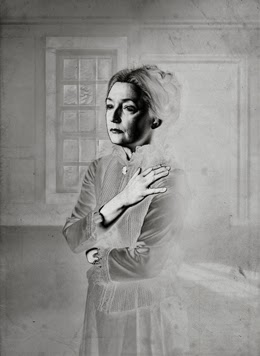
LESLEY MANVILLE (Ghosts, Almeida)
Nominees: Frances de la Tour (People); Anne-Marie Duff (Strange Interlude);
Marianne Jean-Baptiste (The Amen Corner); Helen Mirren (The Audience)
BEST ACTRESS (Musical)
CYNTHIA ERRIVO (The Color Purple, Menier Chocolate Factory)
Nominees: Betty Buckley (Dear World); Rosalie Craig (The Light Princess);
Beverley Knight (The Bodyguard); Scarlett Strallen (Candide)
BEST SUPPORTING ACTOR
CHARLES EDWARDS (Strange Interlude, Lyttelton, NT)
Nominees: Will Keen (Ghosts); Richard McCabe (The Audience);
Paul Ritter (The Audience); Peter Sullivan (The Winslow Boy)
BEST SUPPORTING ACTOR (Musical)
STEPHEN ASHFIELD (The Book of Mormon, Prince of Wales)
Nominees: Christian Dante White (The Scottsboro Boys); Colman Domingo (The Scottsboro Boys); James T. Lane (The Scottsboro Boys); Gary Wood (A Chorus Line)
BEST SUPPORTING ACTRESS
CECILIA NOBLE (The Amen Corner, Olivier, NT)
Nominees:
Charlene McKenna (Ghosts); Sharon D. Clarke (The Amen Corner);
Haydn Gwynn (The Audience); Cecilia Noble (Once A Catholic)
BEST SUPPORTING ACTRESS (Musical)
LEIGH ZIMMERMAN (A Chorus Line, London Palladium)
Nominees: Jackie Clune (Candide); Nicola Hughes (A Color Purple);
Michela Meazza (Swan Lake); Scarlett Strallen (A Chorus Line)
BEST DIRECTOR
RICHARD EYRE (Ghosts, Almeida)
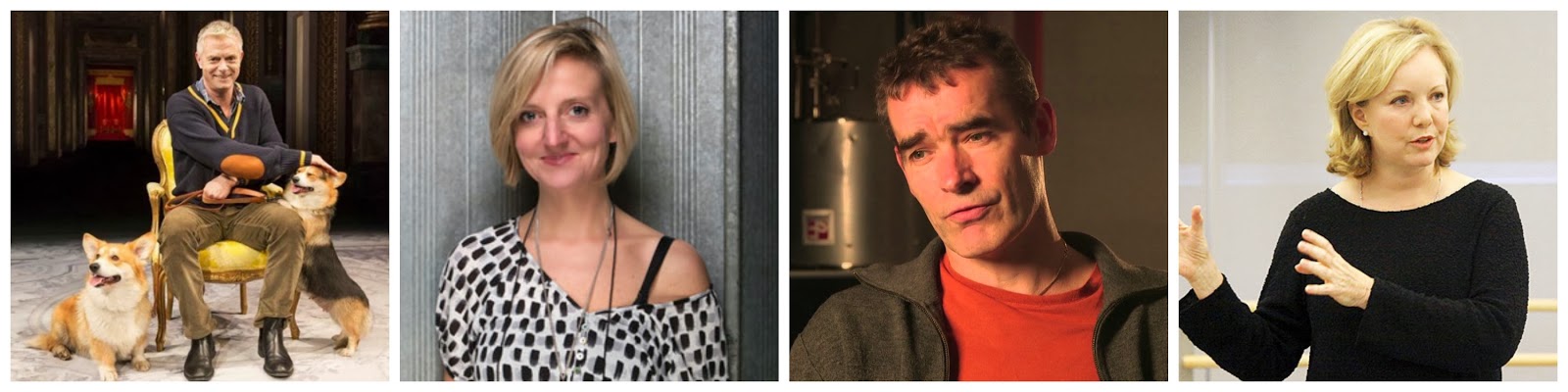
Nominees: Stephen Daldrey (The Audience); Marianne Elliott (The Curious Incident of The Dog In The Night Time); Rufus Norris (The Amen Corner); Susan Stroman (The Scottsboro Boys)
BEST DESIGN
LEZ BROTHERSTON (Sleeping Beauty, Richmond)
Nominees: Bunny Christie (The Curious Incident of The Dog In the Night Time);
John Doyle (The Color Purple); Tim Hatley (Ghosts); Rae Smith (The Light Princess)
BEST LIGHTING
PETER MUMFORD (Ghosts, Almeida)
Nominees: Ken Billington (The Scottsboro Boys);
Paule Constable (The Light Princess); Paule Constable (Sleeping Beauty);
Paule Constable (The Curious Incident of The Dog In The Night Time)
BEST CHOREOGRAPHY
SUSAN STROMAN (The Scottsboro Boys, Young Vic)
Nominees:
Baayork Lee/Bob Avian/Michael Bennett (A Chorus Line);
Matthew Bourne (Sleeping Beauty); Matthew Bourne (Swan Lake);
Peter Darling (Matilda: The Musical)
Friday, August 16, 2013
Big Characters On Small Stages...
Constant Reader what is to be done with Broadway musicals that were written to be staged in big theatres with casts to match but no producer wants to take the risk of staging in one such space?
You downsize of course. Why have a big chorus when your cast can meet themselves going off as they come on in a different wig? Why have an auditorium like a barn when you can happily re-envision it for a small space in a converted workspace, railway arch or former public toilet? Why have a full orchestra when the score can be orchestrated for a couple of synths and a man playing bog-paper on a comb?
That's how DEAR WORLD found itself in the ever-strange Charing Cross Theatre - the latest renaming of the old Players Theatre under the arches of Charing Cross station. It's narrow auditorium always leaves me vaguely uncomfortable and of course any show staged there has to compete with the nearby thundering trains. I haven't seen too many productions there but I have never sat in a full auditorium for any of them. The whole theatre gives off the air of rejection and transitiveness which is not the best atmosphere for a light and whimsical Parisian fable.
Of course any show that is constructed as a star vehicle needs a star. Luckily - somehow - this rather hole-in-the-arches production had bona-fide Broadway star Betty Buckley playing Countess Aurelia. While DEAR WORLD was limping onto the Broadway stage in 1969, Betty Buckley was starring in London in Bacharach and David's musical PROMISES PROMISES at the Prince of Wales and was now back again after 44 years, albeit with the odd cabaret appearance betwixt times.
I first saw her in her film debut as the sympathetic gym teacher in CARRIE and then through the cast recording of THE MYSTERY OF EDWIN DROOD in which she 'Edwin'. I was also aware of her version of 'Memory' as she was Broadway's original Grizabella in CATS which might explain why Trevor Nunn was in the audience. Seeing him reminded me of Buckley's appearance in the documentary BROADWAY: THE GOLDEN AGE recalling the exhaustive auditions she went through to get it.
The ever-present music is composed by three accomplished songwriters: Brenda Russell ("Get Here"; "Piano In The Dark"), Allee Willis ("What Have I Done To Deserve This"; "Boogie Wonderland") and Stephen Bray ("Into The Groove; "Express Yourself") and it is a very tuneful score, notably using various styles of black music: spiritual, gospel, rolling blues, jazzy up-tempo numbers integrated into the more generic show tunes.
The score has been skilfully supervised by Menier favourite Catherine Jayes and is played by the eight piece band in a stripped-down style which suits the whole direction of Doyle's production. This is also carried on through Ann Yee's lucid choreography which shows off the ensemble very well. Speaking of the ensemble leads me onto the cast of seventeen which while being quite a big number by Menier standards is exactly half the size of the original Broadway cast! Take it from me they sound better than the Broadway cast.
When Shug leaves her for a second time to take up with a teenage musician, Erivo plays Celie's refusal to be left behind with a righteous determination which leads into her eleven o'clock solo 'I'm Here' where Celie understands that she can finally stand on her own. Cynthia Erivo takes what on paper sounds like a standard self-justifying ballad and turned it into a tour-de-force that was all the more thrilling to be sung on an empty stage in such an intimate space - you could feel the energy pouring out of her. Constant Reader, what I think I'm trying to impart is that she sang the arse out of it and she deserved every clap of the thunderous ovation it received.
By the end there wasn't a dry eye in the house nor a seat left sat in when the cast took their bows. The wearying Pavlovian response in audiences now to stand to applaud even the fire curtain is truly annoying but every so often you see a company who deserve to know how good they are. This is such a cast and this is such a production.
It is sold out at the Menier until it's last night on September 14th - If ever a show cried out for a transfer it is this one.
You downsize of course. Why have a big chorus when your cast can meet themselves going off as they come on in a different wig? Why have an auditorium like a barn when you can happily re-envision it for a small space in a converted workspace, railway arch or former public toilet? Why have a full orchestra when the score can be orchestrated for a couple of synths and a man playing bog-paper on a comb?
DEAR WORLD is an ideal candidate for downsizing. Based on Giraudoux's THE MADWOMAN OF CHAILLOT, the musical was written by Jerry Herman following the success of MAME as a vehicle for it's star Angela Lansbury. Countess Aurelia is an eccentric who lives in the basement of a Parisian bistro. Along with her equally misfit countess friends and a sewerman, she is appalled to learn that the area will be destroyed by businessmen who believe there's a lake of oil under it. She sets about to destroy them instead.
The production, while aided by Herman's charmingly slight score, was beset by 'creative differences', the sacking of two directors and a choreographer. It opened in February 1969 only to close three months later, although it did lead to Lansbury winning her 2nd Tony Award for Best Musical Actress and a cast recording left to posterity. Now show queens love nothing more than a juicy flop with a Diva belting out her solos on the cast album. The DEAR WORLD cast recording has amassed the obligatory 'cult following' but with it's flop status still uppermost in theatrical minds who would be bold enough to stage a production in a large theatre for it's UK debut? Easy - go ickle!
That's how DEAR WORLD found itself in the ever-strange Charing Cross Theatre - the latest renaming of the old Players Theatre under the arches of Charing Cross station. It's narrow auditorium always leaves me vaguely uncomfortable and of course any show staged there has to compete with the nearby thundering trains. I haven't seen too many productions there but I have never sat in a full auditorium for any of them. The whole theatre gives off the air of rejection and transitiveness which is not the best atmosphere for a light and whimsical Parisian fable.
It was all perfectly pleasant with a nice revolving bistro revealing Aurelia's luxurious basement home and nice colourful costumes for the ladies. But all the time I was watching it I was also aware of the compromised air about the production. Oh for a bigger stage for the dance routines - hell even a bigger space around the bistro for the cast to get on and off the stage! But despite these drawbacks I did like Gillian Lynne's brisk direction and choreography.
A more, ahem, compact stage means that any faults in the book soon become exposed. Even with a revised book DEAR WORLD would have you believe that the bistro waitress and young hero are in love because she sings a solo ballad about never having loved before. In a busier show such plot shorthand can go unnoticed but here I just wondered "Where did THAT come from?" Playing to a half-empty auditorium didn't help with the book's amiable jokes getting smiles rather than laughs. I always feel in such situations an extra tension as an audience member: I must clap louder than I would at the end of the songs just to let the cast know they are not wasting their time being there.
There is also the problem of casting: have the actors been cast because they are the best for the role - or because they were all they could get? Harsh I know, but when you look through the programme and all you see are performers who have done tours and understudy jobs you do begin to despair.
Although this production had these problems - and the additional of the dreaded loveable/punchable 'mute character - I did enjoy Katy Treharne as waitress Nina, she sang her afore-mentioned solo nicely. Annabel Leventon and Rebecca Lock as Aurelia's equally cracked friends didn't overplay the grotesquerie and earned most of the laughs going. Paul Nicholas was surprisingly good as the philosophical Sewerman who knows the world is going to ruin by the rubbish he finds. It was very odd to see his subdued performance and think of 'Cousin Kevin' from TOMMY and the jiggly eejit in the white suit who sang 'Dancing With The Captain' on Top of The Pops!
I first saw her in her film debut as the sympathetic gym teacher in CARRIE and then through the cast recording of THE MYSTERY OF EDWIN DROOD in which she 'Edwin'. I was also aware of her version of 'Memory' as she was Broadway's original Grizabella in CATS which might explain why Trevor Nunn was in the audience. Seeing him reminded me of Buckley's appearance in the documentary BROADWAY: THE GOLDEN AGE recalling the exhaustive auditions she went through to get it.
It is a tribute to her professionalism that despite the half-empty house and reduced production, she gave an exquisitely charismatic performance. Not a barnstorming Diva turn but true to the character and perfectly judged for the production she was in. Her performance of the Countess' cri de coeur "I Don't Want To Know" was particularly moving. It was a pleasure to finally see her in a proper show. But it was not a big surprise to later hear that the show closed two weeks early.
What is important when downsizing a big show to a more intimate space is to have a vision and that's exactly what John Doyle had done with the Menier Chocolate Factory's production of THE COLOR PURPLE.
I was in two minds about seeing it as when it appeared on Broadway in 2005 it seemed to be just a big vanity project for Oprah Winfrey and I couldn't see what value it would have here. I had read Alice Walker's novel back in the day as well as seeing the Spielberg screen adaptation which apart from some fine performances was like all the rainy Sundays in your life put together. But for want of something to see I booked.
John Doyle was lauded for his 2004 scaled-down version of SWEENEY TODD where the cast played the instruments too. "How visionary" the critics cried, to which I replied "How cheap"! He worked at the Watermill Theatre Newbury for God's sake - like they can afford an orchestra! However he delivered a good production of Sondheim's ROAD SHOW at the Menier - with actual musicians! - and with Nicola Hughes and Christopher Colquhoun in the cast I decided to give it a go.
The first surprise was to find the Menier auditorium reconfigured again. Instead of the proscenium for MERRILY WE ROLL ALONG we had a thrust stage with seating at the sides and end. Doyle is also the set designer and his stage is of bare, clapboard which immediately suggested country shacks and a number of wooden chairs hanging on the back wall. Clean, economic, perfect. The costumes are by reliable Matthew Wright, using pale, earthy colours until the arrival of blues singer Shug Avery when we get a splash of colour.
Marsha Norman had the tough job of adapting Alice Walker's novel with it's large number of characters and plot threads. In pairing it back to keep our focus on the heroine Celie, her book skips over the plot like a hard-flung pebble which can only result in some drastic telescoping of character's timelines - we are introduced to Sofia and about 20 minutes later she has five children! Sofia's brutal beating also is incorporated into a musical sequence and feels perfunctory.
Celie and Nettie are sisters who support each other in their stepfather's joyless home. Teenage Celie has had two children by her stepfather who has taken them both away from her. The stepfather refuses Mister's offer of marry Nettie and instead palms him off with Celie and a cow. Celie moves into Mister's equally joyless home and is distraught when Nettie vanishes after spurning Mister's advances. Celie, thinking Nettie dead, is resigned to a life of drudgery alleviated by her friendship with the no-nonsense Sofia, wife of Harpo who is Mister's kind-hearted son.
Celie's salvation comes in the unlikely shape of blues singer Shug Avery. Self-assertive and confident, she is a force of nature who even Mister can't control. While staying in Mister's house, Shug and Celie are slowly drawn into a relationship which allows Celie to experience joy and love for the first time. Shug also gives Celie letters that Mister has been hiding, they are from Nettie who has written constantly over the years revealing that not only is she is teaching with a missionary couple in Africa, but the couple also adopted Celie's two illegitimate children. And that's all just the first half!
The ever-present music is composed by three accomplished songwriters: Brenda Russell ("Get Here"; "Piano In The Dark"), Allee Willis ("What Have I Done To Deserve This"; "Boogie Wonderland") and Stephen Bray ("Into The Groove; "Express Yourself") and it is a very tuneful score, notably using various styles of black music: spiritual, gospel, rolling blues, jazzy up-tempo numbers integrated into the more generic show tunes.
The score has been skilfully supervised by Menier favourite Catherine Jayes and is played by the eight piece band in a stripped-down style which suits the whole direction of Doyle's production. This is also carried on through Ann Yee's lucid choreography which shows off the ensemble very well. Speaking of the ensemble leads me onto the cast of seventeen which while being quite a big number by Menier standards is exactly half the size of the original Broadway cast! Take it from me they sound better than the Broadway cast.
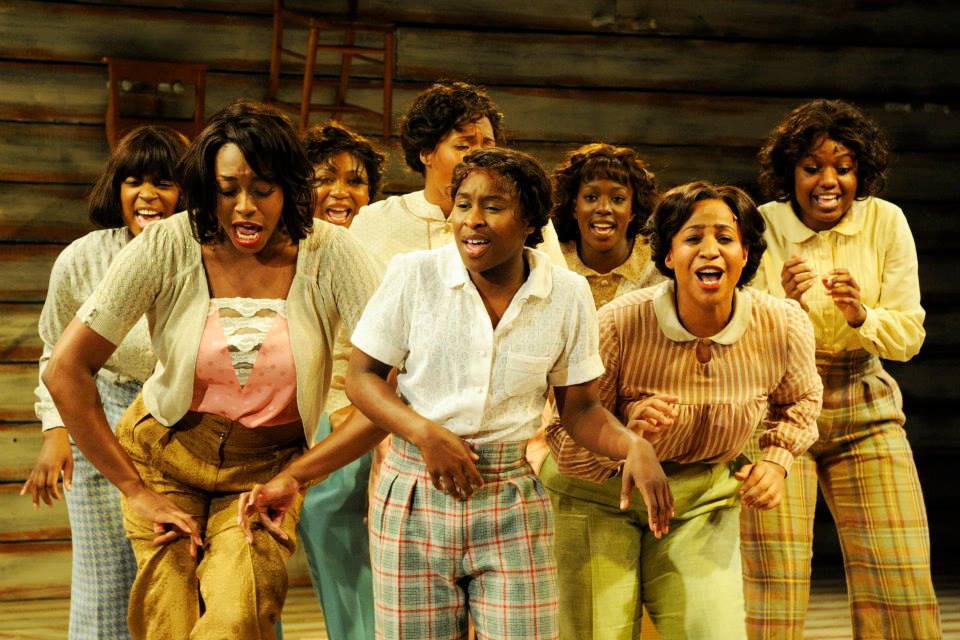
They are collectively splendid, singing in excellent voice with great timing and each has an individual quality rare these days. You really get the feeling that Doyle has taken time over the casting. Particular standouts are Sophia Nomvete as no-nonsense Sofia, Adebayo Bolaji as Harpo, caught between the rock of Sofia and the hard place of his tyrannical father and Lakesha Cammock as Squeak who takes up with Harpo when Sofia leaves him. Abiona Omonua as Nettie was also fine although again Norman's book doesn't allow enough space for the reuniting of the sisters which should be the emotional g-spot of the evening.
In the difficult role of Mister, who has to go through a character volte-face towards the end, Christopher Colquhoun was charismatic and suggested the deeper hurt in Mister that made him the man he is long before the script demands it of him. The role of Shug Avery needs an actress who can give the production a jolt of pure energy and justify the big build-up her character gets, as well as have a range that goes from gimlet-eyed brassiness to tender and loving. The wonderful Nicola Hughes gives all that and more, she performs with a radiant energy that dazzles.
The role of Celie is the glue that binds all the elements together. She is rarely offstage and grows up on it but, and most importantly, has to be able to convince the audience of the hidden passion and determination that flares up in the second half. A self-pitying performance by the actress cast would make the evening a very long night.
Cynthia Erivo plays Celie with a quiet watchfulness that suits the character perfectly. Her mask-like demeanour covers every slight, every insult thrown at her, every deprivation suffered. Her stoicism raises laughs in the scene where she talks to Shug for the first time and says straight-faced that until Shug arrived she never realised her husband had a Christian name. Erivo plays Celie's blossoming into a woman capable of loving and being loved with a simplicity which is truly touching and, in the important scene when she finally stands up to Mister, turns up the power so effortlessly that it's breath-taking.
When Shug leaves her for a second time to take up with a teenage musician, Erivo plays Celie's refusal to be left behind with a righteous determination which leads into her eleven o'clock solo 'I'm Here' where Celie understands that she can finally stand on her own. Cynthia Erivo takes what on paper sounds like a standard self-justifying ballad and turned it into a tour-de-force that was all the more thrilling to be sung on an empty stage in such an intimate space - you could feel the energy pouring out of her. Constant Reader, what I think I'm trying to impart is that she sang the arse out of it and she deserved every clap of the thunderous ovation it received.
By the end there wasn't a dry eye in the house nor a seat left sat in when the cast took their bows. The wearying Pavlovian response in audiences now to stand to applaud even the fire curtain is truly annoying but every so often you see a company who deserve to know how good they are. This is such a cast and this is such a production.
Subscribe to:
Posts (Atom)