Showing posts with label GHOSTS. Show all posts

Wednesday, March 19, 2014

100 x 2

That's an odd title isn't it?  But it ties in with the revival of OH WHAT A LOVELY WAR at Stratford East, the theatre where this groundbreaking show was born.


In case you haven't noticed, this year is the Centenary of the start of World War I but at Stratford East they are also celebrating the Centenary of the birth of the theatre's unique former artistic director Joan Littlewood.  Ironically, Littlewood came close to not even doing the show in 1963.

Her partner Gerry Raffles heard Charles Chilton's radio programme "The Long, Long Road" in 1962 which interspersed soldier's reminiscences with the songs they sang among themselves.  Raffles told Littlewood about it and suggested it might make a good show for her company Theatre Workshop but she turned the idea down as she was an avowed pacifist.  Undeterred, Raffles invited Chilton to the theatre and while going through the songs, Littlewood began to see the potential in making a show that was a critique of the war and the warmongers but to also celebrate the lives of the ordinary people swept up in their power-games.  Her idea to present the company as a Pierrot troupe gave the show a suitably Brechtian twist and featured such characterful actors as Victor Spinetti, Brian Murphy, Murray Melvin, Larry Dann and Fanny Carby.  The show was a huge popular success and moved on to both the West End and Broadway.  Richard Attenborough then went on to make a leaden, joyless screen version in 1969.


I have seen two revivals of the show and was looking forward to seeing this one on the stage where it was created.

There are several scenes in the show that always start the silent waterworks and again this production hit those moments with a quiet power - the Christmas Eve, 1914 scene on the western front when the English and German soldiers stop fighting and meet each other in no man's land to share makeshift Christmas presents always sets me off and the powerful scene of the French soldiers baa-ing their way towards the guns, literally 'lambs to the slaughter' is still unsettling.  The production uses the original trops of slides of contemporary photographs and a moving display that rolls out the awful casualty totals for the battles but the micro-sign that is in the current production uses too large text which makes it difficult to follow what is being scrolled.


What remains the success of the show is the use of the contemporary tunes as well as the snatches of song that the soldiers would sing while marching or in the trenches which constantly reach down the years and jolt you with their jaundiced and savagely ironical lyrics.  The chilling detachment of their words curdle the pretty melodies that they appropriated and are put across by the present company with both gusto and despair.

Sadly for me the show is now hampered by the too-frequent scenes where those who hold the strings - the Generals, the politicians, the businessmen - disrupt the more interesting ones with the soldiers.  What makes it all the more frustrating is that these are the real legacy of the Littlewood agit-prop style but now they are too blatant, too obvious and ultimately too damn long.  At the start of the second act, there is an interminable scene between American, English, German, French and Dutch businessman comparing the fortunes they have made off their munition-trading while on a Grouse shoot (geddit?).  It's so heavy-handed and obvious that it outstays it's welcome very quickly.  You want to shout at the stage "Yes we get it!!"  A re-write of these scenes could easily be done to make these scenes more effective for a modern audience but I'm guessing the show is frozen in deference to Littlewood's wishes.


The show seemed to take an awful long time to get going - namely down to the interminable "War Game" scenes setting out how the war started but start it did with the first real appearance of Caroline Quentin as the Music Hall star singing the recruitment song "I'll Make A Man Of You".  She shook the production awake by the scruff of the neck with her galvanising rendition and her two other major scenes were very effective - speed-singing "Sister Susie's Sewing Shirts" and also as Mrs. Pankhurst being hectored and pelted as she tries to deliver a pacifist speech to an angry street crowd.  It's actually refreshing that Littlewood included this scene as it showed how most of the general public refused to believe there could be any other way forward apart from through killing.

Among a generally good cast, Ian Bartholomew was particularly fine as General Haig, Shaun Prendergast had a good Max Miller-like quality as the MC of the evening and I liked the contributions of Oliver J. Hembrough, who I remembered as the put-upon husband Edgar in last year's TITANIC.  Terry Johnson has directed the show with a sure but possibly a too-reverential hand and I liked the Lez Brotherston's stage design which copied the theatre's proscenium arch and stage boxes in metal scaffolding and filigree.


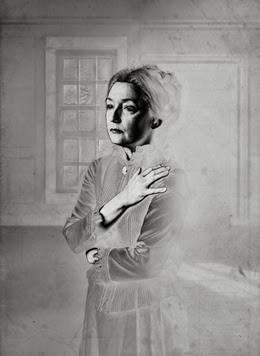
Constant Reader, as we are on the subject of revisiting shows, I went to see Richard Eyre's pressure-cooker production of GHOSTS again which has now transferred from the Almeida to the Trafalgar Studios (my blog from the original Almeida production is here) and I am happy (?) to report that it is still holds you in a vice-like grip of increasing despair and again I found myself breathless at the power and intensity of Lesley Manville as Mrs. Alving.


It was a pleasure to see her performance again and to see how she subtly shades the reactions and actions of her character and how ultimately she descends into her own living Hell.  She is magnificent and it's amazing she has kept up this remarkable performance with all that is asked of her during the course of it's 90 minutes when she is rarely offstage.

Run to see GHOSTS before it closes on March 23nd, OH WHAT A LOVELY WAR ended it's run on the 15th.


Thursday, January 02, 2014

The Theatre Chrissies are here!

Now for the best part of my Chrissies: the Theatre Awards!

BEST DRAMA/COMEDY
 

GHOSTS by Henrik Ibsen at the Almeida Theatre
 

Nominees: The AMEN CORNER (Olivier, NT); The AUDIENCE (Gielgud);
THE JUDAS KISS (Duke of Yorks); OTHELLO (Olivier, NT)
 
BEST MUSICAL

 
The SCOTTSBORO BOYS at Young Vic

 
Nominees: The BOOK OF MORMON (Prince of Wales); A CHORUS LINE (London Palladium); The COLOR PURPLE (Menier Chocolate Factory); SWAN LAKE (Sadler's Wells)
 
BEST ACTOR


RUPERT EVERETT (The Judas Kiss,  Duke of Yorks)
 
 
Nominees: John Heffernan (Edward II); Rory Kinnear (Othello);
Adrian Lester (Othello); Simon Russell Beale (Privates on Parade)

BEST ACTOR (Musical)
 
 
GAVIN CREEL (The Book of Mormon, Prince of Wales)
 
 
Nominees:  Bertie Carvel (Matilda: The Musical); Jared Gertner (The Book of Mormon);
Jonathan Ollivier (Swan Lake); Kyle Scatliffe (The Scottsboro Boys)

BEST ACTRESS
 
 
LESLEY MANVILLE (Ghosts, Almeida)
 
 
Nominees: Frances de la Tour (People); Anne-Marie Duff (Strange Interlude);
Marianne Jean-Baptiste (The Amen Corner); Helen Mirren (The Audience)

BEST ACTRESS (Musical)
 
 
CYNTHIA ERRIVO (The Color Purple, Menier Chocolate Factory)
 

 Nominees: Betty Buckley (Dear World); Rosalie Craig (The Light Princess);
Beverley Knight (The Bodyguard); Scarlett Strallen (Candide)

BEST SUPPORTING ACTOR
 
 
CHARLES EDWARDS (Strange Interlude, Lyttelton, NT)
 
 
Nominees: Will Keen (Ghosts); Richard McCabe (The Audience);
Paul Ritter (The Audience);  Peter Sullivan (The Winslow Boy)
 
BEST SUPPORTING ACTOR (Musical)


STEPHEN ASHFIELD (The Book of Mormon, Prince of Wales)
 
 
Nominees: Christian Dante White (The Scottsboro Boys); Colman Domingo (The Scottsboro Boys); James T. Lane (The Scottsboro Boys); Gary Wood (A Chorus Line)
 
BEST SUPPORTING ACTRESS

 
CECILIA NOBLE (The Amen Corner, Olivier, NT)
 
 
Nominees:  Charlene McKenna (Ghosts); Sharon D. Clarke (The Amen Corner);
Haydn Gwynn (The Audience); Cecilia Noble (Once A Catholic)

BEST SUPPORTING ACTRESS (Musical)
 

LEIGH ZIMMERMAN (A Chorus Line, London Palladium)
 
 
Nominees: Jackie Clune (Candide); Nicola Hughes (A Color Purple);
Michela Meazza (Swan Lake); Scarlett Strallen (A Chorus Line)

BEST DIRECTOR
 
 
RICHARD EYRE (Ghosts, Almeida)
 
 
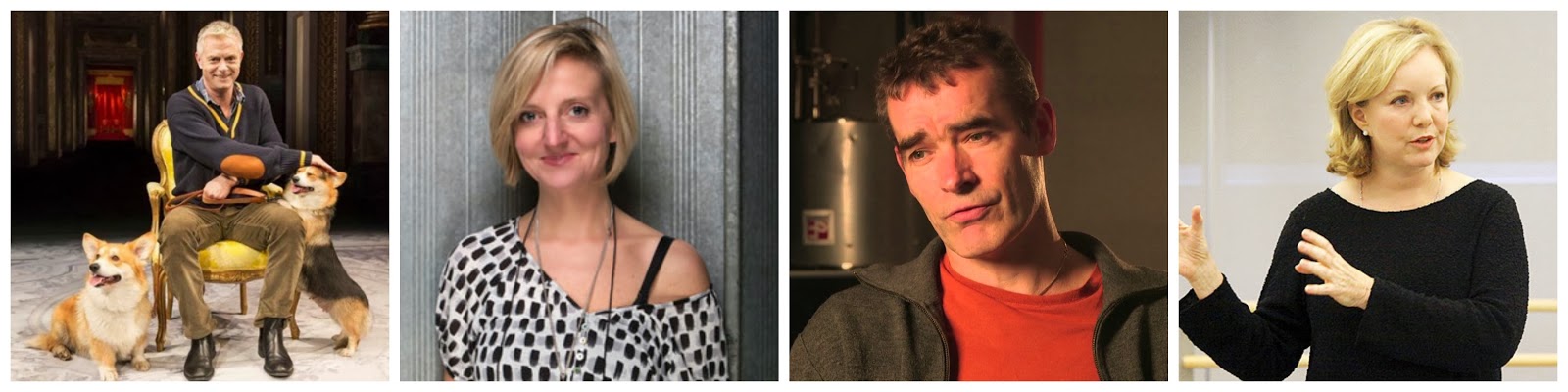
Nominees: Stephen Daldrey (The Audience); Marianne Elliott (The Curious Incident of The Dog In The Night Time); Rufus Norris (The Amen Corner); Susan Stroman (The Scottsboro Boys)

BEST DESIGN
 

LEZ BROTHERSTON (Sleeping Beauty, Richmond)
 
 
Nominees: Bunny Christie (The Curious Incident of The Dog In the Night Time);
John Doyle (The Color Purple); Tim Hatley (Ghosts); Rae Smith (The Light Princess)

BEST LIGHTING
 
 
PETER MUMFORD (Ghosts, Almeida)
 
 
Nominees: Ken Billington (The Scottsboro Boys);
Paule Constable (The Light Princess); Paule Constable (Sleeping Beauty);
Paule Constable (The Curious Incident of The Dog In The Night Time)

BEST CHOREOGRAPHY


SUSAN STROMAN (The Scottsboro Boys, Young Vic)
 
 
Nominees: Baayork Lee/Bob Avian/Michael Bennett (A Chorus Line); 
Matthew Bourne (Sleeping Beauty); Matthew Bourne (Swan Lake);
Peter Darling (Matilda: The Musical)

Thursday, October 24, 2013

Revival Day...

Two recent theatre-trips, two revivals, two radically different results.


I was so excited when MUCH ADO was announced as it meant Vanessa Redgrave was finally going to act on the Old Vic stage, the very stage from which Olivier announced her birth to the world.  It also meant she was finally going to play Beatrice, that she was reuniting with her DRIVING MISS DAISY co-star James Earl Jones and they were being directed by Mark Rylance.  What could go wrong?

Loads.

I had deliberately not seen any reviews but heard that they weren't too complementary.  Oh well... not the first time reviewers don't get it.  What could go wrong?

Loads.

The first inkling that something was odd was Ultz' standing set - a bare brick wall set with a large wooden box-affair plonked in the middle of the stage which after a few minutes started to resemble a giant coffee-table and that thought stayed with me for the rest of the evening.  His set mock-up gives you an idea of it's... oddness.


According to the programme it's a tribute to the director Tyrone Guthrie's vision in the 1930s of setting Shakespeare plays in a non-specific setting with a single wooden structure that could suggest different places.  I am sure Guthrie would be charmed by the thought but I'm also sure he would never have wanted something which suggested a giant coffee table and did nothing to help the production but impeded it and cramped the performing space.  Maybe if it revolved, or went up and down... but no it just sat there.

Then the production started. Rylance has hit on the whizzer idea to set it in England during the 2nd World War in a town close to a US Airforce base.  I mean... how else can you explain away a black American actor and an English actress?  It took awhile to get over the poleaxing evidence of Rylance's lack of an imagination.  Then the incongruities and bad choices came, not as single spies but in battalions...


Ok so we all know the stage can take years off an actor but even that can't stop you thinking that Michael Elwyn is surely playing Vanessa's brother not her father, besides the hideously ugly costuming does nothing but suggest Beatrice is an old frump.  To his credit, Elwyn does actually give one of the better performances.
 
The arrival of Don Pedro's messenger also throws you completely - is the actor REALLY that tall or is he on stilts? it is one of the most preposterous stage images ever.  Enter Don Pedro's platoon of soldiers... sorry, squadron.  And enter James Earl Jones in the world's largest flying suit or, as Owen preferred to call it, his onesie.
 
 
And then the trouble REALLY started.  Now Earl Jones, aged 82, still has the voice which I'm sure made him a fabulous Othello, Lear, Oberon and Claudius.  What his voice is not suited for is comedy verse.  So the opening skirmish between Benedick and Beatrice - which should set up the larks to come - is here a confusing Fugue For Tinhorns between his rumbling and Redgrave's almost mumbled responses.  These two are supposed to be a couple who have already had a failed relationship but for all their recent experience of working together I was really surprised to find Redgrave & Earl Jones' onstage partnership so negligible, as if they were only meeting for the first time in the lift up to the rehearsal room.
 
And so the first act progressed. Earl Jones rumbled away, saying all the words but with absolutely no sense of meaning behind them, the supporting performances seemingly being spoken as if they were still blocking the scene, a bland Claudio, an insipid Hero, a laughably non-threatening Don John and Vanessa occasionally hinting at the performance I was willing her to give.  Was she hidebound by Earl Jones' performance? 
 
 
Three times, thankfully, she delivered - I loved her playing of Beatrice's lovely lines "but then there was a star danced, and under that was I born" stopping after 'danced' and blowing a kiss up to the chandelier above the stalls.  It felt like an acknowledgement of her birth and that auditorium.  I also liked her surliness in the scene when she bids Benedick to come in for dinner, and she also had fun with her speech after the gulling scene, the start of which she directed to a member of the front row, culminating with a joyous "And, Benedick, love on; I will requite thee, Taming my wild heart to thy loving hand".  I wish I could say the same for Earl Jones.  He rumbled through his speech making no sense whatsoever and when he said "No, the world must be peopled" I am sure I was not the only one thinking "Love, you're 82!"
 
The wedding scene was a bit of a disaster - and not just for Hero.  I have written before about the inherent flaw in this scene as directors always have Margaret onstage during it and as it was she who Don Pedro and Claudius saw standing at Hero's window being seduced by Borrachio, why doesn't she just own up while she is seeing her mistress' marriage going upsy-dutch?  Maybe she had lost the power of speech when she caught sight of the SHITEOUS frock that Vanessa was in.  When she dramatically threw aside her dressing gown to reveal it my first thought was of Dame Edna Everage.
 
 
The wedding scene did have one saving grace in Peter Wight's performance as Friar Francis.  We had just seen him as the bumbling arse Dogberry but here he was, slowing the pace and speaking his lines - Stop The Press - as if he understood what he was saying.  A shout-out too to Penelope Beaumont as Ursula whose several lines also showed that she knew what they meant.  Needless to say, now that Benedick suddenly becomes serious and confronts Don Pedro and Claudius with their wrong, Earl Jones finally - briefly - came into his own.  For all of ten minutes he justified being there.
 
Sadly it couldn't last, we had the bizarre finale to come.  The news of Benedick and Beatrice's marriage - and his command of "Strike up pipers" - was the cue for someone to crank up the onstage record player to play a swing tune so the cast could start a half-hearted jitterbug while Earl Jones and Redgrave sat upstage on two chairs hidden behind an open newspaper.  I shitteth you not.  The curtain call consisted of a company bow which parted for Redgrave and Earl Jones to get up out of their chairs and join them in a bow and exit upstage, with Vanessa waving to the audience behind the by-now shuffling Earl Jones.  You know there is something very wrong with a production when the actors playing Beatrice and Benedick don't get a solo bow.
 
Don't get me wrong.  I didn't hate it.  It just left me bemused and frustrated that it was allowed to be presented as such.
 
Especially as I then saw a production which was the polar opposite: focussed, free of directorial conceits, designed to fit the stage requirements of both the actors and the piece itself and acted with a unity of performance and purpose.  But then, not every director is Richard Eyre.

 
Working from his own adaptation, Eyre's production of Henrik Ibsen's GHOSTS at the Almeida Theatre is a stunning achievement which keeps you gripped from the start.  Even scenes which in past productions have seemed to tread water are here played with an urgency which is forever pushing the characters toward their destinies while stirring up secrets from the past.
 
Tim Hatley's shimmering, translucent set design is the perfect illustration of a house which has kept too many secrets behind closed doors and Peter Mumford's exquisite lighting design from a grey, rainy afternoon to the blackest night to the blazing glory of a new day, so ironical after what we have witnessed.
 
 
I have seen productions where Ibsen's use of repeating images and motifs are clanged like a deafening bell but here the repeated references to parents and children, of the sins of a previous generation being visited on the next, and the stymied chances of renewal slowly build up until they really are the ghosts of the title, haunting the rooms of the Alving house.
 
As I said, Eyre's translation is lean and powerful - although I must admit than an exclamation of "Bollocks" at one point was a bit of a surprise.  He also has cast five performers who act as a real ensemble, keeping the intensity going relentlessly throughout the entire 90 minutes.
 
 
The sometimes sticky role of Jacob Engstrand is slyly played by Brian McCardie, slippery as an eel and always thinking a few steps ahead of whoever he is in dispute with to gain the upper hand.  Charlene McKenna was a spirited, feisty Regina, sure of her future with her employer's son and determined to rise above her place in life.  The savageness of her fury at the shattering of her dreams was well played.
 
The other potentially sticky role is Oswald, the artist son who has returned from a libertine Paris life to confront his mother with his own secret.  In some productions I have seen him played as less of a character and just a collection of symbolist metaphors but Jack Lowden played the role with a real humanity which made his sudden descent into a living limbo all the more affecting.
 
 
Will Keen, while not entirely banishing memories of Tom Wilkinson in the role, was a squirm-inducing Pastor Manders, full of self-righteous hypocrisy and sanctimonious smugness in a brilliantly conceived performance.  He also managed to give Manders a humanity which made it possible to imagine why, when younger, Mrs. Alving ran to him to escape her tyrant of a husband.
 
I have seen Vanessa Redgrave, Judi Dench and Jane Lapotaire play Mrs. Alving but it struck me while I was watching her that Lesley Manville's was the most humane I have yet seen.  Expertly paced, she first appears as a woman happy to explore new ways of thinking and confident in her future now she is free not only of the physical presence of her drunken lecherous husband but, thanks to her action of building an orphanage in his name out of his money, also free from any ties to her from beyond the grave.
 
 
But her attempt at freedom, like Regina and Oswald's, is soon unravelling as Captain Alving's actions do indeed reach back from the past, and Manville's horror that although she has deliberately squandered her husband's financial claim on their son, some inheritances are beyond her control was palpable and real.
 
Her distress at the realization of Oswald's future built and built until I was left poleaxed by the intensity of it all.  I stumbled out into the Islington sunshine breathless from the tension and wondering how she would regroup to do that again for the evening performance.
 
The production plays until the 23rd November and although sold out, there are day seats released at 11am at the box office.