Friday, February 28, 2014

Revivalists

Two productions have recently given me the chance to reappraise two works that I had seen before, one on stage and one on film.

I saw THE WEIR in 1999 when it had already been running for nearly two years in various theatres that had been commandeered by the Royal Court while it was being renovated,  It won the Olivier Award for Best Play and has since been named as one of the 100 Most Significant Plays of the 20th Century - it shared the 40th place with Beckett's ENDGAME, Coward's THE VORTEX, Miller's VIEW FROM THE BRIDGE and O'Neill's THE ICEMAN COMETH.  Heady competition for a relatively recent work.


To be honest, for all it's acclaim I had retained only a dim memory of the play.  I remembered the Irish backwater pub setting and it's story of the male locals telling spooky stories to a female newcomer from Dublin.

But here it is revived in a vibrant new production directed by Josie Rourke that originated at the Donmar (and ergo, sold out immediately) and has now transferred to the Wyndhams and it was a pleasure to be reacquainted with it's dense, naturalistic prose and this one has stayed with me.


Tom Scutt's set design places us firmly in the small pub in a remote village in Ireland, we even get the waft of peat burning in the onstage stove,  Brendan runs the pub although you can tell his heart isn't really in it and he is being pressured by his offstage sisters who have invested in it,  His regulars include Jack who runs the town's garage, Jim who is an odd-job man who lives with his aged mother and Finbar who is viewed with some suspicion by the others as he owns property and is a bit 'flash'.  Finbar is also the odd-one-out among them as he is the only one who is married.

The play's first third sets up Finbar's arrival with his new tenant Valerie, a young woman who has just arrived in the village from Dublin.  Her presence in the bar has a vaguely unsettling effect on the regulars, straining to be on their best behaviour and adapting to her 'cosmopolitan' ways - her request for a glass of wine throws Brendan completely but luckily he has a bottle in his adjoining house which was given to him as a present!  One wonders how long the wine has sat in his cupboard as he pours Valerie a beer glass full of it.

They all attempt to trump Finbar's local knowledge with stories of their youth and the characters that are long gone, including the old woman who used to live in Valerie's house.  This leads to Jack recounting a spooky story that the old woman told him from when she was a girl which leads to Finbar and Jim also sharing similar ghostly tales that they were involved in. 

These scenes could stop the show in a bad way but Josie Rourke has by this point created a real world onstage with the cast playing as if they really have known each other all their lives.  These stories have an effect on Valerie and she tells the men her own experience that has lead her to the village.  Her haunting story has a radical effect on the men and at the close of the play Jack shares a story from his past that has no supernatural overtones but which has haunted his life ever after.


A remarkable ensemble cast is lead by Brian Cox as Jack, his black suit looking suitably lived-in. I suspect his performance has grown somewhat larger since the move as his bits of business seemed to be very spotlighted but his performance grows richer during the course of the play and his final monologue was wonderfully played, making you fully realise the loneliness that lives behind his blarney.

Ardol O'Hanlon was very interestingly cast, Jim being very close to his slightly daft television persona but he too managed to show the aching loneliness in his aimless life, again his baggy jumper suggesting character.  Risteárd Cooper had the showy role as jack-the-lad Finbar and he too gave us a fully-rounded character, chafing at his marital ties and all too aware of his friends wariness about him.


Peter McDonald was always watchable as Brendan, he suggests a life in the doldrums, of opening and closing his pub every night while hearing the same stories time and again.  The undercurrent between him and Dervla Kirwan's Valerie was nicely played, you hope that her arrival might give them both a new chance.  Kirwan was excellent as the woman fleeing her recent trauma and her big monologue was beautifully played, holding the emotions in check until the end.  As usual, Neil Austin's lighting was impeccable.


It's a wonderful experience to see this cast playing with such a unity of purpose and I recommend you race to see it before it's April 19th final curtain.  And yes, it does deserve it's place on the that list of great 20th Century plays.

Also on the Significant Plays of the 20th Century list - this time at number 50 along with 8 other plays - is Shelagh Delaney's A TASTE OF HONEY which has just been revived at the Lyttelton Theatre.


I have only ever seen Tony Richardson's 1961 film version which immortalised Rita Tushingham as Jo, the fantasising and gobby schoolgirl, yearning to break away from her overbearing mother and that film certainly casts a long shadow as it is so of it's time and it's trops seem fresh and original.

The play, which like THE WEIR only requires five performers, was Delaney's only real success.  In an excellent piece in the programme, Jeanette Winterson puts her in the context of her times and shows how, as a teenager of 19 when the play was finally produced, Delaney was a unique but lonely voice with no other female writer around her to bounce ideas off.  She had been spurred on to write A TASTE OF HONEY after enduring a production of a Terence Rattigan play and decided that she could write about life better than this writer could - to paraphrase Delaney fan Morrissey it said nothing to her about her life.  She wrote the play in a fortnight and sent it to Joan Littlewood at Theatre Royal Stratford East who seized on it's immediacy and put it into production.


Teenage Jo and her flighty mother Helen have moved into a rundown flat in a dingy part of Salford in the late 1950s after having done a flit from their last home.  With no money coming in apart from what Helen gets from her 'admirers', Jo is looking forward to leaving school and starting work in a shop.  She is also seeking escape from her mother who treats her as her unpaid servant but you also sense that their life together has made them inter-dependant and that Jo will probably never really escape,

Helen starts up with the flashy Peter who asks her to marry him.  What she doesn't realise is that Jo has started her first relationship with Jimmie, a young black sailor who is soon to depart on a new ship.  Left alone over Christmas when her mother leaves her to be with her new lover, Jo invites the sailor over and they have sex.  A couple of days later, while dressing on her wedding day, Helen notices Jo wearing Jimmie's ring on a chain around her neck,  They quarrel and Helen leaves the house, possibly for the last time.


A few months later and Jo is pregnant.  She meets art student Geoff (whose homosexuality is only inferred) who is looking for somewhere to stay, and invites him to share the flat.  He needs a place to stay and she needs a friend and someone to share her life with.  Together they look forward to the birth of her baby and plan for their unconventional life together, although not before an ominous visit from Helen, tipped off by the well-meaning Geoff about her daughter's condition.

In the months nearer the birth Geoff is coping with Jo's erratic behaviour well but all is interrupted when Helen reappears, her marriage apparently over before it began.  Helen immediately starts undermining Peter and while Jo sleeps, he realises he is out of his depth with the fearsome mother and leaves for good.  Helen's triumph is short-lived when she realises Jo's child might be black and leaves while Jo starts her labour, waiting for Geoff's return which we know will never happen.


I really wish I liked the production more but I found Bijan Sheibani's direction to be erratic and a bit all over the place.  What totally ruined most of the show were the profoundly irritating scene changes which has cast members doing little dance routines around the set to the cool jazz music playing.  It put me in mind of those fist-making routines that end Miranda Hart's tv shows and *no one* wants to be reminded of that.  Hildegarde Bechtler's design doesn't really inspire either with it's single-room set seemingly up on bricks over at one side of the stage with a Salford street cyclorama behind it.

I also found Kate O'Flynn to be too strident as Jo, seemingly playing her character like an audition for "Coronation Street".  It made it very difficult to like or sympathise with her character at all.  In her first scene with Jimmie the sailor she hit the right level of gaucheness, saying phrases in a style you knew she had seen in films or heard her mother using, but overall her high-pitched, over-pitched phrasing annoyed.


I did like Harry Hepple as Geoff who suggested an inner life that needed nurturing as much as Jo's did but doomed to be confronted by the prejudices of landladies, bigots and harridans.  His crushed acceptance of being no match for the manipulative Helen was touchingly played,

The show however belongs to Lesley Sharp as Helen.  Changeable as a Salford breeze, she was infuriating but intriguing - yes she was a monster but she also gave clues along the way to what made her that way.  A crippling loneliness and need to be loved has driven her to manipulation and emotional blackmail and the action noticeably sagged when she was offstage.


At times she reminded me of Ruth Ellis, with her tight clothes, love of the bottle and peroxide blonde hair - maybe it's because I had in the back of my mind that Shelagh Delaney had a success in the 1980s with her script for DANCE WITH A STRANGER,

I wish I had liked it more but sadly the combination of iffy direction and an original work being made to seem unoriginal by a production trading on what has come after it made it a missed opportunity.

Wednesday, February 19, 2014

Union Man...

Back in the 1990s and into the 2000s I used to frequent the Bridewell Theatre off Fleet Street.  It was a converted theatre space as it used to be a swimming pool and laundry yet!  To be honest no one ever went to the Bridewell to see great performances - I certainly saw some good ones but they were always a delightful surprise.  No, what one went to the Bridewell to see were productions of musicals that were too expensive and/or risky to ever appear in the West End.  The Bridewell closed to these productions in 2005.

I thought of the Bridewell last night on my way home from the Union Theatre as it seems to have taken it's place.  In almost as many weeks I have now seen two productions there and again both shows were ones that you would have to wait a long time to see in the West End.

 
The first show we saw there this year was the "Song By Song By Kander & Ebb" show THE WORLD GOES 'ROUND, the perfect show for a Sunday afternoon.
 
The show originated in 1991 when director Scott Ellis, choreographer Susan Stroman and librettist David Thompson (who would all later collaborate on the Kander & Ebb show STEEL PIER) put together the show to run off-Broadway where it won several awards but it never moved either to Broadway or London as by the next year the duo had their new show KISS OF THE SPIDER WOMAN staged.  The bizarre thing is that what we saw in 2014 was the 1991 show despite the fact they have since written STEEL PIER, THE VISIT, CURTAINS and THE SCOTTSBORO BOYS.  I think it would have been wiser to do a new show that could take in songs from these later productions.
 
So, once more into the CABARET and CHICAGO songbooks, dear friends, once more... The Union's set-up makes for a convoluted journey to your seat.  It is another 'reclaimed' space - once a paper warehouse - so after walking through it's narrow café (they call it a café, it's more like a passage with shelves on either side) you go into the bar at the back where you are given your numbered laminated tickets. They call numbers out in batches of ten so you can take your seats and give them back their laminated tickets!  I wonder - as I always do - why they can't just number their seats?  There was nearly a Queeny fight the afternoon we went to see the Kander & Ebb show over a disputed seat.  Oh and a handy tip... pee before you go otherwise you have to use the barnacled urinal.
 
 
But despite that Mrs. Lincoln, what did you think of the show?  Hey what's not to love?  They are lovely songs and they were sung by a good cast - Susan Fay, Simon Green, Gareth Snook, Lisa Stokke and Emma Francis.  There was also a supporting company of five dancers (aka possible understudies) who clumped around the concrete floor charmingly.  The leads all had their moments to shine and were clapped enthusiastically by us, the small but happy audience.
 
Kirk Jameson directed and designed the show (it couldn't have taken long as it was only 5 chairs and some mirrors) and Sam Spencer Lane was responsible for the moves.  Enjoyable but it wasn't a patch on HOW LUCKY CAN YOU GET! which was a Kander & Ebb compilation which played at the Donmar (before it became "The Donmar") in 1988 with the astonishing cast of Diane Langton, Josephine Blake, Angela Richards and the late Martin Smith.  The set list was roughly the same but damn it was one to remember.
 
 
Which brings me to the problem I have with most shows these days, where are the real musical comedy performers who can elevate a show from adequate to memorable?  Most shows these days usually feel like you are watching an understudy call - and yes, I'm talking West End too.
 
Show after show seems to be cast from an endless pool of tour choruses, understudies and cruise ship dancers.  Not a bad thing if these can then be built on but the level stays the same - acres of anonymous performers who can smile and nod but who are incapable of throwing shade on a characterisation.  So, on to FINIAN'S RAINBOW...
 
 
All though it's a well-known name I suspect that's due to the lame film version, it's certainly not down to production history, the Union Theatre's production is it's first in London since 1947 - and that one only lasted 22 performances!!
 
The original book has been rewritten by Charlotte Moore who is the artistic director of the USA's Irish Repertory Theatre who revived it ten years ago.  The whimsy-fuelled story centred on Finian, an Irish immigrant, and his daughter Sharon arriving in the imagined state of Missitucky - although a major part of the plot is about living near Kentucky's Fort Knox.  Finian wants to bury a crock of gold near Fort Knox so it will grow (I know, I know) but is unaware that Og, the leprechaun he stole it from, is on his trail.  Sharon falls in love with a local lad but the community is being threatened by a racist senator who wants to buy up their land.
 
 
Plenty there to rewrite I agree but what is the actual reason?  Because Sharon makes a wish that the senator would understand what it's like to be hated while accidently holding the magic crock which grants wishes and the Senator turns black.  The original - and well-meaning - book-writers meant for this to show the Senator exactly what it's like to be poor and black - but no, it is now taken to mean that to be black is to be 'wrong'. 
 
So political correctness decrees the character now disappears only to turn up as a poor white man!  So no, don't rewrite the Leprechaun character, don't rewrite the idea that burying gold will make it grow out of the ground - don't even rewrite the profoundly irritating character of the ingénue who can't speak but dances her answers!
 
 
So as has happened so often before, we have an under-par book supporting a delightful score.  In an odd turn of events, the three break-out numbers from the score - "How Are Things In Glocca Morra?", "Look To The Rainbow", "Old Devil Moon" - follow one another at the start of the show and are of such a high quality that it's hard for the score to keep up that standard but it constantly surprises and enchants.  It's no wonder that Sondheim is a fan of E.Y. 'Yip' Harburg, his lyrics are always on the money and genuinely inspired - the second act opener "When The Idle Poor Become The Idle Rich" is great fun.
 
There are nice performances from James Horne as 'Finian', Christina Bennington as 'Sharon', Raymond Walsh as 'Og' and Joseph Peters as 'Woody' but the playing area is too cramped to fully contain the cast of 23 so it gives an uneven feeling when they all cram in together and start bellowing at the three rows of humble punters.  Believe me, there is nowhere to hide - apropos my earlier point, although the chorus all gave energetic and 'up' performances there wasn't much variation to their playing and in such a confined space their "teeth, tits and tonsils" approach was quite claustrophobic.
 
 
I guess if it's the fault of director Phil Willmott it's because he's such a fan of the show. So, despite all my ruminations, the bottom line is you are not going to see FINIAN'S RAINBOW on any West End stage anytime soon and for the score alone - and the named performers above - I suggest you get along to the Union Theatre where it is playing until 15th March.
 
I guess - to paraphrase Og's second act number - when I'm not near the show I love, I love the show I'm near.

Wednesday, February 12, 2014

The Popcorn Play

A week or so ago I had a totally new theatrical experience.  Constant Reader I hear your cry "But what can that be?"  Well, I have finally been to see a NT Live screening.  And what a strange experience it was.

 
NT Live has been running for nearly five years but I have put off seeing one as the previous broadcasts have either been productions I have seen previously onstage or wasn't interested.  But here we had an interesting cast - Tom Hiddleston as Coriolanus, Deborah Findlay as Volumnia and Mark Gatiss as Menenius - in a play that I had wanted to see again after having seen Ralph Fiennes' film version in 2012.  I was curious as to how to classify this: film or theatre?  But I boiled it down to the question "Would I chomp popcorn during a play?" So, film it is.
 
The Brixton Ritzy was packed with an interesting mix of older punters with glasses of wine and younger, media-types with bottles of wine.  Can you see a connection?  You could see we were the first-timers as we had bottles of Pepsi-Max.  There was an odd, jittery atmosphere in the auditorium as the screen showed us the Donmar audience taking their seats interspersed with 'trailers' for upcoming screenings (Owen shut his eyes during KING LEAR as we are seeing it actually onstage this week) and an introduction from Emma Freud.

 
To be honest I'm not sure what I should be talking about: the screen experience or the stage production. As a screen experience, the first thing that struck me was how strange it was to be seeing what the theatre audience was experiencing but with none of the inherent atmosphere you get, especially in such a small auditorium as the Donmar.  It was also odd at the end to have the actors take their bows to rapturous applause while we sat gawping.  My friends Sharon and Eamonn were seeing it in a cinema in West London and, again, it was odd to text her in the interval to chat about the theatre production we were watching but be miles apart!
 
The actual production was interesting but by the middle of the second act I had started to weary of it's sameness.  Was it because I was not actually there that I felt that?  Maybe.  Tom Hiddleston certainly gave an excellent performance, charismatic and nicely shaded.  During the play you feel Shakespeare becoming more and more fascinated with his lead character to the detriment of others and to be honest there were some very dodgy supporting performances here.  There is a real dearth of good supporting performers these days but I enjoyed Elliot Levey's duplicitous politician Brutus, happily engineering Coriolanus' downfall with his cohort Sicinia.  Oh yes, Sicinius has been given a sex change and is played by Katherine Schlesinger for no real reason but to up the actress rate and for the two nasty senators to share a snog.  Schlesinger actually was good but it reared unhappy memories of the transgender casting in the National's EDWARD II.
 
Hiddleston was better matched by Mark Gatiss' Menenius and Deborah Findlay's Volumnia.  Gatiss gave a fine performance as the peace-making senator who runs out of excuses for Coriolanus' behaviour and is ultimately let down by his friend while Findlay was in excellent form as Caius' mother Volumnia. 
 

A woman who has channelled all her ambition into her son, Volumnia is the one person Coriolanus cannot refuse and constantly pushes him: to become a senator, to suck up to the crowd and with the Senators, but who also seals his fate when she convinces him to turn back from over-running his native city of Rome.  Frustratingly, this climactic scene came across as flat and one-note, again leaving me to wonder was that the fault of Josie Rourke's direction or for the fact that the tension was dissipated by not being in the same room as the actors.  It certainly didn't have the power or the subtlety of playing that Vanessa Redgrave brought to the role of Volumnia in Fiennes' film.  The role of Virgilia, Coriolanus' wife is one of the least interesting of Shakespeare's women especially as she is over-shadowed by the character of Volumnia, but I liked the weary sadness of Birgitte Hjort Sørensen.
 
 
I'm not sure the NT Live thing is something I would do too often but it is an excellent initiative to make these theatre productions truly national events.
 

Sunday, January 26, 2014

From Shakespeare to Sondheim...

...it's not too far.  Not in the West End anyway.

Two productions bracketed last week and their only link was that I enjoyed them both!  Oddly enough it's always harder to praise than to critique but I will give it a go for you Constant Reader.

First off the rank was HENRY V, Michael Grandage's final production in his season at the Noel Coward Theatre (it will always be the Albery to me) which has proved successful by having plenty of lower-price seats allied to the wattage of theatre 'names' starring in the shows.


I was under-impressed by the first production PRIVATES ON PARADE despite Simon Russell Beale's star turn and haven't felt sad to have missed PETER AND ALICE (Ben Wishaw & Judi Dench), THE CRIPPLE OF INISHMAAN (Daniel Radcliffe) or A MIDSUMMER NIGHT'S DREAM (Sheridan Smith & David Walliams) but the thought of Jude Law giving us HENRY V proved too tempting.

Although I am not a fan of Law's screen work - he always seems too lightweight for any role - HENRY V marks the fifth time I have seen him onstage and he should be applauded for returning to the stage when he could be making money doing negligible films.  I feel he has got better each time I have seen him, LES PARENTS TERRIBLES (National Theatre), TIS PITY SHE'S A WHORE (Young Vic), HAMLET (Wyndhams), ANNA CHRISTIE (Donmar) and now HENRY V, but there is still the occasional choice that pulls the focus a bit - a certain way of delivering a speech, the way he stands (he couldn't stop a pig in a passage) and, in some respects, sharing the impression I always had when I saw Kenneth Branagh - good enough, but come back in a few years and he will be better.

 
But despite these moments, I enjoyed his performance very much and he rose to the challenge of Henry's big speeches with ease - the St. Crispin's Day speech was excellent.  Henry is a mercurial character with flashes of anger that show he is no longer the playboy prince that the French think they will be facing on the battlefield and Law encompassed all these moods very well.  The only time it faltered for me was the final wooing scene with Princess Katherine which was played so much for laughs that it broke the through-line of the performance up to that point but I suspect Grandage being at fault there.
 
The production was very Grandage - well-paced, non-flashy, nothing distracting from the text.  They are always slightly under-cast - so no one upstages the lead? - the worst offenders being Ben Lloyd-Hughes' Dauphin who was a bit am-dram and Matt Ryan's Fluellen outstayed his welcome every time he appeared.  Richard Clifford also seemed to let his costume's fluttery sleeves do all his acting for him as the King of France.
 
 
However there was also Grandage stalwart Ron Cook who was a delightful Pistol, conniving and making sure he saved his own skin in battle, and he was expertly partnered in the Eastcheap scene with Noma Dumezweni's Mistress Quickley.  Her richly-voiced description of the death of Falstaff was one of the highlights of the show and her palpable sadness as she watched Pistol and the ragtag army recruits leave for war was beautifully judged.  She also was delightful as Alice, the French princess' knowledgeable maid.    
Another fine performance was given by Ashley Zhanghazha as the Chorus who guides the audience through the plot.  Shakespeare's use of the Chorus to remind the audience they are watching a play on a stage is remarkable - his exhortations to the audience to use their imagination to see castles, the channel, ships, horses is to pinpoint the joy of theatre.  I had also forgot that the Chorus provides a sombre end to the play undercutting the humour of the wooing scene with the fact that Henry was dead within two years and that his son's ineffectual rule led to The War of The Roses - "so many had the managing, that they lost France, and made his England bleed".
 

Christopher Oram's standing set of wooden painted slats was fine but he really needs a new 'look' and Neil Austin's lighting was as evocative as always.
 
Despite all the petty peeves I think this was the best production of HENRY V I have seen.  Click here if you can get to see it before it closes on February 15th.

Then later in the week it was time to finally get to go to the St. James Theatre which opened on the site of the old Westminster Theatre in 2012 - it took a Sondheim show to lure me through the doors!

Let's get the kvetch out of the way - Foster Wilson Architects who designed the theatre should be booted up the arse.  Entering an L-shaped space with a garish marble staircase taking up the axis, attempting to get to the bar is hampered by not only three rows of tables taking up the space but by the waiters squeezing past you with full or empty plates. I wouldn't have minded but said staircase leads up to a restaurant!  They could at least take out one of the rows of tables to give people space to move.  Then you go into a theatre which is too steeply angled to the playing area with minimal leg room - I felt like I was going to be watching an anatomy lecture.


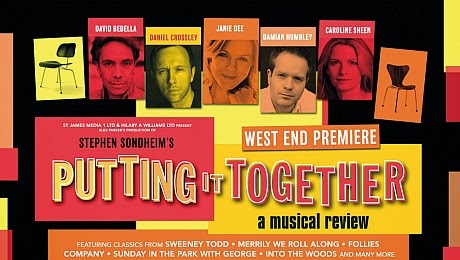
I think I was so thrown by the theatre's ugliness that it took me a while to get into what we had come to see, PUTTING IT TOGETHER a Sondheim revue that was originally conceived in 1992.

In 1992, eighteen years after SIDE BY SIDE BY SONDHEIM, it was suggested that a sequel was due as in those years he had written SWEENEY TODD, MERRILY WE ROLL ALONG, SUNDAY IN THE PARK WITH GEORGE, INTO THE WOODS and ASSASSINS!  So Sondheim and Julia McKenzie devised PUTTING IT TOGETHER, it's limited engagement premiere cast including Diana Rigg and Clarke Peters.  The next year Julia McKenzie directed the show off-Broadway which marked the return to New York theatre of Julie Andrews.  Five years later the show finally made it to Broadway (briefly) with Carol Burnett, George Hearn, John Barrowman, Ruthie Henshall and Bronson Pinchot.


So 22 years after it's Oxford premiere it finally makes the West End.  The premise suggests a cocktail party given by an older couple for a younger pair with an intermediate servant type floating about.  It vaguely works as a construct but we know and they know that it's a device to have them sing all the different songs at each other, some fitting the concept better than others.

As I said, it took me a while to settle in to the show possibly because I know the songs so well from their original settings but luckily the cast had the charm and the talent to ease me into the show - although at one point the three men were lined up singing and I thought "George Clooney, Daniel Craig and John McEnroe have gone off haven't they"?


Janie Dee was the true star of the show, easy to do when you have the 'bitter woman' songs such as "The Ladies Who Lunch", "Could I Leave You", "Not Getting Married Today"and "Like It Was" but she also had her marvellous comic timing and unalloyed charisma.  Caroline Sheen was o.k. as the ingénue and scored best with Madonna's songs from DICK TRACY "Sooner or Later" and "More".

David Bedella has always had "something of the night" about him so as the lecherous older man came easy to him with songs like "Have I Got A Girl For You" and "Good Thing Going" while Damian Humbley, who I last saw mugging away as Charley in MERRILY WE ROLL ALONG, here was much more restrained and therefore more affecting singing "Unworthy of Your Love", "Live Alone and Like It" and "Marry Me A Little".  I haven't seen Daniel Crossley in a lead role before but here he had ample opportunity to shine during "Everybody Ought To Have A Maid" and "Buddy's Blues".


A delightful show with a delightful cast, PUTTING IT TOGETHER is playing at the St. James until 1st February.

Monday, January 20, 2014

Well I would, wouldn't I?

My first theatre visit of the year is one that might surprise you Constant Reader, but then no one is more surprised than me either!


An Andrew Lloyd Webber musical?  The last time I saw a Lloyd Webber show in it's premiere run was SUNSET BOULEVARD, a mere 21 years ago!  WHISTLE DOWN THE WIND, THE BEAUTIFUL GAME, THE WOMAN IN WHITE and LOVE NEVER DIES have come and gone in that time and much is being made of this show being smaller in size and more of a standard book musical than is usual with his love of the dreaded recitative.  Yes it's smaller in scale and has definite book scenes but the show is a curate's egg that leaves an odd taste in the mouth.

I have always been fascinated by the whole Profumo scandal, that very English Molotov cocktail of showgirls, mendacity, politics, sex, deference, espionage, black drug-dealers, film stars, stately homes, mews flats, rich men in masks, police harassment and chequebook journalism, all exploding just as social attitudes were changing in 1963.  How many fall-from-grace stories in the past 50 years have referenced "Profumo" without quite coming close to the uniqueness of it all.

 
The case has any number of permutations with which to tell the story but Lloyd Webber has focused on the perceived patsy of the case, his titular anti-hero Stephen Ward, the society osteopath who was charged with living off immoral earnings but killed himself the night before sentencing.
 
Yes, Ward was hung out to dry by those who he thought he could rely on and the case against him was based on tainted evidence, but while John Hurt made him a sadly pathetic figure in SCANDAL yet the queasy nature of the musical can be traced to that despite all this, he is too obscure a character to be the focal point for the show.  For all his patsydom - and given his sympathetic treatment by book-writers Christopher Hampton and Don Black - Ward remains a frustratingly unlikeable and unknowable character.  He wasn't the pimp that the trial painted him to be but his vaguely unsavoury nature and slavish devotion to "his betters" means that the musical's attempts to make him a tragic hero slide off like Teflon.

 
I felt sorry for the ever-urbane Alexander Hanson who plays Ward as a charming social butterfly in the first act but who seems to fade away in the second act and become almost a supporting character in his own musical.  His eleven o'clock number - sung while sitting on a low couch upstage while gulping down sleeping pills - is a curiously bloodless affair which climaxes with the famous press photograph of Ward, being stretchered out of his flat in a coma, projected onto Rob Howell's curtained set.  This moment was held for an eternity as if to make the audience fully understand the tragedy of his suicide but as Ward has remained a slippery, opaque character that it has been impossible to understand, it just makes for a rather obvious stage 'moment'.
 
With such a large group of characters to introduce, some suffer more than others.  Daniel Flynn's Profumo barely registers and his fall from grace, after lying to the House of Parliament over his relationship with Christine Keeler, is quickly glossed over.  Joanna Riding as Valerie Hobson also contributes to the show's imbalance.  Riding is a fine musical performer but is given nothing to do but waft through several brief scenes then in the middle of the second act she is given a huge ballad called "I'm Hopeless When It Comes To You".  Yes she sings it well but it went on & on and as no time had been invested in her as a character, it simply hung around for a while signalling to us "Big Love Song That Has To Be In A Musical".
 
 
Other casualties are Anthony Calf who has next-to-nothing to do as Lord Astor but does it with charm and a deftness of touch and while Ian Conningham plays the Russian attaché Ivanov like the Russian Meerkat from the CompareTheMarket.com ads he comes into his own as the thuggish police Inspector Herbert.  Something the show does spotlight is the way the prostitutes Ronna Ricard and Vickie Barrett were forced into making confessions by Herbert corroborating the Crown's case against Ward which gives Kate Coysten and Amy Griffiths respectively nice moments to shine in the court scene.
 
Of course the show should be titled CHRISTINE KEELER as she really is the catalyst for the events of the play and the show certainly showcases two Charlottes.  Charlotte Spencer has the right look for Christine and gives an eye-catching and wilful performance.  I wasn't too keen on her high-pitched singing which occasionally jarred but then she also suffers from not having a defining song for the character.
 
 
Charlotte Blackledge was excellent as Mandy Rice-Davies, but then she is the best character in any retelling of the story!  One of nature's survivors, Mandy was the original good-time-girl and of course set her own indelible stamp on the events when giving evidence at the Old Bailey.  Her statement saying she had not only had sex with Lord Astor but that he had given her money was read back to her by the Prosecuting Council who added that Astor had denied all knowledge of knowing her, to which the 18 year-old Mandy coolly replied "Well he would, wouldn't he?"  The sheer sarcastic cheekiness in the face of the might of the establishment is to be applauded.
 
I have made references to Lloyd Webber's score and I was surprised that for most of the first act I liked it.  Three good songs for Ward and Keeler get the show moving although "This Side of The Sky" is really only there because it's time for a Falling In Love song, which doesn't ring true for these characters.  These are followed by a slinky tango called "Manipulation" and then Keeler's "He Sees Something In Me".  Then it takes an embarrassing turn with a faux "Ascot Gavotte"-style ensemble number which takes place during Mariella Novotna's notorious orgy.  It's coy, juvenile and twee style is horribly old-fashioned and, for me, the score never recovers it's earlier promise.  Symptomatic of this is the first act closer "1963" which is sung by an exuberant Christine and Mandy - it's the only time the actual time period is referenced with a couple of desultory Beatles-style "Yeah yeah yeahs" thrown in.
 
 
The direction by Richard Eyre is certainly brisk and I can honestly say that for most of the show I wasn't bored but two long scenes rather stop the show dead: the police grilling their innumerable suspects which is followed by the lengthy courtroom scene.  Rob Howell's noticeably modest set was interesting to watch with it's use of semi-circular curtains that suggested the secret and shrouded world lived in by the onstage characters and Peter Mumford's lighting was as atmospheric as usual.
 
The muted response at the end was echoed by a seemingly hesitant curtain call from the cast, all symptomatic of a show that doesn't seem to know what it actually wants to say or how to say it.
 
What niggles me though is that while Lloyd Webber clamours his insistence of Stephen Ward being a victim of the establishment, he is also a vocal supporter of the self-same Conservative Party that sought revenge on his titular anti-hero.

Another thought that occurred to me after leaving the theatre was that none of the songs in Lloyd Webber's score were as evocative or as haunting as NOTHING HAS BEEN PROVED written by the Pet Shop Boys for the film SCANDAL and sung by Dusty Springfield.


Thursday, January 02, 2014

The Theatre Chrissies are here!

Now for the best part of my Chrissies: the Theatre Awards!

BEST DRAMA/COMEDY
 

GHOSTS by Henrik Ibsen at the Almeida Theatre
 

Nominees: The AMEN CORNER (Olivier, NT); The AUDIENCE (Gielgud);
THE JUDAS KISS (Duke of Yorks); OTHELLO (Olivier, NT)
 
BEST MUSICAL

 
The SCOTTSBORO BOYS at Young Vic

 
Nominees: The BOOK OF MORMON (Prince of Wales); A CHORUS LINE (London Palladium); The COLOR PURPLE (Menier Chocolate Factory); SWAN LAKE (Sadler's Wells)
 
BEST ACTOR


RUPERT EVERETT (The Judas Kiss,  Duke of Yorks)
 
 
Nominees: John Heffernan (Edward II); Rory Kinnear (Othello);
Adrian Lester (Othello); Simon Russell Beale (Privates on Parade)

BEST ACTOR (Musical)
 
 
GAVIN CREEL (The Book of Mormon, Prince of Wales)
 
 
Nominees:  Bertie Carvel (Matilda: The Musical); Jared Gertner (The Book of Mormon);
Jonathan Ollivier (Swan Lake); Kyle Scatliffe (The Scottsboro Boys)

BEST ACTRESS
 
 
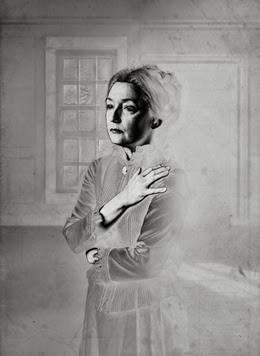
LESLEY MANVILLE (Ghosts, Almeida)
 
 
Nominees: Frances de la Tour (People); Anne-Marie Duff (Strange Interlude);
Marianne Jean-Baptiste (The Amen Corner); Helen Mirren (The Audience)

BEST ACTRESS (Musical)
 
 
CYNTHIA ERRIVO (The Color Purple, Menier Chocolate Factory)
 

 Nominees: Betty Buckley (Dear World); Rosalie Craig (The Light Princess);
Beverley Knight (The Bodyguard); Scarlett Strallen (Candide)

BEST SUPPORTING ACTOR
 
 
CHARLES EDWARDS (Strange Interlude, Lyttelton, NT)
 
 
Nominees: Will Keen (Ghosts); Richard McCabe (The Audience);
Paul Ritter (The Audience);  Peter Sullivan (The Winslow Boy)
 
BEST SUPPORTING ACTOR (Musical)


STEPHEN ASHFIELD (The Book of Mormon, Prince of Wales)
 
 
Nominees: Christian Dante White (The Scottsboro Boys); Colman Domingo (The Scottsboro Boys); James T. Lane (The Scottsboro Boys); Gary Wood (A Chorus Line)
 
BEST SUPPORTING ACTRESS

 
CECILIA NOBLE (The Amen Corner, Olivier, NT)
 
 
Nominees:  Charlene McKenna (Ghosts); Sharon D. Clarke (The Amen Corner);
Haydn Gwynn (The Audience); Cecilia Noble (Once A Catholic)

BEST SUPPORTING ACTRESS (Musical)
 

LEIGH ZIMMERMAN (A Chorus Line, London Palladium)
 
 
Nominees: Jackie Clune (Candide); Nicola Hughes (A Color Purple);
Michela Meazza (Swan Lake); Scarlett Strallen (A Chorus Line)

BEST DIRECTOR
 
 
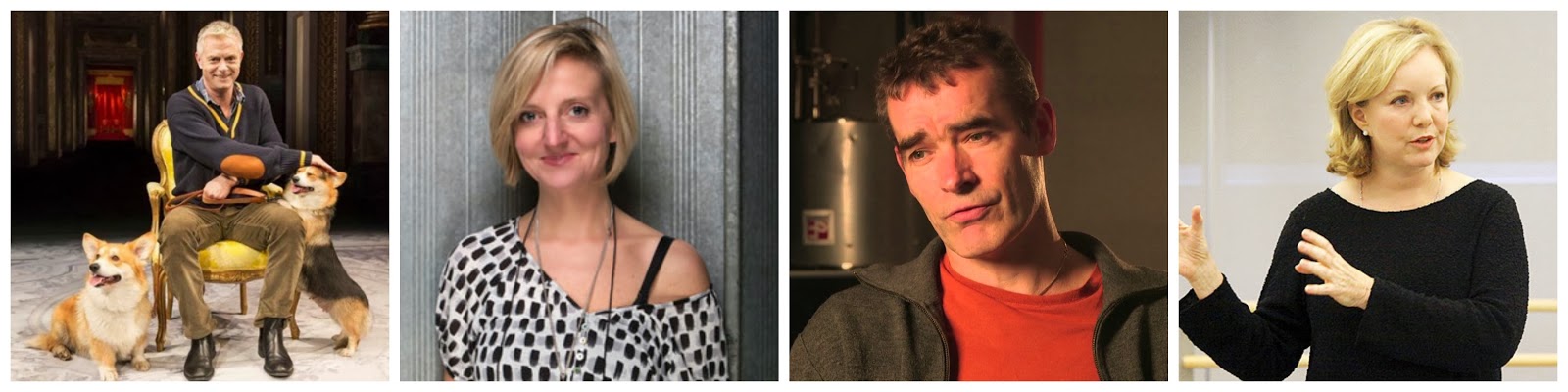
RICHARD EYRE (Ghosts, Almeida)
 
 
Nominees: Stephen Daldrey (The Audience); Marianne Elliott (The Curious Incident of The Dog In The Night Time); Rufus Norris (The Amen Corner); Susan Stroman (The Scottsboro Boys)

BEST DESIGN
 

LEZ BROTHERSTON (Sleeping Beauty, Richmond)
 
 
Nominees: Bunny Christie (The Curious Incident of The Dog In the Night Time);
John Doyle (The Color Purple); Tim Hatley (Ghosts); Rae Smith (The Light Princess)

BEST LIGHTING
 
 
PETER MUMFORD (Ghosts, Almeida)
 
 
Nominees: Ken Billington (The Scottsboro Boys);
Paule Constable (The Light Princess); Paule Constable (Sleeping Beauty);
Paule Constable (The Curious Incident of The Dog In The Night Time)

BEST CHOREOGRAPHY


SUSAN STROMAN (The Scottsboro Boys, Young Vic)
 
 
Nominees: Baayork Lee/Bob Avian/Michael Bennett (A Chorus Line); 
Matthew Bourne (Sleeping Beauty); Matthew Bourne (Swan Lake);
Peter Darling (Matilda: The Musical)