Showing posts with label Ninette de Valois. Show all posts

Friday, December 13, 2019

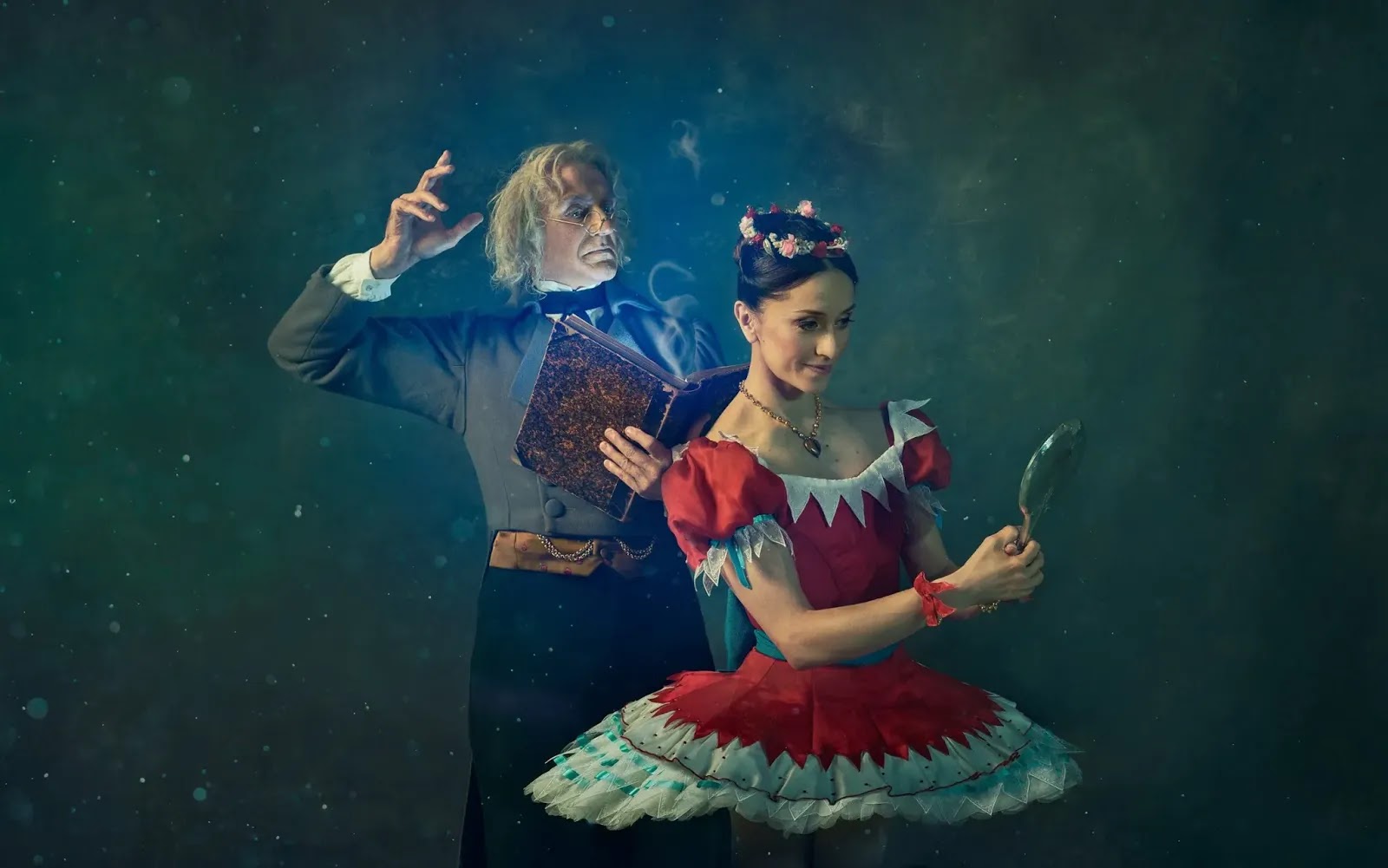
COPPÉLIA at Covent Garden - like clockwork...

In the last four years, since being swept away by The Royal Ballet's WOOLF WORKS, we have seen most of the famous ballets in the canon but one has only just been revived so I can finally tick COPPÉLIA off the list.


Léo Delibes' ballet premiered in 1870, with a libretto by Charles-Louis-Étienne Nuitter based on two stories by ETA Hoffmann, at the Paris Opera and was a big success but it's success was halted by the Franco-Prussian war and the concomitant siege of Paris by Prussian troops.  The severe food shortages that followed cost many Parisians their lives, one of which was 17 year-old Giuseppina Bozzacchi who had danced the female lead.

in 1884 Marius Petipa staged a production for the Russian Imperial Ballet which was hugely successful; in 1894 it was revived by Petipa's assistants Lev Ivanov and Mario Cecchetti and it was this production which has formed the basis for most Western productions down the years.  The original Imperial Ballet production 'bible's were smuggled out of Bolshevik Russia by Nicholas Sergeyev who staged a production with Ninette de Valois' Vic-Wells Theatre Company at Sadler's Wells in 1933.


In 1947 de Valois' ballet company became the permanent dance company at Covent Garden - eventually being named the Royal Ballet - and in 1954 she choreographed her own version based on these Imperial Ballet originals, and here we are, some 65 years later, and it is back in the Royal Ballet's repertoire after a decade away.  I am glad I saw it finally but while entertaining enough, it really doesn't hold up to too intense scrutiny.

In a small German town Swanhilda and Franz are to be married at an upcoming festival but Franz has been noticeably distracted by Coppélia, an impossibly beautiful woman who sits reading in the window of the mysterious Dr Coppelius' house and workshop.  Coppelius loses his house keys and, on finding them, Swanhilda sneaks into the house with her friends to investigate - closely followed by Franz climbing up a ladder!


Once inside they discover Coppelius has made life size clockwork dolls to keep himself company - and Coppélia is one of these.  Coppelius returns; Swanhilda hides behind a curtain with her mechanical rival just as Franz climbs through the window.  Coppelius wishes his dream doll to become alive and drugs Franz in an attempt to steal his soul for her, but Swanhilda breaks the spell by emerging in Coppélia's clothes.  The old man is delighted his creation has come to life but is left in despair when he realizes it's a trick when Swanhilda and Franz escape.  Cue a happy ending in the town square...

There are dark areas in the plot which could be explored - Franz' speed at falling in love with another girl, the eerie workshop of mechanical people who come to life when Swanhilda investigates, Coppelius' wish to kill Franz for his soul, and his sadness when he discovers Coppélia did not come to life - but none of it is really explored and all one is left with is the folksy aspects of the fairy tale.


To be honest I found de Valois' choreography to be fairly uneventful - pretty but hardly memorable - but Delibes's music was lovely and this production is blessed with Francesca Hayward's spirited and fun Swanhilda, Alexander Campbell's bouncy Franz and Gary Avis excelling as Coppelius, not too far from his memorable performance as Drosselmeyer in THE NUTCRACKER only this time he does not have a cloak to swirl around.

I am sure the Royal Ballet have found in COPPÉLIA a good substitute for their Christmas perennial THE NUTCRACKER and I am glad I have finally seen it but I suspect I will not be wanting to see it again.


Saturday, November 23, 2019

THE SLEEPING BEAUTY at Covent Garden - Wakey Wakey!

I think we were very brave returning to Covent Garden as our last visit to The Royal Ballet saw us witness the heartbreak of Steven McRae injured mid-performance during MANON.  Happily  I can report that we counted all the dancers onto the stage and we counted them all off safely.  More importantly, it was a real pleasure to see THE SLEEPING BEAUTY again, still a jewel in the RB's crown.


It has been around for such a long time that quite a few names can claim some ownership of it.  Originally created in 1890 by legendary Russian choreographer Marius Petipa, his original Imperial Ballet production 'bible's were smuggled out of Bolshevik Russia by Nicholas Sergeyev who staged his own production at Sadler's Wells in 1939.

In 1947 Ninette De Valois' Sadler's Wells Ballet company were given the honour of becoming the permanent dance company at Covent Garden - which had been a dance hall during WWII! - and she decided that, to match the building coming back to life, her first production would be Petipa's THE SLEEPING BEAUTY with picture-book designs by Oliver Messel.


De Valois' production stayed in the repertoire for over 20 years then several new productions replaced it until the Dame's was brought back, redirected by then-Royal Ballet Director Monica Mason with Christopher Newton, in 2006 to celebrate the Royal Ballet's 75th Anniversary and it has stayed ever since; however it has since interpolated certain choreographed contributions from Sir Frederick Ashton, Sir Anthony Dowell and Christopher Wheeldon.

As I said it is still going strong - we saw it's 910th performance - but again I find it strange to be seeing a production that is relatively the same as has been done for years; no matter how acclaimed a theatre production, they are rarely revived after more than a year.  It would be nice if someone could look at the tired 'pantomime' actions between the dances; it does rather turn into dance for the deaf with the gesticulations for beauty, sleep etc.


As I said Steven McCrea was injured during the run of MANON so Prince Florimund was danced by Reece Clarke and Akane Takada was off too so Aurora was danced by Fumi Kaneko who really rose to her challenge of the famous Rose Adagio, a dazzling display of movement, balance and stillness as Aurora dances with four visiting princes.

There was fine support from the marvellous Itziar Mendizabal dancing the role of The Lilac Fairy exquisitely, Christine Arestis was very boo-able as the Wicked Fairy Carabosse, and a special mention for James Hay as the always leaping and spinning Bluebird in the finale.  Tchaikovsky's remarkable music sounded lustrous under the baton of Simon Hewitt.


I had been in two minds about seeing THE SLEEPING BEAUTY when it was obvious that Steven McRae would not be dancing but I am glad I did - the many artists who worked down the years to make it created a legendary classic.


Tuesday, February 28, 2017

THE SLEEPING BEAUTY at Covent Garden - Awake again...

The Royal Ballet's THE SLEEPING BEAUTY was the third in an unconsciously-booked ballet triple bill and found us back in the front row of the amphitheatre circle at the Royal Opera House, Covent Garden.  After the Royal Ballet's own haunting WOOLF WORKS and Matthew Bourne's entertaining EARLY ADVENTURES it was time for something a bit more classical, and they don't come more classic than Marius Petipa's THE SLEEPING BEAUTY.


Again I was struck by the actual history behind the production: in 1947 it was decided that Ninette De Valois' Sadler's Wells Ballet company would be the permanent dance company at Covent Garden - which had been turned into a dance hall during WWII! - and she decided that, to match the building coming back to life, her first production would be THE SLEEPING BEAUTY. 

It was largely based on a 1939 production by Nicholas Sergeyev who had fled Bolshevik Russia in 1919, bringing with him the Imperial Ballet 'bibles' for the productions of the great choreographers Marius Petipa and Lev Ivanov.  Thanks to his actions, these classic productions have lived on through the years so, bearing in mind Petipa created his SLEEPING BEAUTY choreography in 1890, in essence we were watching moves that were 127 years old!


De Valois' production stayed in the repertoire for over 20 years but different productions came and went until the hers was brought back in 2006 to celebrate the Royal Ballet's 75th Anniversary and it has stayed ever since, using the original stage designs of Oliver Messell (revised for changes in the size of the stage and in new costume techniques).  Certain sections of Petipa's choreography have been added to down the years by Sir Frederick Ashton, Anthony Dowell and Christopher Wheeldon.

As I have said previously, it is quite odd to bear all this in mind when watching the ballet; we don't go to the theatre to see Michael Elliot's production of AS YOU LIKE IT which catapulted Vanessa Redgrave to fame in 1961 or Michel Saint-Denis's 1936 production of THREE SISTERS, let alone Peter Brook's 1956 TITUS ANDRONICUS - no matter how acclaimed a theatre production, they are rarely revived after more than a year.


Of course, The Royal Ballet can be accused of running a museum theatre but thanks to the consistent quality of their dancers, the ballet always triumphs - one had only to witness the stolid Bolshoi productions from last year to see The Royal Ballet's quality.  The most glaringly old-fashioned part of the production was the over-the-top miming that passes for performance when they are not dancing: circling around the face to show how beautiful Aurora is, gesturing to objects, resting a head on outstretched arms to show sleep... it eventually suggested dancing for the deaf.

There was added drama just as the lights went down when Director of the Royal Ballet Kevin O'Hare stepped out from the famous red curtains to announce that due to the illness of Lauren Cuthbertson, the role of Aurora would be danced by Yasmine Naghdi and the Prince would be danced by Matthew Ball who had both debuted in the roles the previous Saturday.  Both were fine, Naghdi was a bit under-whelming at the start but she shone in the famous Rose Adagio in which Aurora dances a dazzling solo of movement and balanced stillness.


If I am honest, I wasn't ever emotionally swept away by the story; all the pantomime acting and the odd pacing of the story - our hero finally appears an hour and 50 minutes after kick-off - and any ensemble number where the women have floral bowers to wave about always set my teeth on edge, but the quality of the performance was so high that there was plenty to enjoy.

There were fine supporting performances from Hayley Forskitt as the evil Carabosse and Tierney Heap as her good nemesis The Lilac Fairy while there was also exquisite work from Helen Crawford as a skittish Fairy of The Golden Vine and James Hay as the scene-stealing Bluebird in the final wedding scene.  Tchaikovsky's score sounded sumptuous under the baton of Koen Kessels.


 I am glad to have finally seen this important work in the Royal Ballet's repertoire but as the piece has occasionally been added to over the years maybe it is time to have a look at maybe making the non-dance moments not so archaic?


Friday, May 27, 2016

JEKYLL & HYDE at the Old Vic - dancing into danger....

After the ghastly DOCTOR FAUSTUS it was with some trepidation that I went to the Old Vic to see Drew McOnie's JEKYLL & HYDE, the first ballet to be staged there in awhile.  The theatre holds a very special place in British ballet history as in 1925 Lilian Baylis, the legendary owner of the Old Vic, offered the Irish-born dancer Ninette de Valois the chance to not only choreograph their straight plays but also to stage ballets there and in her other theatre, Sadler's Wells.  This eventually led to the formation of what would become the Royal Ballet, the Royal Ballet School and the Birmingham Royal Ballet.


Drew McOnie has become an award-winning choreographer after a career as a dancer and with JEKYLL & HYDE is staking a claim as 'the new' Matthew Bourne, who McOnie is a former company member.  Like Bourne, McOnie is dividing his work between choreographing musicals and his own narrative ballets and JEKYLL & HYDE resembles Bourne's work in that it sifts it's dramatic moments with dashes of humour.

McOnie has updated Robert Louis Stevenson's classic tale to the 1950s and Grant Olding matches this in his score which has echoes of the cool jazz style of Dave Brubeck.  McOnie has also done an odd rewrite so the gentlemanly Jekyll works as a florist by the day and a geek scientist at night.  All this did was make it feel at times like it was a ballet version of LITTLE SHOP OF HORRORS.


Jekyll falls in love with the willowy Dahlia who is also loved by the thuggish Charlie but all this changes when the suave and dangerous Hyde appears.  Also falling under Hyde's spell are a sexy couple he meets in a club - McOnie tends to let the 50s vibe slip in these scenes which seem to be set in a very contemporary world.  However while Jekyll chases Dahlia, he fails to notice his shop assistant Daisy who is quietly pining away for him.  Needless to say by the end of the piece the body count almost matches HAMLET.

I enjoyed JEKYLL & HYDE but there were times when it's swinging, breezy jazz score allied to a curdling whimsy tended to swamp the more sombre moments of the story.  It's 1950s setting gives McOnie the chance to draw from the MGM musical era for his Jekyll-Dahlia choreography and at times his 'homages' were a bit too obvious.  I really felt on reflection that we needed to see more of Mr Hyde than was allotted in the scenario, the story should feel like a seesaw between good and evil and we seemed to spend too much time in the sun.


What is most exciting about the production is the marvellous company that McOnie has assembled and who all deliver fine individual performances while at the same time working as a dynamic ensemble.  The excellent Danny Collins - late of SHOW BOAT - shines as Jekyll as he bounces and boings all over the stage, seemingly going in two places at the same time and deploying a warm, winning charm that makes you want Jekyll to win his schizophrenic battle with his alter ego.  Hyde was danced by Jason Winter in an imposing manner but without much personality or real sense of danger.

There was excellent work from Barnaby Thompson and Ebony Molina as the couple who sexually tangle with Hyde, Molina in particular was wonderfully seductive and exuded a earthy sensuality.  The two women in Jekyll's life were danced by the elegant Rachel Muldoon as his dream date Dahlia while Alexzandra Sarmiento was a delight as shopgirl Daisy.


After bemoaning the cramped and ugly set she designed for DOCTOR FAUSTUS, here Soutra Gilmour gave McOnie's production a simple but very clever metal central frame with four mesh walls which quickly and effectively rotated to transform the scene from shop to workroom to club.  Richard Howell's lighting design was excellent, suggesting the changing moods within the story with style.

With a running time of an hour 50 minutes it didn't outstay it's welcome and I would be happy to see it again should it return to the West End.  If the cheers that greeted the company at their curtain call prove anything it's that Old Vic artistic director Matthew Warchus should find room for it in his coming season and possibly give it a longer run than it's current week-long residency.