Showing posts with label Philip Quast. Show all posts

Tuesday, September 24, 2019

50 Favourite Musicals: 12: SUNDAY IN THE PARK WITH GEORGE (1984) (Stephen Sondheim)

The 50 shows that have stood out down the years and, as we get up among the paint cards, the shows that have become the cast recording of my life:


 First performed: 1984, Booth Theatre, NY
First seen by me: 1990, Lyttelton Theatre, London
Productions seen: three
  
Score: Stephen Sondheim
Book: James Lapine

Plot: Paris, 1884: The impressionist painter Georges Seurat obsessively works on his large pointillist painting A SUNDAY AFTERNOON ON THE ISLAND OF LA GRANDE JATTE despite the ridicule of the public and critics; George is also unaware of his mistress Dot's growing resentment until she leaves him.  Despite all this, he finishes his masterpiece.  A hundred years later, Seurat's great-grandson George fears his own artistic vision is fading..

Five memorable numbers: SUNDAY, CHILDREN AND ART, FINISHING THE HAT, PUTTING IT TOGETHER, MOVE ON

So here we go.  Each musical I choose from now on are the ones which mean the most to me, the ones that all feature indelible memories of songs or stage and screen images; these are the ones that on any other day might appear higher up in the chart.  So why does SUNDAY not make it to the Top 10?  A certain austere distancing in James Lapine's book which makes it easy to admire but difficult to love?  The tricky second act where, after the lovely opening scene where each of the painting's characters relate the history of LA GRANDE JATTE and the fate of Seurat, it then pitches into the 1984 sequence which, in essence, entails the audience having to warm to a prickly new lead character too late in the day?  The character of Dot which feels sketched in at best and should be more pronounced?  After the shock Broadway failure of MERRILY WE ROLL ALONG in 1981 which severed forever the working relationship between Sondheim and his longtime director-producer Hal Prince, Sondheim felt disenchanted with musical theatre.  However when he was approached by the younger playwright-director James Lapine he found a new impetus to do something different, more experimental.  Lapine suggested the teasing enigma of Seurat's painting and that was the spur.  The first-ever showing of SUNDAY was at the Off-Broadway not-for-profit theatre Playwrights Horizons for 25 performances only.  When it opened Lapine and Sondheim had only the first act completed - the full show was only staged for the last three performances.  Despite this they still managed to get the show financed for a Broadway transfer in 1984.  Mandy Patinkin and Bernadette Peters, while known stars, had never appeared in a Sondheim show before and despite their frustrations during the Playwrights Horizons run in trying to shape their characters while half the score still was being worked on, they both opened on Broadway and both received Tony Award nominations.  Bernadette was particularly frustrated in the under-developed role of Dot which was only solved when Sondheim's friend playwright John Guare suggested that while Seurat is painting his masterwork maybe Dot can be learning to read?  Dot's joy in bettering herself is all the more cruelly dashed as Seurat is so absorbed in his art.  Sondheim and Lapine also gifted the actress playing Dot with the second act role of Marie, Dot's 98 year-old daughter, before Dot appears again in the final scene which ties in all the strands of the three lead characters.  Lapine's Broadway production was nominated for 10 Tony Awards but only won two design awards, it was the year of the feel-good juggernaut LA CAGE AUX FOLLES which beat SUNDAY in most of the bigger awards; however it did better at the Drama Desk Awards where it won 8 of it's 13 nominations including Best Musical.  By a stroke of luck just as the Box Office was starting to slow down SUNDAY won the Pulitzer Prize for Drama which perked the Box Office up again and the show closed after a year, the good news being that a week after it closed, the cast returned to film it for television which is now available on DVD.


I had to wait six years to see the show - after having fallen in love with Sondheim's score through the original cast recording - but found that National Theatre production disappointing as Maria Friedman failed to soar to Bernadette Peters' artistry but Philip Quast was an excellent Georges / George, deservedly winning the Olivier Award for Best Actor in A Musical.  It also won Best New Musical - beating Sondheim and Lapine's London production of INTO THE WOODS!  It would be 15 years before another London production came along but this time it was the Menier Chocolate Factory's game-changing production which incorporated the wonderful designs of Timothy Bird's digital projections which flooded the stage with colour and fluid movement.  Used with economy and wit, the digital animations were a total delight with nice touches such as the ensemble leaving the onstage 'tableau' of the painting one by one at the start of the second act, while their character digitally reappeared in the original painting behind them hanging on the Art Institute of Chicago's wall.   More importantly they did not distract from the performances particularly that of Daniel Evans who had never been better than as Georges / George.  This production also marked my first time visiting the Menier and it has stayed in my mind as one of their finest productions.  Sam Buntrock's production transferred first to the West End where Evans was joined memorably by Jenna Russell as Dot and then to Broadway in 2008 where I saw it with Owen and my late friend Dezur at Studio 54.  This production was nominated for 7 Tony Awards but failed to win any as it was the year of two other all-conquering revivals of SOUTH PACIFIC and GYPSY.  However Buntrock's production triumphed at the Olivier Awards winning 5 of it's 6 nominations including Best Musical.  But above all, there is Sondheim's wonderful and challenging score - the score shows itself as Sondheim's most personal to date, in particular his glorious solo for Georges "Finishing The Hat" in which he wonderfully encapsulates the joy of the artist in creating something from nothing while acknowledging the personal cost that brings.  Whatever failings the book has, the score for SUNDAY is the one that effects me the most emotionally.  The three songs that finish the first act floor me - Dot's farewell "We Do Not Belong Together" usually starts me off. Georges' duet with his mother "Beautiful" keeps the snuffles on a fairly low-light and then the tears just flow during the final song "Sunday".  One of the most beautiful melodies ever, it's sung softly by the characters in Seurat's painting as he moves around them, arranging them into the final 'tableau' that will freeze as A SUNDAY AFTERNOON ON THE ISLAND OF LA GRANDE JATTE - It gets me EVERY time - and I'm not talking one tear trickling down my cheek, I am talking seat-row-shuddering sobs.  To make things worse, the three last songs of the second act mirror this: George's despairing "Lesson #8", George and Dot's empowering "Move On" and a final reprise of "Sunday"; floods... just floods.

My video choice has to be the first act finale of the filmed original Broadway production with Mandy Patinkin and Bernadette Peters.  The DVD has a commentary by Sondheim, Peters and Patinkin - and Sondheim and Patinkin start to blub during this scene so I am in good company.  Let's see if the score works it's potent magic on me next year when I see it at the Savoy with Jake Gyllenhaal and and Annaleigh Ashford who are repeating their roles of Georges / George and Dot / Marie from the last Broadway revival in 2017.

Monday, January 01, 2018

and the envelope please...

It's the end of the year so apart from comedy fireworks going off everywhere it also means it's time for the 11th Annual Chrissies...it's the one that they want.

BEST DRAMA (Original/Revival)
THE FERRYMAN - Jez Butterworth (Gielgud)

Nominees:
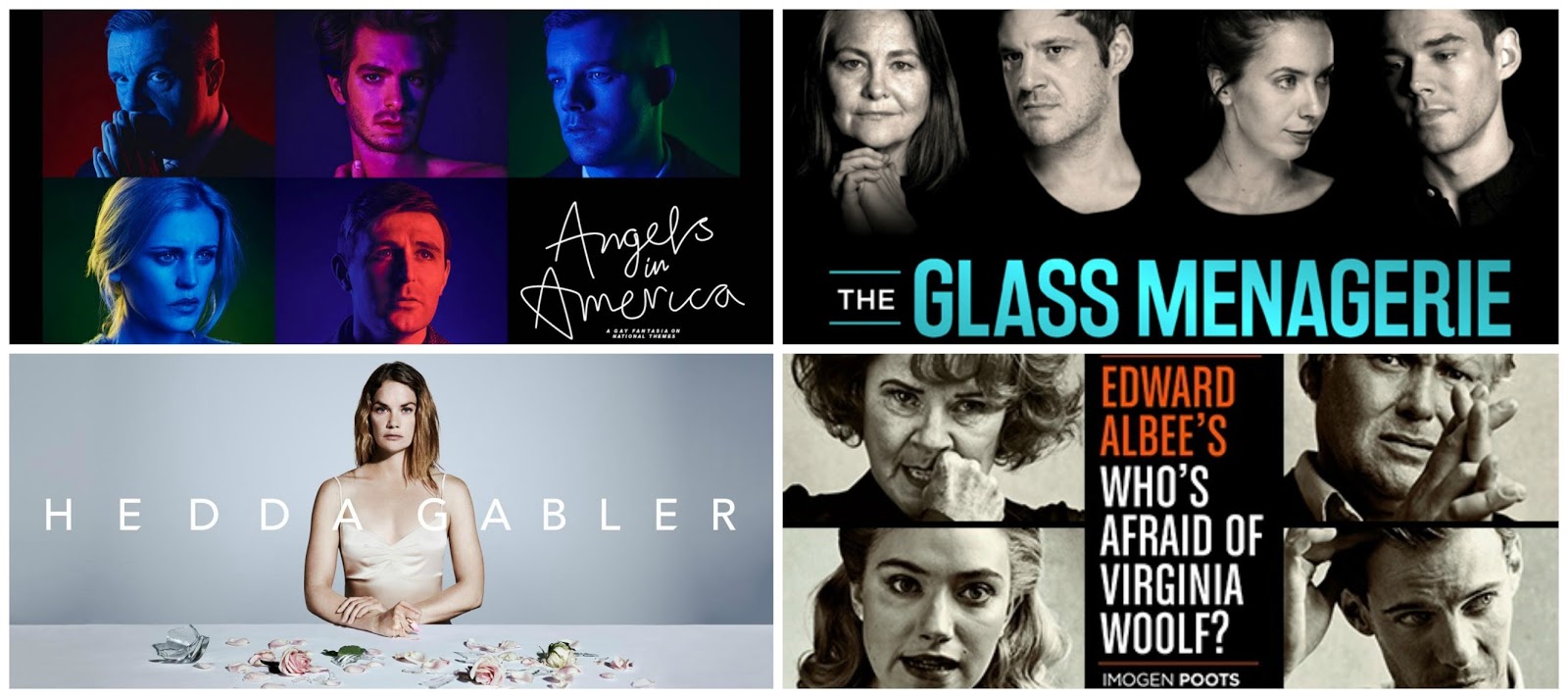
ANGELS IN AMERICA (Lyttelton) / THE GLASS MENAGERIE  (Duke of Yorks) /
HEDDA GABLER (Lyttelton) / WHO'S AFRAID OF VIRGINIA WOOLF? (Harold Pinter)

 BEST MUSICAL (Original/Revival)
 FOLLIES - Stephen Sondheim (Olivier)

 Nominees:
AN AMERICAN IN PARIS (Dominion) / EVERYBODY'S TALKING ABOUT JAMIE (Apollo) / 42nd STREET (Drury Lane) / THE LIFE (Southwark Playhouse)

BEST BALLET/OPERA
 ALICE'S ADVENTURES IN WONDERLAND - Christopher Wheeldon (Covent Garden)

Nominees:
THE DREAM; SYMPHONIC VARIATIONS; MARGUERITE AND ARMAND (Covent Garden) / FLIGHT PATTERN (Covent Garden) / JEWELS (Covent Garden) / MAYERLING (Covent Garden)

BEST ACTOR (Drama)
 ANDREW SCOTT - Hamlet (Almeida)

 Nominees:
SIMON RUSSELL BEALE (The Tempest) / PADDY CONSIDINE (The Ferryman) /
BRYAN CRANSTON (Network) / CONLETH HILL (Who's Afraid of Virginia Woolf?)

BEST ACTRESS (Drama)
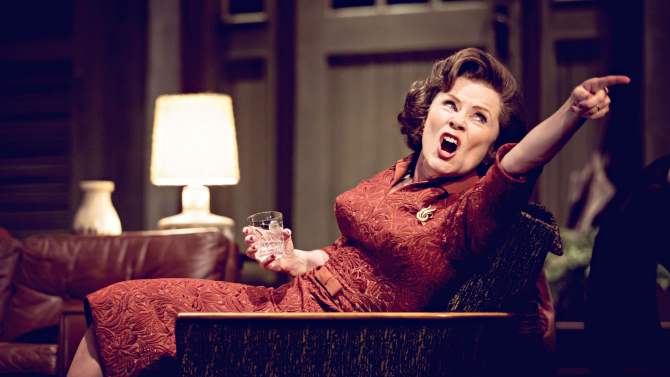
IMELDA STAUNTON - Who's Afraid of Virginia Woolf? (Harold Pinter)

Nominees:
LAURA DONNELLY (The Ferryman) / CHERRY JONES (The Glass Menagerie) / 
 AUDRA McDONALD (Lady Day at Emerson's Bar & Grill) / RUTH WILSON (Hedda Gabler)

BEST ACTOR (Musical)
 PHILIP QUAST - Follies (Olivier)

Nominees:
ROBERT FAIRCHILD (An American in Paris) / ALEXANDER HANSON (...Committee...)
/ TOM LISTER (42nd Street) / JOHN McCREA (Everybody's Talking About Jamie)

BEST ACTRESS (Musical)
 IMELDA STAUNTON - Follies (Olivier)

 Nominees:
JANIE DEE (Follies) / CLARE HALSE (42nd Street) / 
SANDRA MARVIN (...Committee...) / JOSIE WALKER (Everybody's Talking About Jamie)

BEST SUPPORTING ACTOR (Drama)
NATHAN LANE - Angels In America (Lyttelton)

Nominees:
STUART GRAHAM (The Ferryman) / JOHN HODGKINSON (The Ferryman) /  
NATHAN STEWART-JARRETT (Angels In America) / PETER WIGHT (Hamlet)

BEST SUPPORTING ACTRESS (Drama)
DEARBHLA MOLLOY - The Ferryman (Gielgud)

Nominees:
BRID BRENNAN (The Ferryman) / SUSAN BROWN (Angels In America) / 
 KATE O'FLYNN (The Glass Menagerie) / JULIET STEVENSON (Hamlet)

BEST SUPPORTING ACTOR (Musical)
PETER FORBES - Follies (Olivier)

 Nominees:
MARK HADFIELD (Pinocchio) / CORNELL S. JOHN (The Life) / 
CHRIS KIELY (Yank!) / ANTHONY O'DONNELL (...Committee...)

BEST SUPPORTING ACTRESS (Musical)
 SHARON D. CLARKE - The Life (Southwark Playhouse)

Nominees:
JOSEPHINE BARSTOW (Follies) / DI BOTCHER (Follies) / 
DAWN HOPE (Follies) / LUCIE SHORTHOUSE (Everybody's Talking About Jamie)

BEST BALLET/OPERA MALE
AKRAM KHAN - Desh (Sadler's Wells)

Nominees:
DANNY COLLINS (Early Adventures) / STEVEN McRAE (The Dream) / 
STEVEN McRAE (Rubies) / LIAM MOWER (Cinderella)

  BEST BALLET/OPERA FEMALE
 ZENAIDA YANOWSKY - Marguerite and Armand (Covent Garden)

 Nominees:
LAUREN CUTHBERTSON (The Judas Tree) / LAUREN CUTHBERTSON (Mayerling) / ALESSANDRA FERRI (Woolf Works) / ZENAIDA YANOWSKY (Symphonic Dances)

BEST DIRECTOR
DOMINIC COOKE - Follies (Olivier)

Nominees:
MARIANNE ELLIOTT (Angels in America) / IVO VAN HOVE (Hedda Gabler) / 
JAMES MACDONALD (Who's Afraid of Virginia Woolf?) / SAM MENDES (The Ferryman)

BEST DESIGNER
 VICKI MORTIMER - Follies (Olivier)

 Nominees:
BOB CROWLEY (Alices's Adventures in Wonderland / BOB CROWLEY (An American In Paris) / IAN MacNEIL (Angels in America) / JAN VERSWEYVELD (Hedda Gabler)

BEST LIGHTING
  PAULE CONSTABLE - Angels in America (Lyttelton)

Nominees:
PAULE CONSTABLE (Follies) / NATASHA KATZ (An American In Paris) / 
NATASHA KATZ (The Glass Menagerie) / JAN VERSWEYVELD (Hedda Gabler)

BEST CHOREOGRAPHY (Musical)
 BILL DEAMER - Follies (Savoy)

Nominees:
TOM JACKSON GREAVES (The Life) / KATE PRINCE (Everybody's Talking About Jamie) / RANDY SKINNER, GOWER CHAMPION (42nd Street) / CHRISTOPHER WHEELDON (An American in Paris)

BEST CHOREOGRAPHY (Ballet)
CRYSTAL PITE - Flight Pattern (Covent Garden)

Nominees:
FREDERICK ASHTON (Marguerite and Armand) / KENNETH McMILLAN (Mayerling) / KENNETH McMILLAN (The Judas Tree) / CHRISTOPHER WHEELDON (Alice's Adventures in Wonderland)

Sunday, September 10, 2017

FOLLIES at the National Theatre - Now and Forever....

Since first sitting in the Olivier theatre on 6th August 1982 for Richard Eyre's legendary GUYS AND DOLLS, I have sadly seen my fair share of dog shows on that stage, and every time I have endured an EDWARD II or a WONDER.LAND, my mind has wandered to shows I would love to see on that stage and the one that always swayed to the front, glittering with beads and feathers, was Stephen Sondheim's FOLLIES.  And now it's here...


It has been such a long-held dream of mine to see FOLLIES there that I felt very nervous leading up to the lights going down as the first ghostly showgirl made her appearance on Vicki Mortimer's crumbling backstage set.  I must admit to having a few niggles with Dominic Cooke's production but as Imelda Staunton's Sally sings, "I'm so glad I came".

In 1965, Sondheim and writer James Goldman were looking for a project to collaborate on when Goldman had the idea of a murder mystery set at a reunion of showgirls.  Over the years the plot kept tripping them up but both loved the idea of the showgirls reunion and how regrets for what one did and more importantly didn't do, can haunt your life.  When Hal Prince became involved as director, he remembered a 1960 Life magazine photograph of a glamorous but fragile Gloria Swanson standing amidst the rubble of the Roxy cinema in New York which had opened with her film THE LOVES OF SUNYA. Prince felt this captured the essence of the project - the survivor, the glamour and the ruin.


It's 1971 and the Weismann Theatre is to be demolished to make way for a car park. The former owner Dimitri Weismann invites former stars and show-girls of his inter-war "Follies" productions to a first (and last) reunion onstage, the night before the demolition.  The guests compare how they have survived out of the spotlight but cannot resist running through their old numbers.  Among the guests are Phyllis and Ben Stone & Sally and Buddy Plummer - when they were showgirls in 1941, Phyllis and Sally were room-mates being courted by best friends Ben and Buddy but during the joint courtship, Ben led Sally to believe he loved her; he rejected her however and married Phyllis, and although Sally married Buddy she has never stopped obsessing about Ben.

Eventually the two couples finally confront each other - Sally reproaches Buddy for his mistresses while Buddy tells her it's only because she has shut him out emotionally while obsessing about Ben; Ben feels his life as a politician has been a lie and foolishly lets Sally believe he still loves her, while Phyllis accuses Ben of turning her into a frigid trophy wife and never really appreciating the real her.  As they argue with themselves - and the ghosts of their younger selves - it leads to an explosion of fantasy: they find themselves starring in their own "Follies", each singing a solo number which expresses their dilemma.  But the illusion cannot last forever...


Hal Prince's 1971 production ran for 522 performances but closed at a loss of over $720,000, due of the huge costs involved and audience ambivalence - despite 'names' like film stars Alexis Smith and Yvonne de Carlo, 1950s tv singer Dorothy Collins and veterans Ethel Shutta and Fifi D'Orsay, audiences found Goldman's book too downbeat.  It won seven of the ten Tony Awards it was nominated for but failed to win Best Musical.  Cult status grew through the original cast album but sadly Capitol Records would only release it as a single album, losing a lot of the score.  The show has had two further Broadway revivals in 2001 and 2011, but lost out winning the Best Musical Revival Tony Award both times.

1985 was the year FOLLIES hit me!  The lack of a full cast recording led to the decision to stage a concert version in New York to be recorded featuring the full song score with the jaw-dropping cast of Barbara Cook, Lee Remick, George Hearn, Mandy Patinkin, Elaine Stritch, Carol Burnett, Betty Comden and Adolph Green, Liliane Montevecchi et al.  But before this, I had already seen my first production of the show in Wythenshawe, Manchester.  Directed and choreographed by Paul Kerryson, the production swept me away and made me yearn for a London transfer.  However, when FOLLIES opened in 1987 at the Shaftsbury Theatre, it was a new production directed by Mike Ockrent. 


Cameron Mackintosh had asked Goldman and Sondheim if they would 'revisit' the work to make the tone more optimistic.  Goldman was happy to, Sondheim less so.  One night I was outside the Shaftsbury stage door after seeing a preview and Sondheim came out on his own.  While he signed my programme I told him I had seen the Manchester version, he shot me a look and asked which I preferred.  Cautiously I said that, although loving Julia McKenzie, David Healy, Dolores Gray and Lynda Baron, I felt that Manchester was better.  He replied that while shows can always stand a revision it was always possible to return to the original.  Point taken Steve...

Nineteen years later FOLLIES turned up at the Landor Theatre which seated a mere 48 in a production which made up for it's lack of grandeur with a cast guaranteed to have any musicals fan of the 1980s hug themselves with delight - Sarah Payne, Claire Moore, Adele Anderson, Rachel Izen, Carol Ball, Roni Page - my blog of that production is here.  But now here it is at the National Theatre, in a production that looks back to Hal Prince's original, in particular without the sub-par songs Sondheim wrote for the 1987 production and it plays straight through with no interval.


This is Dominic Cooke's debut musical production and if you think FOLLIES is too big an ask for a debut you would be wrong as Cooke handles the production with a thoroughness of vision which allows the musical numbers to flourish and stake their claim on the Olivier stage but is just as thorough at the emotional trauma the four main characters inflict amid the nostalgia.

I grew to like Vicki Mortimer's design but wanted to remind her that the wrecking-ball arrives the day after the reunion not the day before as her set was like a bombsite at the best of times, however Paule Constable's lighting was a wonder and Bill Deamer's choreography is also a pure delight, especially in the wonderful WHO'S THAT WOMAN where the aging showgirls gamely go through their steps unaware that they are being matched step-for-step by the shadows of their former selves.


When the production was announced I was excited as to who would be cast, imagining the National Theatre could and should get together some West End musical veterans who would rival MGM's slogan "More Stars Than There Are Heaven".  Well that didn't happen which is where I have a niggle with the production.  The pure joy of the Landor production, as I said earlier, was to see so many musical performers from the 1980s playing the ex-showgirls; FOLLIES cries out for that recognition of the history behind each of the performers.  Sadly the NT didn't do this so although ultimately it's a whinge probably only I have, I think a trick was missed out on.

My other stumbling block was with Tracie Bennett as Carlotta Campion, the Weismann girl who couldn't quite make it on stage but who found fame, first as a film star then as a tv actress.  As I suspected might happen, Bennett dispensed with a character all together and sang Carlotta's cri-de-coeur I'M STILL HERE as if reprising her Judy Garland role in OVER THE RAINBOW.  More than ever, some identification with the actress playing Carlotta works wonders - most notably when Dolores Gray then Eartha Kitt made it such a tour-de-force in the 1987 London production - but here it was just Tracie Bennett doing her shtick.


But why then did you see me wiping tears of happiness away at more than one occasion?  Because, despite those niggles, I was presented with the production of FOLLIES I have yearned for all those years.  Because when it hits, it hits hard and, despite Tracie Bennett, there are astonishing performances wherever you look.  It was a given that Imelda Staunton would be a great Sally but she is such an astonishing performer that she mines down within the character to find the raw, festering yearning that Sally has nursed for Ben, making her life as a wife and mother a sham.  To quote Neil Simon, Sally is worse than a hopeless romantic she's a hopeful one and watching that dream die in her was Imelda's triumph.

Janie Dee was equally great as Phyllis, the woman who once told Ben that she would read all the right books to make herself worthy of him and who now realizes that in doing so, she lost her most vital possession - herself.  A real treat was to see how a dropped idea from the 1971 production was re-used here: Hal Prince wanted Sally and Phyllis' Follies solos to be tributes to Jean Harlow and Rita Hayworth but it was dropped as it just didn't seem to fit - but here Cooke has Sally singing LOSING MY MIND in a white on white Harlow-esque boudoir while Phyllis' THE STORY OF LUCY AND JESSIE is shake and shimmied to as in a Hayworth film like MISS SADIE THOMPSON.


The real success of the show is Philip Quast as Ben, the man everyone looks up to as a shining beacon of success but who inside cannot understand why.  Owen asked me before were there any songs I didn't like and I said it was Ben's THE ROAD YOU DIDN'T TAKE but in Quast's deft handling it landed wonderfully.  Peter Forbes as Buddy was a little out-of-his-depth but then I was so bowled over by the late and great David Healy in the 1987 production that anyone would struggle.  Of the younger shadows, Zizi Strallen and Alex Young as the 1940s Phyllis and Sally really stood out.

The truly astonishing thing about FOLLIES is that Stephen Sondheim floors you with a fantastic song only to follow it up soon after with another.  It Is a credit that Dominic Cooke keeps the tension throughout and it doesn't become a stop-start affair of big numbers stopping the show, one after the other.  Di Botcher comes out swinging for BROADWAY BABY which was all the sweeter for being from someone I had always looked on as a play-as-cast performer - believe me, that song was still travelling when it hit the Olivier's back wall!  Dawn Hope invests WHO'S THAT WOMAN? with plenty of attitude and sass - she's come a long way since Crystal in LITTLE SHOP OF HORRORS at the Comedy.


But the one that utterly floored me was ONE MORE KISS which is sung supremely by Josephine Barstow as Heidi Schiller, the oldest of the Weismann girls who, before leaving the stage for the last time, sings the operetta aria that Oscar Straus wrote for her - or was it Franz Lehar?  A sad, lilting song of farewell, Heidi sings it to herself but also to Weismann who was once a lover who watches from the shadows, the song made doubly poignant as she is joined by her younger operatic self.

That the production managed to cast one of Britain's great operatic divas for the role is special enough, but within the short space of the song, you could hear a pin drop as her voice soared around the auditorium joined by Alison Langer as her younger self.  In a score of unstoppable great musical moments this was one to treasure.  Hopefully next time, Dame Josephine will be lit to fit her status.. someone should have given the follow-spot op a nudge.


I will be seeing FOLLIES again at the end of the month; by which time the wobbly preview ticks - Barstow's missed lighting, the feedback that distracted during Janie Dee's COULD I LEAVE YOU and the slightly unfocused ending - will be sorted.

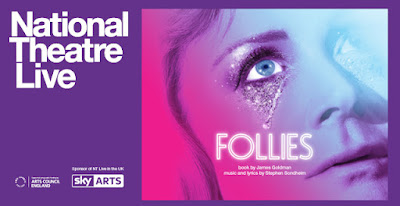
As it is, FOLLIES is nigh-on perfect; an American classic given the production it deserves on our leading stage. Surely a cast recording must follow on?  If you are unlucky enough not to to have booked a ticket already, the great news is that FOLLIES will be filmed live as part of the NT Live series and shown simultaneously in cinemas in the UK and abroad.on 16th November.

Clink the image to see where it's playing near you:

http://ntlive.nationaltheatre.org.uk/productions/63102-follies

Constant Reader, if you have ever loved this blog... go!

The ghostly Weismann showgirls are waiting to walk their stage just one more time...