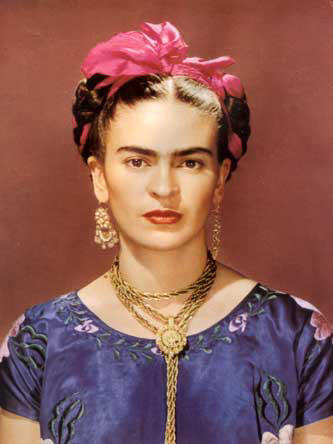
Showing posts with label Frida Kahlo. Show all posts

Tuesday, June 22, 2021

Exit Through The Giftshop - Pictures At An Exhibition #23

More memories from viewings past...

1) BAPTISM OF THE NEOPHYTES (1427) - Masaccio

I bought this when I saw the remarkable frescos in the Brancacci Chapel within the Church of Santa Maria del Carmine in Florence.  The frescos can only be viewed on short timed visits, you enter through the cloisters next to the church, so the vibrant paintings are not damaged by constant visitors.  Masaccio began his frescos in 1425 but stopped when he had to travel to Rome in 1428 where he died aged only 27.  Filippino Lippi completed them 55 years later.  

St. Peter is seen baptizing believers in a river, a supplicant kneels before him as the holy water runs over his head, the river eddying around his knees.  Again, one is drawn to the remarkable cast of characters - the man who is waiting to be baptized who is obviously already freezing, the acolyte of Peter who is helping the man undress in the queue and, at the back, a man in a green tunic who really looks like he is thinking "What have I let myself in for?" as he looks nervously around him. 

2) LADY WITH CAPE AND HAT (1890) - Gustav Klimt


This was bought at the Royal Academy exhibition of drawings by Klimt and Egon Schiele from the Albertina Museum in Vienna in 2018.  The Albertina has for many years been the main research centre for the artist's life and work.  Klimt drew this haunting composition using black and red chalk aged 28.

Say the name Klimt and one thinks of art nouveau stylized, highly coloured portraits of glamorous women but this earlier drawing of a young woman in a black coat with high collar and a large hat is haunting in it's simplicity; her mournful expression beautifully caught as it is lit from the side.  Klimt was to embark on years of upheaval when in 1892 both his father and brother died and their families were dependant on Gustav for their well-being.

3) VIRGINIA AND LEONARD WOOLF'S WRITING LODGE (1934)

A very happy memory is visiting Monk's House on a sunny day in 2014.  Virginia and Leonard Woolf bought the house in an auction in 1919 for £700 and over the years, as they both became successful, they started making improvements to the rudimentary interior and garden.  They lived increasingly at Monk's House during the 20s and 30s due to Virginia's recurring mental breakdowns which were exacerbated by London life, and became a much-loved part of their life.  After Virginia's suicide in 1941, Leonard lived on at Monk's House until his own death in 1969.

The garden lodge was built in 1934 and, apart from being a place to store apples in the loft, it served as Virginia's writing retreat being only a short walk across the lawn from the main house.  Apart from her articles, she would have written the bulk of THE YEARS and BETWEEN THE ACTS here.  I blogged at the time "We were told that we were lucky that they had a full compliment of volunteers so the lodge was actually open to visitors and it was wonderful to stand there by her writing desk, her glasses and cigarettes still there waiting to be used.  The volunteer said sadly all we could do in there was look and breathe in the air.  That was fine for me."

4) SELF PORTRAIT WITH MONKEY (1938) - Frida Kahlo


Another of the great self-portraits by Frida Kahlo.  This was bought in 2005 at Tate Modern when they had a major retrospective of her work.  It had been a commission painting for the then-president of New York's Museum of Modern Art. Anson Conger Goodyear.  1938 was a pretty good year for Frida: she had made her first notable sale when the actor Edward G Robinson bought four paintings for $800 and she was invited to New York to hold her first US exhibition which, while dismissed by critics, was financially successful. 

She had met the Surrealist André Breton earlier in the year in Mexico who invited her to Paris to exhibit and famously described her art as "a ribbon tied around a bomb".  Frida stares out at us at an angle, coiffed and elegant, defiantly uni-browed and with a mousetache showing, against a background of large tropical leaves.  Her spider-monkey pet Fulang-Chang sits behind her with a protective paw around her neck, as if to guard her against the sudden explosion of interest in her and her art.  


5) PIETÁ (AFTER DELACROIX) (1889) - Vincent van Gogh

I bought this at the wonderful van Gogh Museum in Amsterdam: we wandered over that way one late afternoon and saw a smallish queue outside which we joined more as a dare to see how long we would stand there but to our delight it wasn't that long before we were shifting along and we were in, to discover the nooks and crannys of the modernist interior - and of course revel in the glorious paintings within.

Of course the knowledge that this was painted the year before his suicide makes one read more iinto the subject matter than one should, for most of the year Vincent was in the asylum in Saint Rémy-de-Provence where his access for inspiration came mostly from prints of other artists' work that he had with him as well as the grounds of the asylum.  He had always admired Delacroix and one day, when his print of his Pietá fell in some oils, Vincent decided to do his own.  Although based on another work, Vincent was working from a b/w print so the swirling and turbulant colour is his own imagination and memories of Delacroix's style.  I really love the colours: the many blues he finds in Mary's garments, offset against the paler tones of Jesus' skin and his sheet.  As usual when looking at his work you just feel sadness for the poor guy.

Sunday, January 31, 2021

Exit Through The Giftshop - Pictures At An Exhibition #17

As museums and galleries are still locked down here are some memories from the past...

1) THE LAST JUDGEMENT (detail) (1435-1440) - Fra Angelico


I bought this at the Gemaldegalerie in Berlin where Fra Angelico's impressive triptych of the Day of Judgement is on display. The central panel is Christ triumphant surrounded by his sainted besties and on the left panel he shows those blessed with life eternal and on the right those being tortured in Hell.  It possibly needs renovating to bring the painting back to what one assumes was it's vibrant life.

The postcard features a detail from the left panel where those bound for Heaven are being led by dancing angels; the flowing robes are beautifully realised in such tiny detail and they really stand out against the dark background as do the tiny buds and shrubs.


2) THE ANNUNCIATION (1440 - 1445) - Fra Angelico


This came from the San Marco monastery in Florence which is the home of this fresco, one of Fra Angelico's two masterpieces showing The Annunciation, the other is in the Prado.  In one of the great moments of "art theatre" you ascend the wide staircase to the first floor of San Marco where the monks' cells are located and as you turn the corner, you see this large fresco facing you at the top of the staircase - a real wow moment.

Fra Angelico, through the held gaze between the Angel Gabriel and The Virgin Mary, creates a captured moment of being; there is nothing to distract from the intensity of that moment, you believe the world has stopped outside.  It is marvellous to stand and revel at it's detail: the intricate painting of the relief at the top of the portico's pillars which give the image a perspective that breaks with the traditional flat look of Gothic paintings, the vivid pink and gold of Gabriel's robe is contrasted against Mary's blue cloak and his lovely multi-coloured wings also contains intricate detailing.  It's interesting how the flat rendering of the garden is offset by the depths of the trees beyond the fence.

3) THE TOWNEY DISKOBOLOS (circa 2nd Century AD) - unknown


This marvellous Roman marble statue was discovered near Hadrian's villa in Tivoli in 1791 and later acquired for the British Museum.  It is based on a now lost bronze statue, sculpted in the 5th Century BC by the Greek artist Myron.

When it was found, the statue was missing it's head but when it was purchased by Charles Townley he was told that the head had been found nearby.  Down the years there has been much conjecture as to whether it actually was the original head as another marble statue had been found a few years before with the athlete's head turned looking at the discus. Whatever it's genesis, it is still a wonderful rendering of the athlete about to launch his discus into the void.

4) THE BROKEN COLUMN (1944) - Freda Kahlo

One of the most famous and revealing of Frida Kahlo's self-portraits, she painted it in 1944 after she had spinal surgery to correct the injury she received 19 years before in a trolley-bus crash   I bought this in 2005 at Tate Modern when they had a major retrospective of her work.

Frida stands alone, impassively staring out at the viewer in a landscape that is as broken and split as her body.  Her torso is cracked open to reveal a broken but still-standing stone column instead of her spine.  She wears the cumbersome harness that doctors had her wear to correct her posture and her body is pierced with nails as in her own crucifiction.  Although there are tears on her face, she is still standing, still surviving.

5) PORTRAIT OF A GIRL WEARING A BLUE JERSEY (DORA CARRINGTON) (1912) - Mark Gertler


Bought at the marvellous CRISIS OF BRILLIANCE exhibition at the Dulwich Picture Gallery in 2013 which brought together six contempories who studied at the Slade Art School in the 1910s: Bomberg, Nevinson, Spencer, Nash and, as seen here, Mark Gertler and his subject Dora Carrington.

Through his arresting portrait you can feel Gertler attempting to capture the quicksilver modernity of Carrington, then aged 19, with her placid but determined stare, her self-cropped hair and the cool tones of her blue jersey against the sky. Gertler was to become obsessed with Carrington only to find that CRW Nevinson was also pursuing her.  Carrington, however kept them both at arm's length, wanting their friendship but not sex.  She later gave in to Gertler's persistance but it left them both unhappy and they kept a distant friendship afterwards.  Carrington committed suicide in 1932 in despair after the death of Lytton Strachey, the love of her life, and Gertler killed himself in 1939, lost in a swell of depression.

Sunday, October 24, 2010


I haven't given you a helping of Brown Sugar lately which is very remiss as I have a long way to go with them!

Here I peel a banana to the effervescent Josephine Baker, she may not have been the best singer to come out of the early 20th Century flowering of American black performers but she had that undefinable *something* which has made her to this day a cultural icon.

As with some of her preceding Divas, Baker came from humble beginnings and had known hardship for most of her life until her dancing skills saw her progress through clubs to Broadway chorus lines where her frequent facial mugging and quicksilver movement soon made her a favorite with audiences, if not her fellow-chorus girls.

By the mid-twenties she had arrived in Paris whose citizens welcomed her animalistic quality on stage with open arms and soon she was starring at the Follies Bergeres which featured her performing her famous version of the Charleston in her skirt of artificial bananas. Her onstage semi-nudity seemed to come natural to her and she was soon the toast of French intelligentsia. Although she married a Frenchman in the 1930s, Josephine was not adverse to women as well including a relationship with Frida Kahlo.

The 1930s saw her refining her persona to that of a sleek chanteuse and starring in two successful films "Zouzou" with Jean Gabin and "Princess Tam-Tam". By now she had adopted her song "J'ai Deux Amours" as her anthem: 'I Have Two Loves / My country and Paris" although America paid scant interest in her when she returned for an engagement with the Ziegfeld Follies. She remained in France during the Nazi occupation. Like Édith Piaf, Josephine was involved in covert work for the Resistance and after the war she was awarded the Croix de Guerre.

In the 1950s she adopted 12 children of different nationalities called her 'Rainbow Tribe' but this led her into financial problems which meant she had to constantly work to provide for them. In 1951 she was also involved in a nasty incident at the Stork Club in New York when she was affronted at being kept waiting for an hour for her meal and accusing the club of racism left the club, accompanied by Grace Kelly who refused to go back ever again. Her complaint against the club was dismissed four years later.

She died in 1975 aged 68, four days after opening at the Bobino Music Hall in a musical celebration of her 50 years in show business. She had been found surrounded by newspapers carrying rave reviews for her show. Now that's a way to go.

Saturday, September 03, 2005

FRIDA KAHLO at Tate Modern

Finally made it to see the Frida Kahlo exhibition at Tate Modern with Owen at a 7pm admission time. As usual, the experience of looking at paintings, more often than not, sideways on and edging between people got a bit wearing after a while. But hang around long enough and you get there eventually.

It was a wonderfully illuminating experience to finally see so many of her famous paintings. More often than not they are smaller than one would expect which makes them more intense. Three 'shock' works: MY BIRTH, HENRY FORD HOSPITAL and A FEW SMALL NIPS are all in one room and are riveting for this very reason. The starkness of the images is what makes them such painful viewing.


I was reminded when walking around the rooms of the Barbican exhibition of Carrington's work 10 years ago. Kahlo was by far the more important and successful artist but there seemed quite a few points of reference to both of them. The reluctance of either to see themselves as strictly professional painters (giving paintings away to friends and lovers as gifts), their bi-sexuality, their early deaths and the insular vision of their art, painting what they knew and saw and lived.

When I got home I watched one of the extras on the US dvd of FRIDA which is an onstage interview with director Julie Taymor. She is asked by a woman in the audience why the film focused on the love story of Frida and Diego Rivera and seemed to neglect her political and feminist leanings. Taymor eloquently argues that you cannot have a discussion of Kahlo without the relationship with Rivera which was the inspiration for her art. Similarly one cannot discuss the life of Carrington without acknowledging her profound love of Lytton Strachey. Julie Taymor then pointed out that when Frida was first championed as a feminist icon during the 1980s it was not just as a victim of physical pain but for the perceived emotional neglect by Rivera. This triggered in my mind the way Virginia Woolf was similarly viewed and lauded in the 1970s as a feminist victim of the sexual abuse of her step-brothers.

But as when reading Woolf's writing, when looking at the art of Kahlo I don't look upon them as the work of victims. Even in Kahlo's darkest work there is an ironic humour and a strong sense of self which makes one fully believe their friend's reminisces of their being such positive life-forces.

Kahlo's best work as a visual rendering of Woolf's closing lines from THE WAVES "Death is the enemy. Against you I will fling myself, unvanquished and unyielding".