Showing posts with label Bunny Christie. Show all posts

Thursday, October 18, 2018

COMPANY at the Gielgud Theatre: Side By Side.. By Side

Constant Reader, as you will recall, I am wandering through my 50 favourite musicals elsewhere on this blog and Stephen Sondheim's groundbreaking COMPANY from 1970 landed at #46.  It's not my favourite musical of his as you can see; don't get me wrong I love the score but I have found George Furth's book to be dated.  So how will Marianne Elliott's re-appraised and gender-flipped version work?


Um.. about the same really!  For all it's promised looking from a new angle at the show, it still left me loving the score and slightly enervated by the linking scenes.  Playwright George Furth had written a collection of one-act plays for mercurial actress Kim Stanley which were to be directed by Anthony Perkins... who showed them to his friend Stephen Sondheim... who showed them to Hal Prince who agreed that the short plays could be the basis of a new kind of musical where they could be solo scenes linked by a single character observing the action.  There is no word on how pissed Stanley or Perkins must have been to see their project side-lined.

So COMPANY was born: Robert is surprised on his 35th birthday by his close-knit group of friends, five sets of partnered couples.  As he attempts - and fails - to blow out his candles, he remembers occasions when he has been alone with the five couples when their happy facade showed cracks.  Ultimately Robert has to face that, for all his fear of commitment, "alone is not alive".  COMPANY was one of the first non-linear musicals and after mixed reviews out-of-town - Variety infamously said "As it stands now it's for ladies' matinees, homos and misogynists", it struck a zeitgeist-y moment on Broadway and won six Tony Awards, and has seen popular revivals since.


Director Marianne Elliott approached Sondheim with the idea of reworking the show so Robert is now Bobbi, a 35 year-old woman who, after concentrating on the goals of education and a career, finds herself in an emotional limbo.  Sondheim wasn't particularly excited by it but with his old adage "a revival can tinker but the original will always be there" he agreed for her to give it a go; it helped that he was a big fan of her work - indeed, when we first saw WAR HORSE at the National Theatre my attention was drawn to an elderly man a few row down from us on the aisle BLUBBING at the play's climax... it was Sondheim.

Elliott's vision certainly fits the musical's frame - with the implied idea that the biological clock is running too - and of course, in updating the material to include mobile phones and texting, there is also the opportunity to replace one of the couples for a gay couple and, to a less noticeable extent, swap another couple's roles: she is the provider, he is the house-husband.  Elliott's redrawn COMPANY succeeds more because of the production and ensemble rather than the actual material.  I have said how I think the linking scenes are the show's weakness and, again, I just found most of them - for all their modernizing - neither insightful or particularly humorous.  Furth's friends are a collectively unsympathetic lot to be honest and the book's flaws are all the more evident when they co-exist next to Sondheim's effortless wit and insight.


However, as I said, Marianne Elliott has attacked the show with such passion and focus that it is a pleasure to watch.  Helped by Neil Austin's bright neon framing for Bunny Christie's adjoining boxed sets, the show is an unexpected visual treat while at the same time, Sondheim's score sounds fantastic under musical director Joel Fram although having him and the orchestra perched above the set on a bridge is distracting and makes it look like they are sitting on Evita's balcony.  Liam Steel's choreography doesn't really move beyond quirky.

That I liked the production is established and it is the most cohesive vision of the musical I have seen but, for the life of me, I do not understand Marianne Elliott's obsession with Rosalie Craig, who as Bobbi, is the production's dead centre.


Rosalie Craig is a go-to actress for directors such as Elliott, Josie Rourke and Rufus Norris - I presume she takes direction well and doesn't get in the way of their concept-heavy approaches but from THE LIGHT PRINCESS to CITY OF ANGELS, from AS YOU LIKE IT to here in COMPANY she has turned in anonymous after anonymous leading performances.  She is certainly capable, with a pleasant singing voice - although it strains itself in the upper register - but she has zero charisma with no variance in tone - at no time did she surprise me onstage - which here is alarming as Robert / Bobbi is the glue that holds her the show together: at best Craig provides the Pritstick.

In scene after scene, my attention strayed to whoever else was on stage, no matter how good they were.  People might be saying "Let's see COMPANY, Marianne Elliott is directing it" not "Let's see COMPANY, Rosalie Craig is in it".  At one point I thought if only they had asked Cynthia Errivo... imagine what she could do with "Being Alive"?


As I said, it was easy to look through Craig to see some good performances: Mel Giedroyc was a delight as Sarah, forever in contest with husband Harry; it is a bit of stunt casting as her pulling power out-weighs her small role but she was great fun and well matched with Gavin Stokes as Harry who also sang the lovely "Sorry / Grateful" wonderfully.  The classic Sondheim tongue-twisting number "Getting Married Today" is sung by Jonathan Bailey - as Jamie, not Amy - and although he pitched it a little too hysterical to catch all the lyrics it played well to the peanut gallery. Far better was the scene that follows when Jamie's paranoia leads him to break-up with his partner Paul, only to change his mind when Bobbi suggests they marry each other instead; Bailey and Alex Gaumond made a very good partnership.

There was also good work from Bobbi's three lingering boyfriends: Richard Fleeshman was a revelation as the air-head air pilot Andy who wrestles to leave Bobbi to fly to "Barcelona" while Matthew Seadon-Young was very good as Theo, the lover that somehow got away; sadly George Blagden couldn't do much with his big number "Another Hundred People" but that was probably due to the distracting choreography behind him, but the three combined well to deliver a great "You Could Drive A Person Crazy".


And the bitter cherry on the cake is Patti LuPone as Joanne, Bobbi's older and cynical friend, now on her third - possibly fourth - husband, who finally manages to break through Bobbi's defences after delivering her coruscating study of upper-class Manhattan wives, "The Ladies Who Lunch".  This classic was wonderfully paced and sung, and of course, LuPone was a sensation.  Luckily we were sitting halfway back in the stalls so there was no repeat of when we last saw her sing that song at the Leicester Square Theatre when she hurled her martini / water into the audience and I ended up soaked!

Elliott was lucky to get Patti: after suffering such pain from a needed hip operation that her last Broadway show had to close early, LuPone announced that she was finished with musicals - shortly before Marianne Elliott asked her to play Joanne!  LuPone was also a fan of Elliott's previous work so agreed - "if I had turned her down she may never have asked me again" LuPone has said.  Thank goodness she changed her mind.  As great as she was at socking over "The Ladies Who Lunch", her playing of the whole scene was a masterclass in nailing a character and holding her moment.


So, despite Craig, everybody rise... COMPANY is back in town.


Monday, February 12, 2018

JULIIUS CAESAR at the Bridge Theatre - all terribly new, all terribly old

All in all, it was an evening of remembering things..
.

...I remembered that Nicholas Hytner's 'modern-dress' Shakespeare productions might make critics salivate but to me they are crushingly obvious attempts at saying "Hey kids... Shakespeare could almost be writing about today!"; surely any decent production should rely on the text to get that over to an audience.

...I remembered how The Bridge Theatre's YOUNG MARX so underwhelmed me and here I was seeing it's second production to similar feelings

 ... and I remembered how uncomfortable the seating is at The Bridge, a willful act of neglect on the part of Hytner and oppo Nick Starr as the theatre was only built last year.

...and finally I remembered how much I loathe being interrupted during the first important minutes of a production by disruptive latecomers and a clueless usher.  Could they have come in during the caterwauling pro-Caesar band playing in the round playing area?  No.  Due to this-in-the-round configuration, the latecomers had to come through our row led by a clueless bumbling usher to get to far-flung seats as the actors were already speaking.

Now The Bridge Theatre's 'dress circle' third row has NO legroom when you are sitting in the large tip-down seats so we all had to stand and attempt to squash against the back wall when this tribe of arseholes made their way loudly and clumsily along the row.  Cue shouting from people whose feet were stood on and those who did the standing... meanwhile I have lost my train of thought and the actors might as well be speaking Urdu for all I fucking cared.  I repeat... this theatre was built last year, so we are not talking about seating as in the more ancient west end theatres which are cramped.  So one can only assume that the architect responsible deliberately made them like this.  The arsehole.


So.. by the time the mayhem died down we had missed the first scene altogether.  Sad to report I was so angry at all of the above that the production had lost me... and nothing I saw particularly made me fight to catch up.

Which is a shame considering I was looking forward to seeing this especially after seeing Dominic Dromgoole's gripping Globe production in 2014 which showed how timely Shakespeare's play is and probably always will be... and no, that wasn't in modern dress.


It's also a shame as there were good performances struggling to get out from Hytner's absurdly LOUD production, nothing terribly revelatory, but good.  Ben Wishaw was well-cast as a liberal elite Brutus, first seen at his desk surrounded by books, who is suckered into joining the conspiracy against Caesar when they appeal to his Republican idealism.  Wishaw is not a terribly likeable performer; there is a prissy petulant quality to his acting which suited the role of Brutus - a man whose idealist nature led to his downfall - but there were also no surprises in his performance: he gave me just what I expected.

Michelle Fairley played Cassius with a needling earnestness but nowhere in her performance did she suggest anything that was revelatory or what was gained by having her cast over a male actor, I also got no real heat off of David Calder's Caesar, for all the hints of Donald Trump - which was too drearily obvious to have been pursued in rehearsal.  Again, it's not that he gave a bad performance... it just didn't reveal or illuminate.


I had sadly the same feeling for David Morrissey whose hang-dog Mark Antony reminded me of the Tex Avery cartoon dog Droopy more than the quick-witted character who subtly beats the conspirators at their own game.  He upped his game for the famous funeral oration but then he almost seemed to disappear into the clanging loud whirlwind of the final third of the production.

One had to look further down the ranks for the performances that did stand out: Wendy Kweh's Portia was suitably impassioned in her attempt to keep Caesar from going to the Senate while Hannah Stokely and Leila Farzad stood out as Metellus Cimber and Decius, senators who all play their parts in lulling Caesar into thinking it's just another day at the office.  The most sparky performance of all was from Adjoa Andoh as the spiteful Casca, whose shade-throwing starts the whole conspiracy off; her pointed and arch performance made one feel sorry for the character's absence in the second half.


As i said all the stalls seats have been removed for JULIUS CAESAR making the punters so-many unpaid extras in the crowd scenes - and just like the Globe's groundlings - we had a fainter!  The production had to be halted in the scene between Cassius and Casca when a young bloke fainted and he had to be removed from the acting area, the wuss - it was only about 30 minutes in.

Although I can see the point in the promenade set-up, ultimately I tired of seeing the audience being moved about like so much cattle and looking about themselves while the actors were performing in front of them.  I did however like Bunny Christie's inspired production design of having platforms rise up in and around the audience to give the actors their stages - the Senate was particularly well-realized.


I'm only sorry I did not enjoy the production more.  To be honest I got more from the excellent programme notes than from the production!

Thursday, January 19, 2017

THE RED BARN at the Lyttelton Theatre - dead behind the eyes...

After what has seemed an interminable wait - 19 DAYS! - I have broken my 2017 theatrical duck.  By the way Constant Reader, don't you think 2017 is a very ugly number?  Hopefully that doesn't influence the next 50-odd weeks.  I also hope THE RED BARN does not prove an omen for my theatre-going this year... oops, showed my hand there eh?


David Hare grew up reading the novels of George Simenon and found himself drawn to the writer's stand-alone psychological thrillers more than his Maigret crime novels and now he has adapted the little-known novel "La Main" (The Hand) for the National Theatre stage.  I know what he means.. give me the stand-alone novels of Ruth Rendell of a seemingly normal person going wrong over the neatly-packaged Inspector Wexford books. 

THE RED BARN is the National Theatre debut of director Robert Icke who is the new *hot* director at the Almeida and his production shows all the signs of a director being given all the opportunities the National Theatre can offer - video projections, elaborate scenery possibilities and lighting, special effects...  The trouble is when these are what one remembers of the piece itself...


THE RED BARN is set in a Connecticut town in 1969, the seemingly unflappable community hides a jittery, nervous feeling of unwanted change in the country while on the verge of Richard Nixon's presidency.  Two married couples - Donald and Ingrid Dodd, Ray and Mona Sanders - attend a dinner party which takes an embarrassing turn when Donald stumbles unseen upon Ray having sex with the host's wife.  They all leave the party early due to a flash snowstorm but Ray vanishes when they all have to walk the last mile back to the Dodd's home.

Donald braves the storm again but returns after an hour without Ray and, so Mona will not be alone, Ingrid arranges that they all sleep on mattresses by the fire.  Days later, the snow is cleared and Ray is found dead.  However in the Dodd's nearby barn, the Police also discover a number of cigarette butts which lead to Donald confessing to be his - rather than hunt for Ray during the storm he sheltered in the barn for over an hour smoking.


His motives for this are possibly shown when, while visiting Mona in her Manhattan apartment to offer his professional help, they start a sexual relationship.  However it's not long before Donald starts to slowly become engulfed by his emotions and secrets and when, Mona casually tells him that she is going to marry another man, he suspects that somehow Ingrid is behind it all...

It certainly sounds like a well-told tale; the plot feels very old-fashioned for such a prestige production which might explain the flashy look of Icke's production.  The stars of the show are actually Bunny Christie's set design and Paule Constable's moody, atmospheric lighting - a massive shout-out too for the Lyttelton's tech crew who make the filmic quality of Icke's production work.


But - and it's a very big but - it feels like the one thing Icke is reticent to do is give us a thriller.  Oh no... that's too obvious, too common - no this, is an existential, slow-moving story of the destruction of a dull man's psyche.  The fact that the play features two deaths hardly registers in the frigid air atmosphere.   It all felt like one of those independent films where acting is dialed down to a minimum, the score is usually 'ironic' use of pop songs and the cinematography tends to linger on 'artistic' static set-ups just a little too long. 

The actors do not pull focus under this poe-faced concept (imagine Pinter meets Dennis Lehane): Mark Strong is obvious casting for Donald bearing in mind his last stage role was as the equally obsessed Eddie Carbone in VIEW FROM THE BRIDGE and with his unprepossessing brown wig and nerdy glasses he hardly seems equipped for the passion that allegedly grips him in his desire for his dead friend's wife.  But Strong is playing him on such a low light that his despair rarely registers, apart from an overly dramatic STAGGER SLUMP as he leaves Mona for the last time.


Hope Davis as Donald's emotionally controlled wife Ingrid certainly gives her an icy exterior but again is played in such a colourless way that you cannot care for her.  However she does make some impression, which is more than can be said for Elizabeth Debicki as the recently widowed Mona.  Her banal performance leaves you utterly clueless as to why Donald would throw up his life to be with her - he would surely be equally at home with a showroom mannequin.  I am sure she is supposed to be a blank canvas that Donald projects all his fantasies on but any interior life is totally missing from her phoned-in performance.

As I said the real star of the show is it's design; Bunny Christie has utilized black screens that move up and down, left and right to create a theatrical version of film pans and zooms which makes it enjoyable to watch - although this technique for making a show more filmic is not original - and has also designed the set to change in an instant: from the long and low cabin of the Dodds, to the Sanders' wide open and expansive Manhattan apartment.


Paule Constable's moody and atmospheric lighting is almost too much at times - in the final scene you are squinting at the stage to make out what is going on in the log cabin - but she does deliver, and Tom Gibbons' soundscape comes into it's own at the end, sounding louder and more discordant to signal to you that something shocking is about to happen.... and it does. If it had not been for this you would hardly be aware there was about to be a violent conclusion as Icke's production is played at such a glacial rate.

Something which only struck me later was how insidiously misogynistic it was - Donald is seemingly trapped between the primly efficient Ingrid (who looked astonishingly like Hilary Clinton at times from where I was sitting) and the icy beanpole Mona.  The drama is all his and after the offstage afternoon sex scene between Mona and Donald it is of course Debicki who enters topless... why?  What did that possibly add to the scene bearing in mind Strong was fully clothed.  Added to the violence of the climactic act it really did make me wonder on whether this crossed Hare or Icke's mind at all.


Sunday, February 14, 2016

HUSBANDS & SONS at the Dorfman, National Theatre - In The Pits....

I had been toying with seeing this as it is directed by the always-interesting Marianne Elliott but never got round to it until O booked tickets for it as the first of his birthday week theatre trips.  It certainly had it's moments but it also showed the worrying way that "director theatre" is taking.


So it turns out that in a workshop of D.H. Lawrence's three most important plays: THE DAUGHTER-IN-LAW, THE WIDOWING OF MRS HOLROYD and THE COLLIER'S NIGHT IN - none of which he ever saw performed - Elliott and Ben Power (who has that dreaded job, a dramaturg) hit upon the *whizzer* idea that, as they were all of comparable length, why not stage them all at the same time and have all three plays performed on the same stage - Lawrence's Eastwood community alive at the same time.

The trouble is that Lawrence, while obviously skilled as a writer, had a limited dramatic palate; the three plays seem to have the same rhythm, the dramatic peaks all seem to happen at the same time - and the dramatic lows all happen at the same time too.


I am sure if Lawrence - who had yet to hit his full literary height when he wrote these plays - had wanted his plays to be performed as such he would have written an ensemble piece.  They are three miniatures that have been pasted onto a massive painting.  This "cut and shunt" approach to plays is growing more prevalent as directors make productions more about them then about the text they are presenting.

The idea of setting a play within it's period and within the writer's character delineations are becoming more grist to the star director's mill.  If I go to see UNCLE VANYA then I want the lead character to be called Vanya... and not John as is currently the case at the bloody Almeida.  And what with the National announcing in the past week that Tamsin Greig is going to be playing MalvoliA in a re-imagined TWELFTH NIGHT...


Bunny Christie has transformed the Dorfman into a Nottinghamshire version of OUR TOWN or DOGVILLE with the outlines of the three houses cheek-by-jowl and one couldn't fault the lighting design by Lucy Carter and video design of Tal Rosner.

The cast were mostly ok but no one really seized their role and gave it a damn fine shake.  Anne-Marie Duff is unlikely to ever give a bad performance and she was suitably downtrodden as Mrs Holroyd and I liked Katherine Pearce as Gertie, a fine big lump of a girl, always up for a laugh.  Otherwise, the performances were anonymous.


I wish I had liked it more but the concept kept getting in the way.  What next I wonder?  Hey, Noel Coward wrote plays about the same types of people - why not do PRIVATE LIVES, HAY FEVER and DESIGN FOR LIVING all at the same time and call it RICH PEOPLE?

Monday, December 23, 2013

Designing Theatre...

My last two trips to the National Theatre this year have both been to see new plays adapted from children's literature and it was interesting to see the different ways that they were staged.  The one thing they both did was to give the production teams a free hand - but was it to the detriment of the shows?

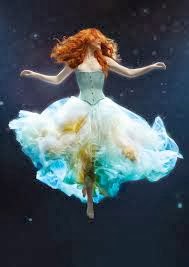
First up off the rank was THE LIGHT PRINCESS, a new musical written by alternative pop singer Tori Amos and playwright Samuel Adamson that is based on a fairy tale by George MacDonald.  I honestly had no idea what to expect when we took our seats as I had stayed away from all the reviews.  Indeed I wasn't too sure why I had booked in the first place as I am not a big Amos fan - it just seemed a good show to see on an Autumn Sunday afternoon!  However we were both instantly onside as the front-cloth was a colourful and glittering map of the imaginary lands of Lagobel and Sealand.

The show has a major plus in that it's creative team of director Marianne Elliott, designer Rae Smith and lighting designer Paule Constable were responsible for WAR HORSE.  They have brought their collective excellence to this project too, the show is a visual treat and the somewhat twee story is told with a bold panache by Elliott.  What is truly odd however is that at no time do any of the humans in THE LIGHT PRINCESS ever make you care for them as much as you care for puppet Joey in WAR HORSE.


We follow the story of two motherless royals - Princess Althea (Rosalie Craig), the daughter of the King of Lagobel, has refused to ever cry again following the deaths of both her mother and brother and has become so deliberately light-hearted that she has lost her sense of gravity and floats instead of walking.  Her father (Clive Rowe) is at his wit's end so keeps her locked in a tower bedroom where she is tethered by her faithful servant Piper (Amy Booth-Steel).

Meanwhile in the neighbouring country of Sealand the young Prince Digby (Nick Hendrix) since the loss of his mother has lost all mirth and is continually down-hearted.  His wicked father (Hal Fowler a.k.a. Mr. Kim Wilde) actually had his wife killed and rules his country with an iron fist.  His disconsolate son's only friend is his brother Llewelyn (Kane Oliver Parry) and his only joy is with his mother's falcon.


Of course when the two countries resume their eternal war for each other's land, the two royals are bound somehow to meet and of course fall in love.  But their idyll by the lonely lake in The Wilderness which separates their countries cannot last and all seems lost for the young lovers.

The original story has been rewritten by Adamson to have a rather leaden feminist overtone which at times is bearable but at other times is thumpingly obvious as to appear to be a reworking of a Drill Hall feminist panto from the early 80s.  My other concern was the rather listless score by Adamson and Amos which carries enough of her standard introspection but not enough variation to give the musical it's all-important rise and fall. 

 
Indeed in the second act Clive Rowe had a ballad that was so one-note as to make you wonder if it would actually ever end - it was only the thought that at some point he must have gone to sleep the night before that gave me hope for it's conclusion.  Saying this I have to say that the meeting of Craig and Hendrix in the first act was one of the most lovely and lyrical falling-in-love pas-de-deux I have seen.

These things are all the more irritating because visually the show is a such a triumph.  Of course there is the possible argument that Elliott has stuffed the production with puppetry, physical theatre elements and good old fashioned stage magic to distract from these central weaknesses but these tend to slip your mind when you are keeping an eye out for the scene-stealing rodent that lives in Althea's bookshelf, marvelling at the swirling colourful birds that play key moments in the action and the amphibian creatures of Althea and Digby's lakeside home.


Rosalie Craig's performance was all the more impressive for the physicality that is involved in it.  Whether she is soaring on her wire or being passed around the stage by the onstage acrobats she never dropped the level of her singing and made Althea a passionate and vital presence - if a touch too much of a bluestocking.  Nick Hendrix - last seen as the under-achieving older brother in THE WINSLOW BOY - brought more to Prince Digby than was on the page.

In a sometimes solid, sometimes stolid supporting cast, I particularly enjoyed Malinda Parris as the Serjeant-at-Arms and Laura Pitt-Pulford as the Falconer.  By the fairy-tale finale I must admit I had been swept along by Elliott's mis-en-scene and have booked to see the show again before New Year's Eve so I guess I liked it after all.


The second show which was an even more blatant example of design over content was this year's Christmas production in the Olivier, EMIL AND THE DETECTIVES, adapted for the stage by Carl Miller from the famous novel by Erich Kästner.

 
The National has a history of interesting Christmas shows based on 'intelligent' kid's books - HIS DARK MATERIALS, CORAM BOY, NATION and - yes that show again - WAR HORSE.
 
I have never read EMIL nor seen any of the five film versions so this was all new to me. 
 
Um.. I'm still not too sure what it's all in aid of as we were 20 minutes late due to a mix-up over the start time.  Sigh, sadly this is where my theatrical autism kicks in - if I don't see a show from the lights going down then all I see are people walking around a stage saying words, I just cannot give myself over to it.
 
 
Anyhoo here we are in 1929 Germany and Emil is a young lad who journeys to Berlin from his small town with money saved by his mother from her job that he has to deliver to his grandmother.  On the train journey he shares a carriage with the mysterious Mr. Snow who on learning of Emil's reason for travelling, drugs him and steals the money.  Emil wakes up and chases after the slippery Mr. Snow but where can a young boy who's alone in the city turn to for help in catching an adult?
 
To the 'Detectives' of course.  A rag-tag group of Berliner children who befriend Emil and using their network of friends across the city seek out the nasty Mr. Snow.  Led by the know-it-all Toots and incorporating Emil's girl cousin Pony The Hat (shrugs) Mr. Snow doesn't stand a chance.
 
 
It's a charming tale that tells a good story of friendship helping to triumph over the baddy but it also seemed to be stretched terribly thin across the huge Olivier stage.  Enter Bunny Christie to distract us all with a set that echoed the era of German expressionism with wonky angled sets allied with film and projections to render the stage alive with movement at all times.  As much as I liked the design, it totally engulfed the production - when you are more interested in what the set is going to do rather than what happens to your hero you know something is awry.
 
Out of a fairly non-descript cast, the younger actors impressed the most.  I am fairly certain our Emil was Toby Murray and he had a nice stillness to his performance which made him stand-out from the clamour onstage, Izzy Lee was good as the bolshy daredevil Pony on her bike and Georgie Farmer impressed as the ringleader Toots who is not half as self-assured as he seems.  Ryan Quarterly was also good as Petzoid, one of the gang who all too soon reveals a hatred for all things non-German and turns the play momentarily toward what was to happen soon.
 
 
I'm not sure whether this character exists in the book or whether he has been written that way by Carl Miller but for the rest of the play, after he is ostracised by the group, I wondered what would have happened to our scrappy bunch of crime-busters when the real Nazty men took over.  The slightly uneven and woozy feeling of Bijan Sheibani's production is probably down to a feeling that it's time-setting is too close to an impeding nightmare that one cannot readily put out of one's mind in retrospect.
 
Or maybe I just feel that because I was not totally immersed in the production?

Sunday, July 07, 2013

Remembrance Of Things Past

Ooo catchy title... I must copyright that.  Oh.

Right, Constant Reader, now that I have found my voice again, time for a bit of a catch-up on productions seen.  But I have seen so many!  I will do it in bite-size chunks.

New plays, not too many.


The latest of Peter Morgan's factional musings on the reality lived behind lives in the public eye found him returning to the ultimate person who is known to all but known to none, our Brenda.  He hit pay-dirt with her in 2006 with THE QUEEN and THE AUDIENCE reunited him with the film's leading lady Helen Mirren.  La Mirren hasn't done too badly out of HRH either and here she was given the opportunity to give a tour-de-force performance as Morgan bounced hither and yon across the six decades of the Queen's rule giving her minutes to change costumes, wigs and playing age.


Indeed it was a remarkable performance with Mirren finding a quiet through-line amidst the skilful onstage quick changes and turning on a sixpence from the young Queen finding her feet with Churchill to the slow, slightly stooped Matriarch running rings around Cameron.

The problem I had with Morgan's play was also it's purported unique selling point.  As Morgan has as much idea as we do in what takes place when the Queen meets the Prime Minister in their private weekly meetings, each section settled into a pattern of the Queen playing Devil's Advocate with whoever she was meeting so ultimately Morgan's script played it safe and certainly did nothing to shock or provoke it's - ahem - audience.  His most controversial gambit was to have the Queen haunted by her teenage self which didn't really amount to anything that would have him dragged to the tower.

 A play by Peter Morgan about the Queen starring Helen Mirren on Shaftesbury Avenue is going to attract a certain public and they were out in force when I went.  EVERYTHING got a round, the curtains, the frocks, the set, needless to say the Corgis.  The only real frisson during the show was in the enjoyable sparring match between Mirren and Haydn Gwynne's basilisk Margaret Thatcher - you could almost feel a large section of the audience having to choose between two heroines.  Seeing it a week or so after the absurd blanket canonisation of the old bitch it was good to see Morgan's jaundiced view of her.

 
Morgan obviously has a soft spot for Harold Wilson as he appeared three times: as a gauche bull-in-a-palace at their first meeting (cute but quite far from the truth I suspect), a PM-out-of-water in Balmoral and his announcement of retiring.  Richard McCabe played him very well - not so much an impression as 'an impression' if you get my drift.  His performance in the final scene was particularly touching.  Paul Ritter's turn as John Major was very entertaining and Michael Elwyn was a silky, deceptive Anthony Eden.  Edward Fox was a last minute replacement for Robert Hardy as Churchill and it showed.

Stephen Daldrey certainly kept the traffic of the stage moving briskly and Bob Crowley's design was spare and elegant.  I just wish Morgan's play - apart from the Thatcher scene - hadn't felt so damn timid.

Mirren and McCabe won this year's Olivier Awards for Best Actress and Supporting Actor which just happened to be two categories that A CURIOUS INCIDENT OF THE DOG IN THE NIGHT-TIME wasn't nominated in - lucky for them as it swept seven other categories including Best Play, Set, Lighting and Director.


Now, some history.
I have never read Mark Haddon's novel the play is based on as I spent a lifetime one evening watching his play POLAR BEARS and as that arsed me off so much I couldn't bear to set foot on him again.  I was aware of the basic premise but it was interesting to be one of the few in the packed Apollo Theatre who didn't know what was about to transpire.  By the way, we appeared to be sat in the designated American section - it was like being back on Broadway.

Luke Treadaway might have won the Best Actor Olivier award but the slacker doesn't do Monday or Tuesdays - they just don't have the range any more - so I saw Johnny Gibbon in his West End debut.  He certainly gave a relentless performance as the autistic teenager Christopher Boone who, when his neighbour's dog is killed with a pitch-fork, decides to find out not only who the killer is but the other mysteries in his life.  I am sure a long career beckons.

I must admit the plot itself didn't offer too many surprises, when the killer is revealed it was all a bit obvious - and was quickly dispensed with - the dead dog being the McGuffin to get us involved in Christopher's journey to find the missing mother he had been led to believe was dead. 

We experience his disorientating journey from Swindon to London through his eyes and this is where Marianne Elliott's production triumphs.  Elliott, set designer Bunny Christie and lighting designer Paule Constable combine to give us stage image after image which are haunting, delightful and exciting.  There were plenty of younger types in the audience and it made me wish that hopefully a good number of them will be excited by what the theatre can do in the hands of an accomplished team.


However, like a number of other productions this year, I came out thinking that I wasn't as blown away as I had been led to believe I would be.  The problem here was that the acting wasn't really all that.  Performances were either drawn larger-than-life or so muted as to be anonymous.  Even Niamh Cusack - so good recently in two productions at the Old Vic - here barely registers as Christopher's teacher.  We pride ourselves on the quality of British stage acting but more often than not, what you get are performances that have you wondering whether they bothered putting the understudy slips in the programme.  Just saying.


But as a work of theatrical possibilities?  Dazzling.


I have also had two dollops of Alan Bennett.  Earlier this year I had read his memoir A LIFE LIKE OTHER PEOPLE'S so I was curious to see the play UNTOLD STORIES which drew on part of it.

 
The play took two parts, the first half was a theatrical amuse-bouche called HYMN that was almost over before it began, a 30 minute reflection on the music Bennett remembers having an influence on him growing up.  More than anything it got us accustomed to Alex Jennings' unerring and affectionate interpretation of the author.

The main part of the evening was COCKTAIL STICKS in which Bennett turned his attention to the subject of his parents.  When I read A LIFE LIKE OTHER PEOPLE'S I had found it unbearably moving as Bennett gave us his recollections of growing up with his loving but socially embarrassed parents to whom the world seemed a party they didn't have the courage to attend.


They were played by Jeff Rawle and Gabrielle Lloyd with a gentle charm and as, in the book, Lloyd as his mother moved more centre-stage as she slipped into the twilight world of dementia.  Ultimately I think it works better on the page, especially the final section where Bennett turns his quiet anger on the institutionalised stripping away of any dignity his mother had at a pace with the dementia stripping away her identity.

After this it was natural to see Bennett' s latest play PEOPLE at the Lyttleton.  Now I had been one of the 8 people who saw THE HISTORY BOYS in the same theatre and not liked it.  Indeed I recently saw the screen version and again, found little to enjoy outside of Frances de la Tour's caustic performance.  So here was a chance to enjoy her playing the lead role for a change.  I presume it is what one could call a play of ideas, the trouble being that it is all ideas and no play.

A packed Lyttleton audience laughed itself through the play while I sat with the occasional half-smile.  Bennett has worked himself up into a right old state initially about the National Trust and on a larger scale, the idea of a culture, an identity that can similarly be shaped and packaged and sold back to you.  I have no problem with this argument and occasionally a point was made that shone through.  I just didn't buy the package.

Frances de la Tour played Dorothy Stacpoole, the heir to the crumbling stately home that has been in her family for years.  Now just she and her equally eccentric companion Iris live there so she is a sitting target for a beady-eyed consultant for the National Trust, played by Miles Jupp who was taking a break from being a panellist on innumerable quiz shows, and her Reverend younger sister (Selina Cadell).


The answer to Dorothy's problems appear to arrive in the bizarre twist of an ex-lover appearing who is now a porn director who asks for his latest film to be shot in the house.  We then had a lengthy scene of the filming which made laboured use of knob jokes, social embarrassment and the like to little purpose other than for Frances de la Tour to swish around in a 1960s style couture ensemble.


Ultimately Dorothy cannot keep the real wolves from the door and the house is taken off her hands and renovated fit for the paying proles consumption.  But she still had a trick up her sleeve...

Frances de la Tour was as watchable as ever (the cast even included her brother Andy as a vicar) and she found wells of sympathy for her improbable character and it was amusing watching Linda Bassett make bricks from straw as her bizarre cohort but otherwise it just seemed to ramble on taking a long time to get to an obvious pay-off.  The ubiquitous Bob Crowley's dark and cluttered set was obviously going to be given a make-over and it was Constant Reader, before your very eyes.

It was pointed out by director Nicholas Hytner to Bennett that the National Trust share more than just initials with the National Theatre and it was a peculiar sight to see the well-heeled audience hooting with delight as Bennett took less-than-veiled potshots at their ilk.

Ultimately it all felt rather like Bennett was having his cake and eating it too.

Still, always nice to hear Petula Clark singing DOWNTOWN.