Showing posts with label Sam Wanamaker Playhouse. Show all posts

Sunday, December 08, 2019

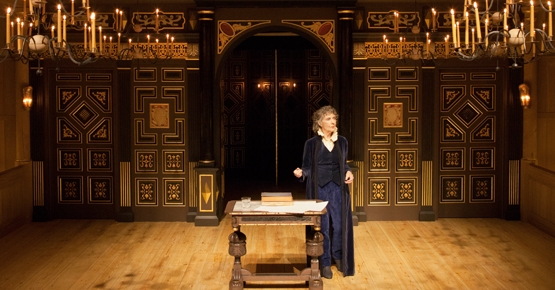
A ROOM OF ONE'S OWN / THREE GUINEAS at the Sam Wanamaker Playhouse - Woolf Works

This year marks the centenary of Nancy Astor being the first woman to take a seat in the House of Commons, but she was not the first female MP; that was the Sein Fein member and feminist Countess Constance Markievich who refused to take her seat in the UK Parliament.  A woman who deserves greater acclaim in my eyes than Astor who later was an appeaser and virulent anti-Semite. 

However to celebrate Astor taking her seat and the passing of the first law that banned discrimination based on gender or marriage, the Globe hosted a reading of Virginia Woolf's two most famous essays: A ROOM OF ONE'S OWN on the subject of women and fiction and her more controversial THREE GUINEAS in which she explored the connection between patriarchy and militarism.  It was definitely a game of two halves.


First up was Hattie Morahan with A ROOM OF ONE'S OWN which she interpreted wonderfully.  Both essays were abridged by Globe artistic director Michelle Terry and directed by Blanche McIntyre and it felt like Morahan got the better attention. In A ROOM OF ONE'S OWN, Woolf brilliantly explores the many interpretations of the phrase "Women and fiction": she had been asked to give a talk on the subject in the autumn of 1928 at Newnham and Girton, the two foremost colleges for women in Cambridge, and after these events she enlarged them into a book.

Virginia explores, in a wonderfully 'meta' style, her process of understanding what they wanted to hear: the role of women in fiction or women who have written fiction?  While exploring this quandary, she enlarges it to show us the world around her - being told to stay off the grass by a Cambridge beadle, being refused entry to see a book in the college library by an attendant, musing on the actual financing and building of the college by rich men for their sons' education, the delicious food served at lunch in the men's college compared to the plain and dull dinner served at the women's college.  Back in London and starting her research at the British Library, she discovers many books on the subject of women and their place in society, both here and overseas... all written by men who seem to be very angry about the subject.


It is these unseen influences that leads to Virginia stating that her conclusion is that in the future for a woman to be a successful writer she needs to have an independent income and a room of one's own.  Being allowed to write, unfettered from the distraction of a job or family or visitors, will lead to generations of female writers writing not just fiction but books on many subjects "for books have a way of influencing each other".  On her way to her conclusion she cites such originators as Aphra Behn, the playwright who proved that women could earn a living by writing, the poet Anne Finch, Jane Austen - who Woolf compares to Shakespeare as a writer whose writing shows a clarity of vision with no petty hatreds cluttering that vision - George Elliot, Charlotte Bronte and Emily Bronte. 

She also famously imagines Shakespeare having a sister whom she names Judith, a woman with the same wish to write as her brother and with the same need to express herself but, diametrically opposed to her brother, had no chance of education, no chance of becoming a performer to gain access to the theatre, but meets an actor-manager who promises to help her but instead gets her pregnant and in a fit of despair, Judith killed herself and "lies buried at some cross-roads where the omnibuses now stop outside the Elephant and Castle".  One of my favourite things to do is to read Virginia Woolf's writing out loud and twice Hattie Morahan paused to simply take a breath, obviously affected by what she was reading.


After the interval Joan Iyiola read THREE GUINEAS, Woolf's controversial reaction to the encroaching shadow of Fascism.  In 1932 Virginia Woolf started writing a new book which would intersperse the fictional story of the well-to-do Pargiter family and their changing fortunes from 1880 to the 1930s with essays relating to aspects within the fictional chapters.  She found it ultimately not to be working so she concentrated on the fictional chapters which later turned into her novel THE YEARS. published in 1937 to huge success.  But the rise of Hitler and Mussolini in Europe led her back to her 1932 essays and she expanded on them, concentrating on the links between the patriarchal society and the rise of militarism and the rush to war.

Like in A ROOM OF OWN'S OWN, Virginia uses repetition to enforce her central thesis, forever circling back to certain thoughts or phrases, but while Morahan made these distinct from each other, Iyiola offered no variation to her tone and sure enough, people started leaving while she was only mid-way through.  I mentally wandered quite a few times and started to feel the agony of the Sam Wanamaker Playhouses's purgatorial seats.  It felt like the first half had been worked on more and poor Joan was left to just read out the text without being able to illuminate it. But any excuse to hear my favourite writer celebrated and spoken aloud is to be grasped at.


Wednesday, May 16, 2018

EASTWARD HO! at the Sam Wanamaker Playhouse - Read Not Dead!

Now that the Globe has emerged from it's extended period of being used as an adventure playground for backward adults, it is safe to return and on Sunday we had our first visit in two years.  But to ease our way in, we went to see a rehearsed reading rather than a fully-staged play.


The Sam Wanamaker Playhouse within The Globe stages a small season each year called Read Not Dead in which little-seen or known plays get an airing where they are meant to be experienced - on a stage.  The rules of the game are that a director will gather a small cast together, present them with the texts in the morning then in the late afternoon they present the blocked and rehearsed reading to a paying audience; the idea being that the dust will be blown off the pages by the nervous energy of cast and audience alike.

Sunday's re-discovered play was EASTWARD HO! which was first performed in 1605 and was a collaboration between the playwrights Ben Jonson, George Chapman and John Marston, three noted writers combining to give the London stages the latest in cutting-edge satirical City comedy... it proved a bit too cutting-edge: King James I took umbrage at the jokes about the Scots and cash-for-titles resulting in Chapman and Jonson ending up in prison for a few months... luckily Marston wasn't around at the time so wasn't imprisoned!


One would have to know exactly what to look for nowadays to see what could have caused such offence but it fits the play nicely into the Globe's cross-season of plays dealing with stage censorship.  The play has occasionally be revived but they are few and far between - there was even a musical version in 1981 that starred Richard O'Brien (in another attempt to broaden his ROCKY HORROR persona), Belinda Sinclair, Anita Dobson, Philip Sayer and Clive Merrison, with a score by Nick Bicat and ROCK FOLLIES writer Howard Schuman - it lasted 45 performances.

Needless to say, it was all a bit upsy-dutch as we were let in to the auditorium late to be greeted with the rather ominous news that they hadn't finished rehearsing the last act.  The running time was 3 hours plus - towards the end I honestly thought I would have to leave as the purgatorial hard benches were KILLING my back.


I survived however and I must say it was a very enjoyable experience - it indeed had the shaggy, missed cues, stumbling quality you might expect but the cast all pitched in and there was even a memorable performance or two.

The sprawling plot has a goldsmith William Touchstone having apprentice trouble: Quicksilver wants to get out into the world and live an uproarious, drunken life while Golding is studious and diligent in his work.  Touchstone's two daughters mirror this pairing: snobbish Gertrude is desperate to marry into money and be a proper lady while Mildred is rueful and quiet.  The whole Touchstone family are excited when Gertrude seems to get her wish and marry Sir Petronel Flash, a Knight who has a huge estate in Essex.  The trouble is... he hasn't!  He is broke and looking forward to receiving Gertrude's large dowry.


Touchstone chucks Quicksilver out of the house then promotes Golding and allows him and Mildred to marry.  Quicksilver and Sir Flash meet and decide to use the Touchstone dowry to sail to Virginia to seek their fortune with Quicksilver's Jewish money-lender friend Security... the trouble is that the captain and crew are drunk and the ship sinks while still in the Thames!

Needless to say it all ends up in a court but as all are flawed in one way or another, it all ends up happily!  The characters are so vivid, larger-than-life and silly, it is a surprise that the play is not better known.  Director Jason Morell gave it all a winning brio and elicited good performances from Michael Matus as Touchstone (it was fun to see the different uses he had for his catch-phrase "Work upon that now!"), Ralph Davis as Quicksilver (luckily he had clean pants on as he had a lengthy scene with his trousers round his ankles), Tok Stephen as the sober Golding and Nicholas Boulton as the wobbly-kneed, penniless Sir Petronel Flash.


Apart from those damn benches, it was very enjoyable.


Monday, October 10, 2016

THE TWO GENTLEMEN OF VERONA at Sam Wanamaker Theatre - a new low in lows...

In the 34 years that I have been a proper theatregoer I have, naturally, seen some bad productions but I have never left a show in the interval of my own accord - yes I left Kate Mitchell's UNCLE VANYA at the Young Vic at the interval but that was at the prompting of my friend Jane who had bought the tickets for my birthday; she said she would rather buy me dinner at the late and great Alfred's on Shaftesbury Avenue.  So, Linus Roache as UNCLE VANYA or Alfred's summer pudding?  Absolutely no-brainer.

Apropos, here are some Shakespeare productions that had me chewing my programme in anger, frustration or boredom:  The National Theatre's recent AS YOU LIKE IT which I blogged was "a superficial production where the set and cast were all surface with no real insight offered or found", the National's 2011 TWELFTH NIGHT directed by Sir Peter Hall and starring his daughter where I thought "Time and again Rebecca Hall give us true moments of jaw-dropping thinness".  There was Ian Rickson's 2011 HAMLET at the Young Vic when I blogged that it "all smacked of a 1970s theatre collective production" and, showing that the Old Vic can put on ghastly Shakespeare too, the truly bizarre MUCH ADO ABOUT NOTHING from 2013 mis-directed by Mark Rylance where I blogged "I didn't hate it.  It just left me bemused and frustrated that it was allowed to be presented as such". But despite all the above, at least I stayed till the curtain call.

Then last week this happened...


Yes Constant Reader, I left in the interval.  It was either that or lose my sanity.

Thank you Nick Bagnall - your ghastly production has done what no other director has ever made me do.  THE TWO GENTLEMEN OF VERONA is rarely produced so here was the perfect chance to see it.  But no... I had reckoned without Nick Bagnall deciding to set it in the Swinging 1960s.  His reason?  Because the play is about young people discovering life and they did that in 1966, oh and he is 'obsessed' with the 1960s.  Thankfully the programme had a synopsis which I had to read at the end of the first act as this awful production was so confusing and ghastly.

Owen hit the nail on the head when he said it felt like a production the Upper Sixth had been allowed to put on as part of their drama studies.  This is actually a touring production for the Globe and Liverpool Everyman & Playhouse.  It should have stayed beyond the pale.

Bagnall had the whizzer idea of stopping the action every so often with cod-60s music...  if he wanted to stage a musical version of the play, why not go for the 1971 Broadway musical that won Tony Awards for Best Musical and Best Book?

The cast were woeful but special mention must be made of Garry Cooper who played the nasty Duke of Milan like the Geoff Tracy "Thunderbirds" puppet operated by someone with Parkinsons.  A more ugly performance it would be hard to imagine.

The cast were grindingly amateur and I hope to never see them on a London stage ever again.

However the main culprit for this theatrical cesspit is the Globe's éminence merde Emma Rice.  Her ghastly stamp is all over this and it fits in nicely with her reductive ethos: strip everything down to the barest minimum, cross-cast with untalented performers who however are the right gender or race to fit your Politically-Correct check list, make it understandable to anyone with no brain, distract with colour and noise to disguise the paucity of soul or emotion - oh and ramp up the mugging so it feels like New York in the 1970s.

Emma Rice has called her first season Wonder... 

I Wonder if I will ever go back to the Globe as long as her shiteous reign lasts.

Thursday, June 30, 2016

THE FLYING LOVERS OF VITEBSK at the Sam Wanamaker Playhouse

After the very under-whelming TAMING OF THE SHREW on the main stage I must admit I was wary of going into this production at the Sam Wanamaker Playhouse as it was a production directed by the new artistic director Emma Rice and while it was better than I expected it also betrayed all the irksome 'poor theatre' trops that signpost Director Theatre these days.


Daniel Jamieson's THE FLYING LOVERS OF VITEBSK tells the story of painter Marc Chagall and his first wife Bella who was an obvious muse for his other-worldly, surreal paintings that also drew their inspiration from their hometown of Vitebsk in Belarus.  We follow how Chagall met the vibrant and educated Bella and how she gave up her own interests in theatre and writing to bolster his painting.

WWI occurs as they marry and have a child (Marc's absence for several days after the birth proving a challenge to Bella) and unhappy with the Soviet appropriation of the arts they start a peripatetic life that takes them from Germany to France and finally the US as again a World War rages around them and news filters through that the Nazis have finished what the Soviets started, the eradication of their home village of Vitebsk.  The pay ends with Bella's sudden death in 1944 and a re-married Chagall haunted by her memory.


The action takes place on an unwieldy set of various wooden poles and canvasses which doesn't help the small acting space or the sightlines in the Wanamaker auditorium.  For a production that tried to invoke the floating otherness of Chagall's paintings I found it remained particularly earhbound.

Again my problem with the schtick of Emma Rice and co. is that for all their much vaunted imaginations it all gets awfully tired after a while - when Chagall tossed snowflakes in the air for the fourth time to denote bad weather I groaned.  It's all surface.. the passion feels very inch-thin.


This is particularly troubling when you are dealing with Marc and Bella Chagall, you never feel the desperation they must have felt at being displaced from their home again and again, in Rice's production we just get two whey-faced, sad, knock-kneed waifs who give the impression of having escaped from a Tim Burton film not a war-torn country where their Jewishness has sealed their fate.

However - despite all the overdone cuteness - there is a delightful performance lurking within it from Audrey Brisson as Bella, she far outshines the droopy sad-sack performance of Marc Antolin as Chagall.  She holds the attention throughout and suggests a three-dimensional, living person amidst the dress-up flavour of the show.

Sunday, April 03, 2016

THE TEMPEST at the Sam Wanamaker Playhouse: it's going to be a bumpy night...

So here we are, the final production in the Globe's staging of the last four plays of William Shakespeare which have laid bare the hidden and not-so-hidden links within them.  Fathers lose daughters, mothers vanish or are never present, love is discovered by chance, physical journeys are bound upon and safe havens sought while coincidence exists alongside magic...


Oddly enough I have only seen THE TEMPEST once before on stage, I seem to have seen filmed or tv versions more often.  The only stage version seen was Sam Mendes' dreary production at the Old Vic in 2010 with an under-whelming Stephen Dillaine as Prospero and the mixed UK and US cast turning the text into a right fugue for tinhorns.

No such problems for Dominic Dromgoole's production at the Sam Wanamaker Playhouse which despite it's spartan, fixed-design stage, still managed to be infused with the right amount of mystery and imagination to suggest the more magical moments of the play.


If I have a criticism of the production it would be that it seemed a little too benign at times - moments such as the two murder plots to kill both Alonso and Prospero seemed to come and go without causing too many ripples of alarm.

Tim McMullan is not usually an actor I warm to - his sonorous voice can be too distracting - but I enjoyed his performance as Prospero, the Duke of Milan who, 12 years before the start of the play, was overthrown by his jealous brother and bundled aboard an unsafe boat with his three year-old daughter Miranda and set loose on the sea.  McMullan had the right commanding presence and was a believable magus, capable of bending the elements to shipwreck his brother and retinue of lords onto the strange island where he himself was washed up with his daughter.  He also spoke Prospero's last two famous speeches - "Our revels now are ended..." and "Now my charms are all o'erthrown..." with great simplicity.


Phoebe Pryce - daughter of Jonathan who we saw as Jessica in the Globe's MERCHANT OF VENICE last year - was good as Miranda, a dutiful daughter but eager to fall in love with the King of Naples' son Ferdinand when he is separated from the others during the shipwreck and there was also an interesting performance from Pippa Nixon as Ariel, Prospero's spirit servant who also is aching to be free.

Fisayo Akinade was a bit too obvious and one-note as Prospero's subjugated native slave Caliban but there was better fun to be found in the low comedy antics of Trevor Fox as the permanently soused Stephano and the flamboyant Trinculo of Dominic Rowan, his comedy 'business' at times threatened to capsize his scenes but he is such an engaging actor that they were great fun.


Another reason for the success of the production was the sympathetic performance of Joseph Marcell as Gonzalo, Prospero's friend who came to his aid when he was deposed by filling his boat into exile with provisions and, more importantly, with books on magic which Prospero has used to his advantage.

Jonathan Fensom, although constrained by the afore-mentioned playing space, made good use of the stage and made necessity a virtue by having a large flat rock in the middle of the stage which was turned around for each scene giving the actors something to clamber over and around, simple but effective.  Stephen Warbeck's music was ever-present and engaging throughout.  Needless to say, Prospero's lovely parting words asking for the audience's applause to free him from the island were undercut by the usual end-of-play meaningless jig about.


The Globe is to be applauded - and I did! - for staging these last four plays so one can make connections with their recurring themes of love and reconciliation, now bring on the events to honour the 400 years since Shakespeare's "little life was rounded with a sleep".

Tuesday, March 15, 2016

The WINTER'S TALE at Sam Wanamaker Playhouse

In April I will be seeing the Royal Ballet's production of THE WINTER'S TALE at Covent Garden.  It's nice to know that I will not have to speed read the synopsis before it starts as I am now a bit familiar with the story having seen it twice in four months!  First Kenneth Branagh's production at the Garrick before Christmas and now the new production at the Globe's Sam Wanamaker Playhouse Theatre.


As usual with the Wanamaker Playhouse, it's intimate space made the play more involving and allowed for a more subtle playing style from some of the actors.  Our 2nd tier seats were facing the stage so nothing was missed apart from when they lowered the six candle chandeliers above the stage so all you could mostly see was the actors legs.

However the biggest literal pain was the bench seating... it absolutely beggars belief that this theatre that opened only two years ago was built with such uncomfortable seating,  No doubt the Playhouse would say they were keeping to the Jacobean style of theatre. But then I am sure the Jacobean back stage area did not have showers and toilets.  Think on...


So, here I was again in the court of the King of Sicilia Leontes and his wife Hermione who have both enjoyed a lengthy visit from his childhood friend Polixenes, the King of Bohemia.  One night Leontes is overcome with an irrational jealousy and accuses Hermoine and Polixenes of adultery much to their astonishment which results in Hermione arrested and Polixenes fleeing with the courtier who Leontes sent to kill him. Despite the pleadings of Paulina on her behalf, Hermione is put on trial and is not allowed to see either her young son or the baby girl she has just given birth to. Leontes has sent word to the Oracle to judge Hermione's guilt but is angered when his messengers return with the news that the Oracle has declared his Queen is innocent.

As Leontes remonstrates against the Oracle's decision, word arrives that his young son has died and Hermione collapses with grief.  Leontes slowly realizes his jealousy was wrong and this is compounded when Paulina announces that Hermione is died.  Too late too for Antigonous, Paulina's husband, who had been told by Leontes to take his baby daughter to a far-off shore and lose her there.  Antigonus does this but is killed by a bear while carrying it out.  The baby girl is found by an old shepherd and his son who adopt her.


It all makes for a fast-paced and claustrophobic first act as Leontes irrational feelings bring disaster to his court.  Sadly the second act moves 16 years later and relocates the action to Bohemia and the lost daughter now named Perdita who has caught the eye of Prince Florizel, son of Polixenes.  No matter what production I see of this play, this is usually where I check out mentally: after the delicious sturm und drang of Leontes' festering jealousy, the bucolic hey-nonny-nonny of Perdita and Florizel's simpering allied to the extended laborious comedy of Autolycus the pickpocket stealing from the shepherds just goes on and on and on. And on.

Luckily it's Polixenes' turn to spit his royal dummy and forbids Florizel from marrying Perdita.  They high-tail it to Sicilia but are pursued by Polixenes who arrives just as they are presented to Leontes.  What follows s a scene of such staggering literary cheek that Shakespeare has the good grace to do it all offstage - Perdita's real identity is discovered, the shepherds are rewarded, and father and daughter are reunited... but Paulina still has an ace to play which gives the play it's famous denouement.


After the fussiness of Branagh's production, Michael Longhurst's production was refreshingly direct and concentrated, the Wanamaker's stage design was also the perfect setting for the reveal of Hermione's statue, its centre doors proving a natural grotto.  The candlelight was very effective as usual, especially after the death of Antigonus when the auditorium was plunged into complete darkness for a few moments before the shepherd's lanterns were seen.

After Branagh's rather showy Leontes, John Light was suitably moody and tormented which felt more of an ensemble performance as did Niamh Cusack's Paulina, suitably impassioned when she needed to be but not as barnstorming as Judi Dench or Deborah Findlay at the National Theatre in 2001.  For me the performance of the evening was Rachael Stirling's Hermione, a role usually played as a trembling twit but Stirling was marvelously resolute and strong.  Her playing of the final scene was also beautifully pitched and all the more moving for that.  Echoes of her mum Diana Rigg were very strong!


There was also good support from Dennis Herdman as the dim younger shepherd, and Steffan Donnelly & Tia Bannon as the young lovers Florizel and Perdita.  I had wondered aloud if Owen thought that there might be a jig at the end of the show and, sure enough, there was, a courtly pavane with waggly hands that added precious little to the show.  Along with the benches, the after-show dance is something the Wanamaker could possibly 86...


Wednesday, February 10, 2016

ELLEN TERRY WITH EILEEN ATKINS - Lightning Strikes Twice...

Last Sunday I had the great thrill of seeing, at the Sam Wanamaker Playhouse, Eileen Atkins in her one-woman show based on the Shakespearean lectures of the great Victorian actress Ellen Terry - and it was as good, if not better, than last time.  Click on the picture below to see my original blog:

http://chrisnthat.blogspot.co.uk/2014/03/interpreting-shakespeare.html

What makes the show so fascinating is that, while Atkins is saying Ellen Terry's words, you cannot help to look through that to hear the actress sharing her own thoughts on acting, actresses and Shakespeare, so often are the lines blurred...

The 80 minute monologue encompasses Terry working with Sir Henry Irving as well as her reflections on the wonderful Shakespearean women she played and this is when the show becomes the stuff of legend - at times turning on a sovereign to play two characters within a certain scene, Atkins was simply dazzling in speeches from AS YOU LIKE IT as Rosalind (as well as Orlando and Duke Frederick),  MERCHANT OF VENICE as Portia, MERRY WIVES OF WINDSOR as Mistress Page, MUCH ADO ABOUT NOTHING as Beatrice (as well as Ursula and Hero), TWELFTH NIGHT as Viola, OTHELLO as Desdemona and Emilia (and even Othello!), ROMEO AND JULIET as Juliet, KING LEAR as Cordelia (and the King) and HAMLET as Ophelia.


Using Terry's own words to describe each heroine and to point out the pleasures and the pitfalls in playing them, the Victorian actress then gave way to the magnificent Atkins to fill the auditorium with wonderful readings of the parts, finding pathos, comedy and wonder in the words with no props or scenery.  Once within the role - even if for a few lines - the years fell away...

My favourite characters were Rosalind, loving and wise; the humanity of Portia; the fearless courage of Emelia; Juliet and her tremulous fear of waking in the burial vault (and giving a great example of the age-old observation that by the time an actress has the experience to play Juliet she is too old to be Juliet);  Ophelia and her broken mental state; and the finest of all, Cordelia and King Lear's reunion.  Atkins was simply stunning in both roles - an example of total theatre thanks to true acting genius illuminating the heartbreaking words of a bewildered, humbled King and his loving daughter.  You could hear a pin drop during this moment and I will happily admit to copious tears.


I am honoured to have experienced this wonderful event twice - PLEASE someone film this show!  It would be the perfect addition to the marking this year of the 400th anniversary of Shakespeare's death.

Friday, January 29, 2016

CYMBELINE at Sam Wanamaker Playhouse - heads it's Imogen...

...tails it's Innogen.  Mind you, the head just might belong to the Prince who wants to rape you... although you might think that it belongs to your exiled husband (who has actually hired an assassin to kill you).  Yes, Constant Reader... CYMBELINE is the Shakespeare play where he threw *everything* into the plot!


I was glad to finally see this play, if only to cross it off my Shakepeare list - only TWO GENTLEMEN OF VERONA, TIMON OF ATHENS, HENRY VI trilogy, HENRY VIII and The TWO NOBLE KINSMEN to go!  All I really knew about the play was that Vanessa Redgrave had played the heroine in an RSC production in 1962 and that it's plot was a bit freewheeling - including a headless body.  It's very out there.

Because of this it has divided writers down the years: John Keats and William Hazlitt both admired it but in the last century Lytton Strachey and Harley Granville Barker disliked it, both citing that it showed a Shakespeare exhausting his talent.  You can see their point - at times you could almost see Shakespeare thinking "They like my comedies so I'll stick in some low comedy yokels" then "Oh and they love my nasty royals so I'll throw in a wicked Queen - oh and my fans love drag so I shall stick my heroine in men's clothes for a while etc etc."  It's like watching a 17th Century Jive Bunny 'doing' Shakespeare.


There's even uncertainty over the heroine!  Long held to be Imogen, it has also been contested that in the original performance she was actually Innogen which is what director Sam Yates has plumped for here.  And to be totally contrary - which I suspect is her raison d'etre - incoming Globe artistic director Emma Rice intends to stage a version later in the year retitled IMOGEN as she has more lines and is more of a central character than dreary old King CYMBELINE.  How very modern.

To be honest, the bewildering plotline did cause me to tune out a bit so when I regrouped and concentrated I had no idea what the multitude of characters were to each other and why they were doing what they did.  Thank God for the interval and a chance to read the synopsis.  But Yates' production hurtles through the plot - possibly as to linger on it for any length would be daft - and as usual, despite the inanity of the plot, I enjoyed the production and a few of the performances.  Sorry Lytton and Harley.


Emily Barber was a spirited and engaging Innogen, her performance even more impressive with the knowledge that she only graduated from drama school in 2014.  Calum Callaghan impressed too as the oafish Cloten who suffers one of Shakespeare's more bizarre deaths - all I am going to say is that the Globe Theatre is leading the field in well-modelled severed heads!  Pauline McGlynn was an interesting wicked Queen but Joseph Marcell was a bit milquetoast opposite her.  Jonjo O'Neill was a suitably confused Posthumus - one minute Shakespeare has him passionately in love with Innogen, the next believing that she is unfaithful and plotting to murder her.

Globe stalwart Trevor Fox delivered another eye-catching supporting performance as Innogen's Geordie servant and before the show started he stepped onstage to tell us that Eugene O'Hare, who was playing the nasty Iachimo, had broken his foot the night before but was still going on with 2 arm crutches - what a trouper!  It made for some particularly hairy moments - Iachimo hides in Innogen's bedroom in a large chest so watching him negotiate that with his crutches was real edge-of-the-seat stuff!


I would recommend it to anyone who has never seen it and wants to see it in the candle-lit surroundings of the Wanamaker Playhouse... just don't expect anything profound!

Wednesday, December 23, 2015

PERICLES aka Shakespeare's Round-The-Med Revue at the Sam Wanamaker Playhouse

This year saw quite a few visits to the Globe Theatre to see several of the productions under their Justice & Mercy season and, now that it's colder, we are booked to see their four late Shakespeare productions in their atmospheric Sam Wanamaker Playhouse.


First off the rank was the departing Globe artistic director Dominic Dromgoole's production of PERICLES, a lesser Shakespeare which he co-wrote with the little-known George Wilkins.  It's disjointed feel is probably down to this partnership, scholars suspect that they split the play down the middle with Wilkins taking the first few acts and Shakespeare picking it up towards the end - which would explain why the play feels more involving towards the end but it's still not a play I would go out of my way for.

The trouble is the plot which piles on thinly plotted characters and absurd situations which mostly happen offstage but are relayed to the audience by the show's narrator Gower (the name of the author who wrote the story the play is based on) but who here is played by the ever-twinkling Sheila Reid.  Since her National Theatre days at the Old Vic under Olivier's direction, Reid has been giving constantly good performances but she can sometimes play cutesy and she does that here, almost distracting the audience from the melodramatic plot twists she tells us about.


Was there ever a more tiresome lead role than Pericles?  Up and down the Mediterranean coastline he wanders bringing chaos and misery wherever he goes... he arrives in Antioch to marry the King's daughter but discovers their secret incestuous relationship so he flees, pursued by the King's assassin, back to his home city of Tyre but the assassin turns up there so he is off again to Tarsus where he relieves the city of it's famine but, feeling unsafe, sets off again where he - and us - endure the first of two storms at sea...

One is reminded of Thelma Ritter's caustic line in ALL ABOUT EVE "Everything but the bloodhounds snappin' at your rear end"!  One feels Pericles really needs his life set to a oh-why-me song a la Travis but he is washed up on the shores of Pentapolis where, with the King's eager help, he marries the princess Thaisa.  You would think that would make him stay in one place - but then he hears that the incestuous King and his daughter have been killed by a lightning bolt (they really don't write 'em like this anymore) and he journeys back to Tyre in safety.


But safety isn't Pericles' top quality and low and behold, another storm at sea happens just as Thaisa is giving birth - come on, you just KNOW she dies and is buried at sea where she is washed up at Ephesus and revived by a physician wherein she goes off to be a high priestess of Diana while Pericles leaves Marina, his baby girl, with the King and Queen of Tarsus while he wanders off again.  Pericles is not a good role model for single parenting as the Queen starts to develop a psychotic hatred for Marina for getting more acclaim than her own child.  So she hires an assassin...

Yes this *could* be where you came in but one starts to discern the occasional insight in the writing and you know that Shakespeare is on the scene. I can imagine him thinking "What has Wilkins done here?" and throws in a dollop of sex straight out of MEASURE FOR MEASURE when Marina is kidnapped by pirates and sold to a brothel.  Finally it gets going with a few decent laughs!!


What makes PERICLES worth the climb is how Shakespeare uses his part of the play to shift the play away from the dreary title character's perambulations and leads us more into explorations of fathers and daughters, magic, reconciliations, humorous supporting characters and a feeling of tragedy averted.  A prime example is Marina's reuniting with Pericles after so many years apart; only a year or so before Shakespeare had given us a similar scene in KING LEAR which ended in nihilist brutality, here all is forgiveness and harmony.

For all it's absurdity, Dominic Dromgoole certainly kept the action moving on the bare Wanamaker stage with Jonathan Fensom's spare design.  I had seen the play once before at the National Theatre in 1994 which was pretty irritating but I think this one will tide me over for a while.  A major problem with this production was the dull performance by James Garnon as the titular Prince of Tyre.  He's not an actor I particularly care for and his gurning delivery of his speeches failed to move.  Sadly it appears he is beloved at the Globe (so I presume he's cheap).


Much more eye-catching were Jessica Baglow as the tyrannically virginal Marina, Dennis Herdman as the randy pimp Bolt and Dorothea Myer-Bennett as both the put-upon Thaisa and the inexplicably murderous Queen Dionyza.

I am looking forward to seeing THE WINTER'S TALE, CYMBELINE and THE TEMPEST at the Wanamaker Playhouse in the coming months as they are all stronger plays than this Greek's Own adventure.  Oh and no thanks at all to former Globe artistic director Mark Rylance who occasionally kneed me in the back on the Playhouse's absurdly cramped backless seating.  You would also think someone so versed in the theatre would remove his hat in the auditorium too.

Friday, July 17, 2015

ALL THE ANGELS: HANDEL AND THE FIRST MESSIAH at the Sam Wanamaker Playhouse

After last year's Paulian conversion to the joys of the Globe Theatre in Southwark, it looks like the Sam Wanamaker Playhouse, it's newish intimate indoor theatre, won't be too far behind... but with some qualifications.

At the start of the year, Owen set down a challenge that maybe we should see things this year which we might not ordinarily see.  ALL THE ANGELS seemed to fit that brief: a 3-hander about Handel's writing of his Messiah oratorio with extracts sung by a professional choir.  I honestly had no idea what I would experience when entering the toy theatre-like interior.


Sadly what I experienced was the audience sitting directly opposite me and the top of the actors' wigs whenever they moved to the prompt side of the stage.  The only tickets Owen could nab were in the second row at the side looking down onto the stage so if you are ever planning a trip to the Sam Wanamaker Playhouse do not sit in the Upper Gallery, Row DB.  Yes the tickets were marked as Restricted View, but this was taking the piss!  If you do have these seats, best resign yourself to treating it like listening to a radio play.  However we did have an excellent view across onto the musician's gallery for the musicians and the occasional appearance of the choir.

However, this did not deter Owen from coming out of the Playhouse all a-buzz so when I got home, I decided to check the website for the following day's performance which also happened to be the last.  Astonishingly there were 2 seats in the main section facing directly onto the stage!  Whoever returned those tickets, thank you, as these ones allowed me to fully enjoy Nick Drake's new play.  So I shall base my review on this performance where I could see all the actors (all 3 of them) all of the time!


An Irish chancer nicknamed Crazy Crow, sets the scene by placing props around the stage and telling us that we were about to see how the composer Handel premiered his Messiah oratorio in a concert hall in Dublin.  During his research, Drake found an illustration of a musicians' porter called Crazy Crow - bedecked with musical instruments - and all he could find out about him was that he doubled as a 'resurrectionist' aka grave-robber.  It is through this intriguing character that Drake can find a way in to the real-life backstage drama by having him as our narrator.

Proving that life is like fiction (and that art is like life) Handel's travails sound like any number of putting-on-a-show stories.  In 1742, German-born composer George Handel, already a UK Citizen for 15 years and with an income from royal patronage, found himself at an artistic impasse.  His operas were no longer popular and although he could compose in a variety of styles, he was out of favour.  


However the reclusive writer Charles Jennens remained a devoted admirer of his work and continued to send him librettos for free.  One of these was Messiah, his melding of Old and New Testament texts which he hoped would invigorate belief in religion, now being assailed by rationalist debate.  To his frustration Handel let 18 months go by before he did anything with it, only dusting it off when an invitation to perform a new work in Dublin arrived to lift him out of his artistic slump.

He wrote the music for Messiah in three weeks and, stuck in Chester due to bad weather while travelling to Ireland, he rehearsed it above an inn with a local church choir who sadly did not come up to the maestro's exacting standards.  Any worries about his reception in Dublin however were forgotten when he was warmly received by William Cavendish, the 3rd Duke of Devonshire who was the King's envoy.


Handel decided he needed a second soprano to complement the Italian diva he had hired and, as fortune would have it, a solution presented itself by the presence in Dublin of the English actress and singer Susannah Cibber.  

Again, in a scenario straight out backstage stories, Cibber had come to Dublin to try and revive her career damaged by a recent sex-scandal trial.  Her dissolute husband had attempted to pimp her to his creditors to pay his debts but she had fallen in love with one of them and they set up house together.  Her husband then sued them but the judge had found against him but Susannah's reputation was in tatters.  So she accepted an acting season in Dublin which is where Handel hired her for his premiere - what a perfect case of stunt casting - the sex scandal actress singing in a pious oratorio.


Handel rehearsed her continually to get her to lose her stagey mannerisms and diction and to sing his arias with a pure power.  He also relentlessly rehearsed his chorus, trying to get them to appreciate that while they were 'merely' a chorus they were also the narrators of the piece, that they were the voices of "all the angels".  Of course it was a huge success, re-establishing both Handel and Susannah Cibber to popularity and it has continued to be sung down the years.
 
Drake's play was involving and fast-moving through the various set-backs and successes of the premiere and at one point seemed to channel Peter Shaffer's AMADEUS when Crazy Crow described the physical sensation of hearing the Messiah for the first time, how profoundly he was moved but also how it angered him: that he should experience this beauty but then have to go back to a life of deprivation and squalor.  The play was made better by the moments when The Portrait Choir (the resident choir of the National Portrait Gallery) sang parts of the Messiah to illustrate and counter-point the action.


Surrounded by the glow of many candles, the black and gold Playhouse stage glittered like a Restoration jewel-box.  The Playhouse stage with it's close proximity to the steeply-banked audience calls for a bravura style of performance as there is nowhere to hide and we certainly got that for the cast of three actors.

David Horovitch excelled as the gruff and demanding Handel and elicited plenty of laughs while also maintaining his Hanoverian accent with skill, his unrelenting pursuit of perfection slowly being explained by a recent brush with death.  Kelly Price held her own against him as Susannah Cibber, capturing well Susannah's anxiety of being upstaged by her opera singer rival while fighting her fear of performing without her usual actressy tricks.


Sean Campion was excellent in the supporting roles of the reclusive librettist Charles Jennens (even in the 18th Century the writer felt that the composer got all the glory), the effusive and urbane William Cavendish, and in particular, as narrator Crazy Crow, capturing your attention from the start with his crashing up through the stage trapdoor and drawing us into the story with his mocking view of the precious artists who have none of his struggles to survive.

Jonathan Munby follows up his recent success directing Jonathan Pryce in THE MERCHANT OF VENICE (Pryce was in attendance on our second visit to the show) with a delightful production that balanced the profundity of the composition with the hilarity of trying to stage a show and it also benefited from Mike Britton's costume design.


It's a shame that the production didn't have more performances in it's run but hopefully it might return at some point and it certainly deserves to be filmed for a wider audience to enjoy the play and performances.