Showing posts with label Charles Edwards. Show all posts

Monday, November 16, 2015

WASTE at the National Theatre: private morality made public

Included in the wonderful John Singer Sargent exhibition at the National Portrait Gallery this year was a chalk drawing from 1900 of a handsome young man, matching Sargent's gaze with a knowing smile as if to say "Make sure you capture *all* of my handsome looks won't you?"  The subject was 23 year-old Harley Granville Barker.


1900 was an important year for the young actor, not only did he become a lead player with the forward-thinking Stage Society but he also wrote his first play "The Marrying of Ann Leete".

It was through the Stage Society that Barker made two particularly close friends, George Bernard Shaw and the critic William Archer.  Shaw's use of language and dialogue-heavy style of drama influenced Barker in his playwriting and that is very evident in his play WASTE which is now revived at the Lyttelton.


It is fitting that the play should be staged at the National Theatre as it was written in the same year that Barker and Archer wrote "A Scheme and Estimates For The National Theatre", a costed document for the establishment of a UK national theatre, listing everything from staff wages to an idea of the repertoire.  Nothing came of it immediately but the idea refused to go away and long after Barker and Archer's passing, the National Theatre launched in 1963 under the direction of Laurence Olivier.  

For an architect of the concept behind the place, Barker has hardly been well-served by his dreamchild: THE MADRAS HOUSE was staged in 1977 with Paul Scofield and THE VOYSEY INHERITANCE appeared in 1989 and 2006.  Now we have his controversial play WASTE, directed by Roger Michell.  Initially banned by the official Censor in 1907, Barker gave several private productions of it under the auspices of the Stage Society to gain it a copyright - in the first one he even played the lead - but it was not professionally produced until 1936.


To be honest, WASTE is a play that can be admired rather than liked, Barker's scenes can sometimes trip over into being too prolix for their own good - especially if there are more than one character onstage - but usually the scenes involving just two characters create biting argument and tension.

Henry Trebell is an independent MP who is invited by the Conservative Government to head up a bll that he is passionate about, to dis-establish the Church of England.  Trebell is an ambitious politician who need not worry about home distractions as his adoring sister Frances runs that for him.  However at a country house weekend party Henry starts a dalliance with Amy O'Connell, a 'modern', opinionated, separated wife of an Irish freedom agitator.


Although popular with the men, Amy is quietly disliked by the women of the party including Frances for her free-spiritedness, but she suits Henry's teflon life.  All of that is turned upside down when Amy appears in his office in a frantic state after finding out she is pregnant and is determined to have an abortion despite Treball's insistance that she have it.  Days later Amy is dead from a back street abortion that went wrong and Trebell is suddenly facing disgrace with his former political colleagues willing to throw him under the bus.

As I said, my trouble with the play is that while individual scenes are gripping - Amy and Henry confronting each other over the pregnancy, Frances trying to give Henry a reason to live, Frances denouncing her former friend - his scenes with a group of characters soon become a static talking shop with little to animate them.


Roger Michell sadly doesn't really speed the play along, this is really material for a forensic director like Peter Gill or Howard Davies and while Hildegard Bechtler's design can be seen as a tribute to Barker's wish for non-specific theatre design, I suspect the grey & earth tones of her sliding panel set and costumes would suit something a little less site-specific than Edwardian parliamentary London.  I did enjoy watching the pretty patterns during the scene changes.

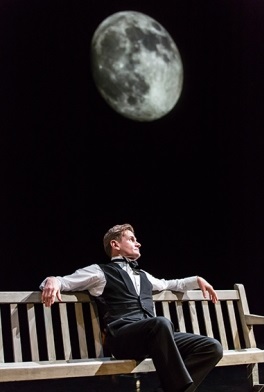
If you want someone to be put-upon and upper-class then Charles Edwards is your go-to guy.  Henry Trebell follows his roles of Richard II, Charles Condomine in BLITHE SPIRIT and Charles Marsden in STRANGE INTERLUDE and while he again delivers a very fine performance, he cannot make Trebell's singularly callous approach to anyone outside his House of Commons colleagues particularly understandable.


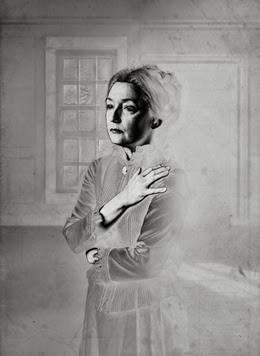
There are good performances from others in the cast but I felt the best came from Trebell's put-upon women.  Olivia Williams has never really bleeped my radar before but here in her climactic scene, she was electrifying: Amy's terror at being pregnant and her panic at the closing down of her opportunities leapt off the stage and swept away the verbose scenes that had gone before.

Sylvestra Le Touzel also gave a very fine performance as Frances, Trebell's protective sister who comes into her own at the end when she realises that her brother is determined on a course of action that she tries desperately to change.  The final scene that finds Frances with a blank canvas for a life gave her ample scope to scrape away at the poised veneer her character has hitherto presented.


All of this is rather swamped by a bizarre design trick just for the curtain call.  Any thoughts about what Barker was referring to by his title: the waste of Treball's life, of Amy's life, of Frances' happiness, of a career, of ideals, is defeated when the cast take their bows on a bare stage apart from a larger-than-life tipped-over wastepaper basket which featured in the final scene when Trebell's secretary was throwing away his post into it.  This clunky, "do-you-get-it?" motif throws the air of quiet desperation that the final scenes suggest into a cocked hat.  Or an upturned, giant wastepaper bin.

Oddly enough, some might say that the title might be pinned on Barker himself who, with his second marriage to the American writer Helen Huntingdon, turned his back on the British theatre for good as she had little time for it.  Shaw could never forgive him for this or for the marriage and they were never reconciled as Barker moved to Paris.  Although never actively involved in theatre again he did translate several plays with his wife as well as writing his "Prefaces To Shakespeare" where for the first time, several key plays were investigated not by a critic or academic but by someone who had directed or acted in them.  This once and future king of British theatre died in 1946.

Saturday, August 29, 2015

RICHARD II at the Globe Theatre - non-Cumberbatch Shakespeare

You would never know it from the press hype surrounding Benedict Cumberbatch's HAMLET but there is another vacillating royal in serious trouble on the London stage and we were lucky to see it last week.


RICHARD II is the latest production in the Globe Theatre's 2015 season based around the themes of Justice and Mercy, qualities that are singularly lacking in the story of the downfall of the vain, misguided Plantagenet King who learned too late that it's more important to be human than majestic.

Charles Edwards brought his upper-class panache to the role of Richard: by turns pampered, remote, haughty and witty, he sailed through the first act on an air of privilege, uncaring of the turmoil he was creating in his wake among his lords and barons, sure in his knowledge that as an anointed King he was impervious to complaint.


However when Richard II tires of the dispute between Henry of Bolingbroke and Thomas Mowbray and banishes them both abroad he sets off a chain of events which swiftly leads to disaster.  Caring little for the angry remonstrations of Bolingbroke's dying father John of Gaunt, Richard seizes his property and goods to pay for his war with the Irish and in doing so deprives Bolingbroke of his legacy.  The King returns from Ireland to discover that Bolingbroke has returned from exile and rallied an army while his own followers have vanished.

Up until this point Richard has been fairly unlikeable but his realisation that his destiny is now uncertain leads him through various stages of self-pitying anger, despair, and finally to a wisdom that is touching in it's resignation.  Up until the arrival back on English shores, the only moment of real poetry has been John of Gaunt's denunciation of Richard, brooding on what his reign has done to "This sceptre'd isle".  William Gaunt in the small but haunting role of John of Gaunt was excellent, using up the last of his energy to rain down anger on Richard's reign.


But with Richard's growing realisation of his inadequacy, Shakespeare ups the ante and Richard finds his poetic voice, in particular when he invites his admirers "let us sit upon the ground and talk about the death of kings".  Two excellent scenes follow where Richard and Bolingbroke confront each other, first at Flint Castle where Richard attempts to face down his enemy but eventually capitulates to fate and the following scene at Westminster Hall where Richard is called before the council to abdicate.

This magnificent confrontation - where vacillating Richard literally makes Bolingbroke pull the crown from his grasp and then ruminates on the transition from King to man - saw Edwards at his finest and indeed, his final scene was shot through with a noble pathos.


David Sturzaker also upped his game as Bolingbroke in his scenes with Edwards although he at times felt a bit lightweight to play such an important main role.  There was very good support from William Chubb as the honest Duke of York, Richard Katz as both the murderous Exton and the Queen's head gardener and Sarah Woodward as the Duchess of York.  However her major scene at the end where she begs Bolingbroke to spare the life of her traitorous son while her husband the Duke demands his son's death was played almost as slapstick and threw the tone off dramatically.

Overall, Simon Godwin's production was very enjoyable although some of the cast were a bit lightweight and the first act seemed to feature one too many scenes of the rebellious lords sweeping on to only sweep off again after a few minutes.  Despite this I enjoyed it more than the Kevin Spacey/Old Vic production from 2005.

Where the production did score well was with Paul Wills set of cracked and peeling shining gold paint.  As soon as I saw it I was reminded of the famous portrait of the ill-fated King in Westminster Abbey.


Monday, April 21, 2014

The British Birthday Play

After the hard-edged GOOD PEOPLE, it was time to relax into the chiffon-edged comedy of Noël Coward's BLITHE SPIRIT currently revived at the Gielgud Theatre with a long-overdue return to the London stage by Angela Lansbury.  All very appropriate as John Gielgud had starred in and directed an ENSA touring production of the comedy during World War 2.

 
Michael Blakemore had previously directed Angela Lansbury in 2009 on Broadway in the play which won her a fifth Tony Award and here they are reunited with a new cast and production team.  Unsurprisingly she has rooted herself into the character, making Madame Arcati her own.

Written by Coward in 1941, it was an instant hit - although Graham Greene found it "a wearisome exhibition of bad taste"!  It went on to hold the record for the longest running play in the West End until "The Mousetrap" overtook it in 1957.  David Lean filmed a screen adaptation in 1945 which featured the original players of Arcarti and Elvira, Margaret Rutherford and the delicious Kay Hammond, although this version had an alternate ending.  The play has been revived frequently and I first saw it in 1986 at the Vaudeville Theatre with the perfect cast of Simon Cadell, Jane Asher (Ruth), Joanna Lumley (Elvira) and Marcia Warren as Arcarti.

Author Charles Condomine and his wife Ruth hold a soirée with the village doctor and his wife as well as the local eccentric Madame Arcarti with the ulterior motive of getting her to hold a seance so Charles can get material for a novel he is planning.  During the seance however Arcarti "brings across" the ghost of Charles's glamorous first wife Elvira who has been dead for seven years and only Charles can see her.  Elvira, as capricious in death as in life, causes mischief around the house much to Ruth's anger and Charles' bemusement. 


He soon tires of her behaviour however when he realizes she has her own agenda when she fixes the brakes on his car hoping he will join her forever - but it's Ruth who uses the car first.  Now with two ghostly wives making his life a misery he calls in Madame Arcarti to try and get them back to the other side.  If only she knew how...

Michael Blakemore directs the comic business and Coward's devilishly witty dialogue to expert effect but also suggests the darker tones that lurk in the corners of the Condomine living room.  Written two years into World War II where death was in everyone's consciousness, it's musings on the lingering effects of those departed must have made for a very heightened experience when first presented.


Simon Higlett's set has just the right feel of a home counties living room and also is entertaining in it's own right when the other world encroaches in on it which is also well-evoked by Mark Jonathan's lighting design.

Blakemore's cast also rise to the occasion with one clanging exception.  The ever-reliable Charles Edwards is a delight as Charles, effortlessly spinning his lines with the lightest touch like the deftest of tennis players.  But he also plays a man quietly delighted to be given a change from his second, rather conformist, marriage.  Luckily Edwards is complemented perfectly by Janie Dee as Ruth.  She showed her excellent comic timing time and again particularly in the classic exchange:
  • Charles: Anything interesting in The Times?
  • Ruth: Don't be silly, Charles. 
Ruth can be a tough role - the character who wants to stop the madcap antics usually is - but Janie Dee is such an engaging stage performer that her dry delivery was a joy to behold.


I found the casting of Jemima Rooper to be a miscalculation however.  Her childishly petulant pouts and squeaky voice seemed to belong to a totally different production and more than once I felt she was totally out of her depth with the quality of performance onstage.  Simon Jones and Serena Evans made full use of their considerable experience to fill out the roles of Doctor and Mrs Bradman and Patsy Ferran made the most of the West End debut as Edith, the Condomine's gormless maid.

Needless to say Madame Arcarti's belated entrance on stage provoked a round of applause for Angela Lansbury, you don't get too many of those anymore but somehow within the context of Coward and BLITHE SPIRIT it didn't seem strange at all!  There was the odd stumbled line but that is more than allowed when you're 88 and in the process of giving a performance of pure star quality.  She played Arcarti as an intelligent and engaging authoress but one who didn't suffer fools gladly - I will treasure the exasperated daggers she shot at Mrs. Bradman's clueless questioning.


Yes, she stole scenes with her bizarre little dance in her pre-seance trance or in her delighted responses to Elvira's presence but that's what she's there to do!  Although the role didn't give her the opportunity to touch us in the way her Madame Armfelt did in A LITTLE NIGHT MUSIC on Broadway in 2010, it was an utter joy to see her on a West End stage and proving that this wasn't a case of stunt star casting - just like Arcarti, she brought sheer magic to us.

All this and being made Dame Angela last week too - it's about time!


Thursday, January 02, 2014

The Theatre Chrissies are here!

Now for the best part of my Chrissies: the Theatre Awards!

BEST DRAMA/COMEDY
 

GHOSTS by Henrik Ibsen at the Almeida Theatre
 

Nominees: The AMEN CORNER (Olivier, NT); The AUDIENCE (Gielgud);
THE JUDAS KISS (Duke of Yorks); OTHELLO (Olivier, NT)
 
BEST MUSICAL

 
The SCOTTSBORO BOYS at Young Vic

 
Nominees: The BOOK OF MORMON (Prince of Wales); A CHORUS LINE (London Palladium); The COLOR PURPLE (Menier Chocolate Factory); SWAN LAKE (Sadler's Wells)
 
BEST ACTOR


RUPERT EVERETT (The Judas Kiss,  Duke of Yorks)
 
 
Nominees: John Heffernan (Edward II); Rory Kinnear (Othello);
Adrian Lester (Othello); Simon Russell Beale (Privates on Parade)

BEST ACTOR (Musical)
 
 
GAVIN CREEL (The Book of Mormon, Prince of Wales)
 
 
Nominees:  Bertie Carvel (Matilda: The Musical); Jared Gertner (The Book of Mormon);
Jonathan Ollivier (Swan Lake); Kyle Scatliffe (The Scottsboro Boys)

BEST ACTRESS
 
 
LESLEY MANVILLE (Ghosts, Almeida)
 
 
Nominees: Frances de la Tour (People); Anne-Marie Duff (Strange Interlude);
Marianne Jean-Baptiste (The Amen Corner); Helen Mirren (The Audience)

BEST ACTRESS (Musical)
 
 
CYNTHIA ERRIVO (The Color Purple, Menier Chocolate Factory)
 

 Nominees: Betty Buckley (Dear World); Rosalie Craig (The Light Princess);
Beverley Knight (The Bodyguard); Scarlett Strallen (Candide)

BEST SUPPORTING ACTOR
 
 
CHARLES EDWARDS (Strange Interlude, Lyttelton, NT)
 
 
Nominees: Will Keen (Ghosts); Richard McCabe (The Audience);
Paul Ritter (The Audience);  Peter Sullivan (The Winslow Boy)
 
BEST SUPPORTING ACTOR (Musical)


STEPHEN ASHFIELD (The Book of Mormon, Prince of Wales)
 
 
Nominees: Christian Dante White (The Scottsboro Boys); Colman Domingo (The Scottsboro Boys); James T. Lane (The Scottsboro Boys); Gary Wood (A Chorus Line)
 
BEST SUPPORTING ACTRESS

 
CECILIA NOBLE (The Amen Corner, Olivier, NT)
 
 
Nominees:  Charlene McKenna (Ghosts); Sharon D. Clarke (The Amen Corner);
Haydn Gwynn (The Audience); Cecilia Noble (Once A Catholic)

BEST SUPPORTING ACTRESS (Musical)
 

LEIGH ZIMMERMAN (A Chorus Line, London Palladium)
 
 
Nominees: Jackie Clune (Candide); Nicola Hughes (A Color Purple);
Michela Meazza (Swan Lake); Scarlett Strallen (A Chorus Line)

BEST DIRECTOR
 
 
RICHARD EYRE (Ghosts, Almeida)
 
 
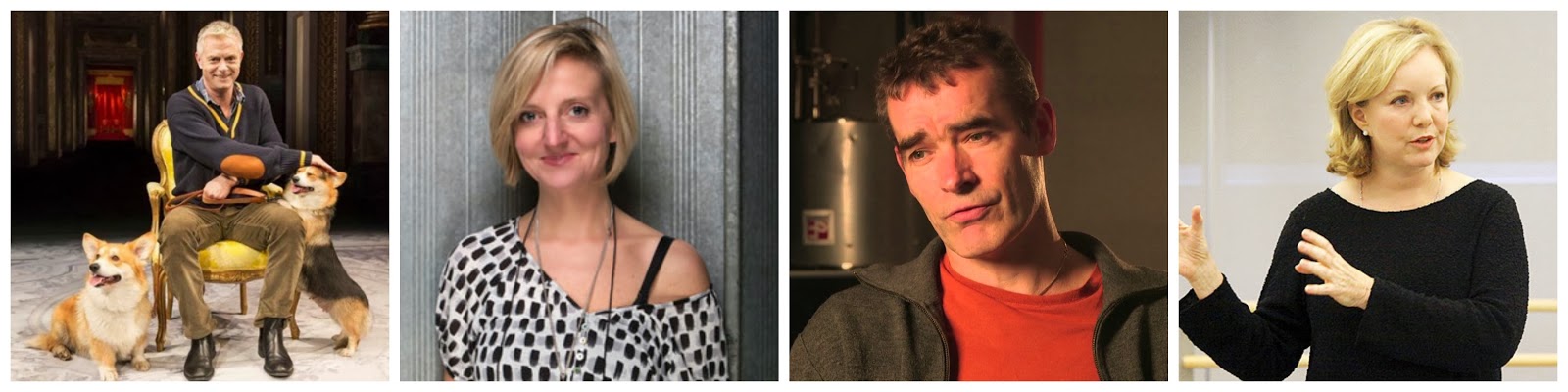
Nominees: Stephen Daldrey (The Audience); Marianne Elliott (The Curious Incident of The Dog In The Night Time); Rufus Norris (The Amen Corner); Susan Stroman (The Scottsboro Boys)

BEST DESIGN
 

LEZ BROTHERSTON (Sleeping Beauty, Richmond)
 
 
Nominees: Bunny Christie (The Curious Incident of The Dog In the Night Time);
John Doyle (The Color Purple); Tim Hatley (Ghosts); Rae Smith (The Light Princess)

BEST LIGHTING
 
 
PETER MUMFORD (Ghosts, Almeida)
 
 
Nominees: Ken Billington (The Scottsboro Boys);
Paule Constable (The Light Princess); Paule Constable (Sleeping Beauty);
Paule Constable (The Curious Incident of The Dog In The Night Time)

BEST CHOREOGRAPHY


SUSAN STROMAN (The Scottsboro Boys, Young Vic)
 
 
Nominees: Baayork Lee/Bob Avian/Michael Bennett (A Chorus Line); 
Matthew Bourne (Sleeping Beauty); Matthew Bourne (Swan Lake);
Peter Darling (Matilda: The Musical)

Saturday, July 13, 2013

Revivalists: Act one

...and what of the revivals I have seen?  There have been a few... I won't list them by preference, I shall simply pull programmes out of the Poly Styrene tote bag they are currently residing in!

First off the rank is the National Theatre's long-awaited production of OTHELLO at the Olivier.  Ironic that, as Larry O had one of his biggest successes - although retrospectively controversial - when the National Theatre was at the Old Vic.


The big anticipation was for the NT Dream Team casting of Adrian Lester and Rory Kinnear as Othello and Iago.

In 2003 Nicholas Hytner directed Lester as Henry V in a production that looked more like a War On Terror than a war against the French and here he gives us the same shtick, as Cyprus becomes a dusty, dry, compound which suggests Afghanistan.  I have no problems with this approach but it does chime with the idea that Shakespeare can only be relevant if put in a contemporary setting and that the audience won't 'get' the timeless aspect of his plays unless it's made obvious.

 
And above all, it makes for a very drab evening.  I sympathised for the actresses playing Desdemona and Emilia whose respective wardrobes looked to be the best that Primark and Millets can offer.  I do appreciate how the unrelentingly awful barrack-room atmosphere of Vicki Mortimer's set suggested a world where wives are out-of-place and more likely to be victimised.

Did I enjoy the production?  All in all, not as much as I had hoped.  Kinnear was fine, creating a very recognizable character: the reliable bloke, everyone's mate, but secretly snide and conniving.  Lester rose finally to the challenge but he is such an intelligent actor that it was a real struggle to believe that his Moor would simply change from loving husband to jealous tyrant.  It didn't help that the production literally had him exiting as the former and 5 minutes later bursting through the same door as the latter.


I guess there was so much anticipation that these two actors would bring the drama that it was bound not to deliver totally.  Olivia Vinall played Desdemona as the usual milquetoast blonde, oh for a Desdemona who actually puts a fight.  Lyndsey Marshal was also lacking something as Emilia.  It's worrying when the performances that stayed with me were those of William Chubb as an unforgiving Brabantio and Nick Sampson as a sympathetic Lodovico.  The lead supporting male roles of Roderigo and Cassio were played by Tom Robertson and Jonathan Bailey with little effect.  I did like the brief flash of fire that Rokhsaneh Ghawam-Shahidi brought to Bianca.

Vicki Mortimer's interiors of flat-pack and office furniture combined with Jon Clark's glaring neon lighting design gave us a world of mundane joylessness.  The production certainly gave us some new Othello images: Othello heaving into a handy toilet at the news of Desdemona's alleged infidelity and Desdemona meeting her death in a tee-shirt and drawers on a Seconique bed.

In 2011 I saw OTHELLO in Sheffield with Clarke Peters and Dominic West which the director Daniel Evans set in a more 17th Century style and I have to admit I preferred that production.  There was less to prove, less of an 'event' and there was stronger characterisation especially in the two female roles.


Also at the NT was CHILDREN OF THE SUN by Maxim Gorky in a new version by Andrew Upton.  There were big hopes for this as it reunited Upton, director Howard Davies, designer Bunny Christie and lighting designer Neil Austin who had struck gold with Bulgakov's THE WHITE GUARD in 2010.

Disappointment set in early as Bunny Christie's set was practically the same as THE WHITE GUARD - big windows, small closed area, long corridor stretching away from the audience - check, check, check.

Gorky's 1905 play can be included in the Russian stable of plays where silly people fritter and fuss their lives away not realising that events in the world outside will change them forever.  Protasov, a scientist tinkers away with his experiments at home, oblivious - wilfully or not - to the growing chaos around him - his wife Yelena is fighting off the advances of an artist friend, his sister Liza is becoming more and more mentally distressed, Boris the town vet who loves Liza is becoming more and more depressed while his sister Melaniya is almost semaphoring her adoration to the scientist which, of course, he cannot deal with.

All the while the offstage anger of the town's people is growing at the cholera that is sweeping the town which they blame on the scientist poisoning the water with his experiments.  Gorky based the play on an 1862 cholera epidemic but anyone seeing the play in 1905 - the same year as the Bloody Sunday massacre of workers and their families - would know exactly what the left-wing writer was really saying.  Allegedly at the play's first performance, the audience got so agitated at the offstage sounds of a riot that the actor playing Protasov had to assure them it was part of the play!

 
Writing the above actually makes me wonder why I didn't enjoy the production more.  Howard Davies is one of our finest directors but by God, his Russian productions tend to the ponderous and without Chekhov's more forensic writing of characters, Gorky's people did nothing to keep you interested in their fate.  On and on it went in Upton's modern speech, scene after scene with the characters reiterating what they had done in the previous one with no change in tone.  Luckily there were a few performances that I clung to.

As Protasov Geoffrey Streatfeild was enjoyably irritating, his baffled incomprehension at the world outside of his science lab wonderfully done.  Justine Mitchell as Yelena seemingly reprised the same role she played in THE WHITE GUARD, that of the only sensible person who knows what is going on outside as well as inside.  Paul Higgins was very effective as the tragic Boris.

 
Two actresses whose performances really stood out were Lucy Black as the wealthy, imperious but lovelorn Melaniya and Florence Hall as the Protasov's stroppy maid Feema, marking time as a servant until she could marry a wealthy man.  Emma Lowndes as Liza and Gerald Kyd as the artist in love with Yelena both usually outstayed their welcome.

However just as I thought the play would never end - it did with a bang!  The rioting mob finally broke in to Protasov's enclave and as Yelena rushed out into the melee brandishing a revolver, Protosev was left alone in a state of shock at what he had brought about.  His beloved science lab is set on fire and the play ended with a MASSIVE explosion which certainly woke the audience up - and going by the look of them gave them a few heartaches!  I loved it!!  I now want plays where there are exploding sets at the drop of a hat - bring it on!


Oh and on the subject of the NT... I have never blogged about their revival of SHE STOOPS TO CONQUER!  I had never seen the play before and I'm happy that this is the one to compare all future ones too. 

A play has to have something going for it to still raise genuine laughs 239 years after it was written and Goldsmith's classic farce of mistaken identities still delivered despite Jamie Lloyd's uneven handling of the play which felt at times like an adult panto - I really could have done without the outbursts of song from the ensemble between the scenery changes which diluted the tension of the plot.

The production was helped immeasurably by a delightful cast who sparked memories of Peter Wood's great 1983 production of THE RIVALS in the same theatre.

Steve Pemberton was an exasperated Mr. Hardcastle and in a performance of the most glorious over-the-topness, Sophie Thompson stole everything but the lighting gantry as the painfully nouveau-riche Mrs. Hardcastle.  Anyone who saw her play the scene where she welcomes her visitors from London to tea won't forget it with her strangulated pronouncements on all that was "farshionable"!  Sophie never fails to deliver on stage and here she created a wonderful monster!

 
For once at the National the other lead roles were also very well balanced, ex-Corrie star Katherine Kelly as Kate Hardcastle and Cush Jumbo as her friend Constance were equally matched with the posh blokes out of their depth, Harry Hadden-Paton as Marlowe and John Heffernan as Hastings.  Katherine Kelly in particular was a real surprise as Kate, possibly the most sensible character in the piece.  Daniel Fynn was the only one to pull focus as the troublesome Tony Lumpkin.
 
 
The classy quality of the production was exemplified by Mark Thompson's sumptuous costumes and sets and Neil Austin's lighting.  It was one of the increasingly rare productions which truly embraced the Olivier stage and showed it off to it's full potential.

More recently the National has also given us Eugene O'Neill's epic STRANGE INTERLUDE at the Lyttleton.


I had missed Glenda Jackson's version in the 1980s - and they never show Norma Shearer and Clark Gable in the 1932 film! - so I grabbed my chance to see it.

Um, does it sound odd to say that I wish it had been longer?  Simon Godwin - and the cast I presume - have tightened up it's standard 5 hour running time to a cantering 3 hours 30 minutes but I still felt oddly short-changed.  The play just seemed to be an upmarket soap opera - surely at that length there should at least be some sense of profundity?

Nina Leeds is a young woman who has cracked mentally under the grief of losing her pilot fiancée in WWI as well as the pressure of living with her professor father.  She makes the break from him and sinks her sorrow into being a nurse - and with sleeping around (always an under-rated tonic for misery).

She returns to the family home, still restless with inner demons and marries Sam, an amiable advertising man who will never challenge her wilful nature.  She learns from his mother however that there is a strain of madness in the male line of his family and, horrified at this prospect for her unborn child, Nina has an abortion procured by her father's doctor Edmund Darrell - then promptly seduces him to provide the replacement - you go, girl!  Hovering in the background is an old family friend Charles Marsden, a fussy would-be writer who lives with his ailing mother who secretly loves Nina.


We follow the lives of Nina and her besotted men over twenty-odd years and from the start the audience are included in on the secret thoughts - so the scenes are always played on a knife edge as we are privy to their secret thoughts.  The one who this works best for is Charles, his bland exterior covering a spiteful and frustrated interior life.

As the central quartet move into middle age they are joined by Nina and Edmund's son Gordon who has grown up with the suspicion of his mother's relationship with Doctor Ned.  When Gordon is grown and falls in love Nina finds herself implacably jealous of the threat to her relationship with his son but by now she should be aware of what curves life can throw, eh?


As I said, Simon Godwin's production rockets through the text but this actually leaves little space for reflection on the character's actions as they bounce on and off Soutra Gilmour's pretty sets, through innumerable quick frock and wig changes.  O'Neill's device of having the characters address their private thoughts to the audience suffers too as they sometimes do this at such a speed that it comes across less like high drama and more like sitcom. 


Speaking of comedy, while watching the play I kept thinking of Groucho Marx in ANIMAL CRACKERS where he spoofs O'Neill's premise while talking to Margaret Dumont and Margaret Irving, he keeps stopping to address his thoughts to the audience such as "Pardon me while I have a Strange Interlude"!

Anne-Marie Duff gave a fine performance as Nina, making the character's wilful behaviour understandable and believable.  A lesser actress would struggle with this which is maybe another reason why the play is rarely revived.  The other standout performance was Charles Edwards as Charles Marsden.  Bristling with resentment at Nina's choices in life he nevertheless made the character a fully-rounded one and his deftness of touch was missed when not onstage.  They also aged wonderfully!
 
Jason Watkins was fine as the optimistic Sam while Darren Pettie (last seen flashing his knob as the Angel of Death in the less-than-impressive THE MILK TRAIN DOESN'T STOP HERE ANYMORE on Broadway) was again adequate enough as Nina's sometime lover, it's just a shame they couldn't have found a more charismatic performer.
 
Ok time for an ice cream and an interval wee... Act Two starts soon!