Monday, August 31, 2009

On Saturday I descended into madness with Natasha Richardson. Twice.I watched her 2005 film ASYLUM on DVD that Natasha had struggled to bring to the screen and it certainly provided her with one of the few screen opportunities she had to stretch herself and show how powerful she could be.

She had read the book before it was published and was determined to bring it to the screen. Sadly I don't think it was particularly successful although as I say, she was never less than watchable.

The film moved along at a brisk rate and that I fear was the problem - again and again I got the impression that I was watching a scene that probably had more impact on the page, but stripped of all internal dialogue etc. it slid by with hardly any impact.

Richardson played Stella, the unfulfilled wife of a newly-appointed chief psychiatrist to a large asylum, who falls in love with a charismatic but dangerous inmate who was formerly an artist. Abandoning her husband and son, this 1950s Mrs. Soffel lives with her lover in his moodily-lit garret room until tracked down by her husband's jealous colleague (an oily Ian McKellen). Returning to normality she attempts to play the repentant wife but slowly her life unravels as she finds herself as much a prisoner of her emotions as she is of the men who wish to possess her.

I still have the DVD so I guess there is the chance a second viewing will be better but it's a shame I didn't enjoy it more as it was obviously a project that was very close to her heart.
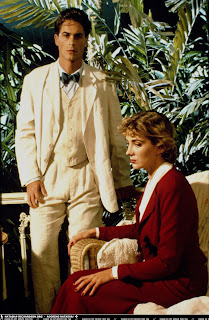
No such problems with the 2nd outing as it was a work I was already familiar with. The National Film Theatre - I can't call it the British Film Institute no matter how much they try and brand it - have had a short season of stage-to-small screen adaptations so it meant I could finally see Richard Eyre's 1992 BBC production of Tennessee Williams' haunting SUDDENLY LAST SUMMER.

As with Brando and Leigh in STREETCAR.., the celluloid shadows of Katherine Hepburn and Elizabeth Taylor threaten to loom heavy over any production of this play. However the late Sheila Gish and Rachel Weisz banished any filmic memories when I saw the 1999 Donmar production at the Comedy Theatre as the play is radically different to the film and here, although the overall feel was a bit too cool for the fevered hothouse atmosphere, I think Richard Eyre coaxed performances of greater nuance and subtlety from the leads.
It is reported that Maggie Smith was unwell during the filming and she certainly appears to be firing on a quieter cylinder than usual but this in fact leads to a new interpretation of Mrs. Venable, the possessive mother willing to go to any length to protect the reputation of Sebastian, her dead poet son. Rather than Hepburn's Cruella De Ville turn or Sheila Gish's dominating matriarch, Smith gave Mrs. Venable the unassailable quality of the patrician snob, sure in her power of getting people to do anything for her money.

Rob Lowe was surprisingly good as the young doctor whose clinic is promised a large donation from the Venable coffers... just so long as he performs a lobotomy on Catherine, Sebastian's poor cousin who is the only witness to his death.

Tennessee Williams had doubts as to Elizabeth Taylor's suitability for the quiet and poor relative who is naive in the ways of the world and in particular, her effect on men. Natasha Richardson was a luminous Catherine, obviously damaged by what she witnessed but also capable of firey anger when confronted by her mother and brother (a fine double act of Moira Redmond and Richard E. Grant) who are more than happy for Catherine to stop upsetting her aunt who disdainfully finances that side of the family. She handled the devastating climactic soliloquy with great skill.

On the whole I preferred SUDDENLY LAST SUMMER over ASYLUM but both stand as further evidence of the tragic loss of Natasha Richardson.
Wednesday, August 26, 2009

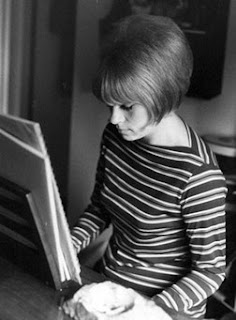
It was with sadness tonight I read of the death of singer-songwriter Ellie Greenwich from a heart-attack aged 69. Greenwich was responsible with her then-husband Jeff Barry for some of the Brill Building's most enduring pop hits.

Born in Brooklyn and raised in New Jersey, Ellie was already writing songs as a teenager. She visited the Brill Building aged 22 to meet a songwriter for guidance in her career. Left alone in an office for a while, she started playing the piano. A man walked in and said he liked what he heard - he was none other than legendary songwriter Jerry Lieber who shared the office with his writing partner Mike Stoller! Signed to their publishing company she soon showed her worth, co-writing "Why Do Lovers Break Each Others Hearts", "Wait Till My Bobby Gets Home" and "(Today I Met) The Boy I'm Gonna Marry" with Phil Spector.
Marrying Jeff Barry later in 1962, they soon rivaled the other Brill Building husband-and-wife teams of Carole King and Gerry Goffin and Cynthis Weil and Barry Mann: they were responsible for, among many others, "Be My Baby", "Baby I Love You", "Da Doo Ron Ron", "Then He Kissed Me", "Chapel of Love", "(Christmas) Baby Please Come Home", "Baby Be Mine", "Leader Of The Pack", "I Wanna Love Him So Bad", "Hanky Panky", "Maybe I Know", "Do Wah Diddy Diddy" and Ellie's haunting "You Don't Know". Ellie and Jeff even recorded as the group The Raindrops "The Kind Of Boy You Can't Forget" which has one of the greatest non-Motown drum lines ever!

After their marriage foundered in 1965, they still co-wrote for a while - actually writing two of their most enduring hits "I Can Hear Music" and "River Deep, Mountain High". During this period she discovered a young songwriter called Neil Diamond who she and Barry went on to produce at the start of his singing career.

She continued in the music business on a less-showy level, recording demos, writing, singing backing vocals on other singer's tracks and writing commercial jingles. Her biggest success of her 'solo' years was "Sunshine After The Rain".

There was a major resurgence of interest in her work when in 1985 a jukebox musical of her songs "Leader Of The Pack" played on Broadway with Greenwich and Darlene Love appearing as themselves. How odd that now you can't move for these sort of musicals on both sides of the Atlantic but back then it lasted 3 months.

As long as people love a 3 minute pop song, Ellie Greenwich will be remembered.
Last month saw an end of an era...

Despite being sceptical when it opened ten years ago I soon found myself won over by Borders Books on Oxford Street. It's late closing time was ideal for when I used to finish work at 7pm at Flashbacks. Many a walk to Oxford Circus station was interrupted by a quick wander round - doing my famous picking-up-and-putting-down, heading to the new titles... to my favorites in the fiction department on the first floor... to the history section and wandering around the biography section which bizarrely only appeared about two years ago. I had a great time getting books signed by Mary Wilson of The Supremes and Boy George.

I started my retail job life in a West End bookshop chain - the long-gone Claude Gill Books on Piccadilly then 19-23 Oxford Street and in my 10 month spell of unemployment I applied to Borders for a job - to no response.

So it was with mixed feelings when a few weeks ago I saw the shop windows plastered with large CLOSING DOWN posters. That'll learn 'em I thought... but it didn't stop me feeling a bit sad too.


Tuesday, August 25, 2009

Although I have been to Somerset House in the past to see Grace Jones and Beverley Knight perform in the big courtyard - by the way, if you ever see a gig there, bring a plastic screw-top with you as they take them off any bottles of water you buy there - I had never visited it's main claim to fame these days which is the home of the Courtauld collection. Well not anymore! I am down with the Courtauld posse innit?

On Sunday afternoon, as London sizzled in the boiling sunshine, Owen and I stepped into the cool of the Somerset House portico and had a hugely enjoyable time! The main reason for me going was to see the BEYOND BLOOMSBURY exhibition which is currently on there. The small exhibition - only two rooms - celebrates the brief six year period of the Omega Workshops, set up in Fitzrovia by the artist and critic Roger Fry.

Fry set up the workshop to bring together the worlds of applied and decorative arts as well as giving regular work to his artist friends who all worked anonymously under the workshop's 'omega' trademark. As with all things ahead of it's time, the Omega didn't quite fulfill it's ambition.

A schism led by the artist Wyndham Lewis resulted in his defection with his Vorticist chums to set up a rival enterprise - and he drearily continued to snipe at Fry and the Bloomsbury Group for years. The Workshop would work to order so there was never a chance to build up a name known to everyone so most of their work was created for wealthy benefactors. It was also a quirk of fate that it's opening coincided with the build-up and arrival of WWI.

But it's legacy lives on and the exhibition boasts a wide range of it's creations, from ceramics to textiles, from clothing to carpets. A few of the pieces I had seen at the Tate's wide-ranging Bloomsbury exhibition in 1999 but I would happily have run riot there with a shopping trolley!There was Vanessa Bell's large screen of figures in a campsite, Duncan Grant's wonderful 'lily pad' design on a table and screen, the carpet that Bell and Grant designed for the Omega's stand for the 1913 Ideal Home Exhibition, a very nice women's tailored waistcoat, Grant's fantastical design of a curled-up Giraffe for a plate and some impossibly cute cat figurines designed by Henri Gaudier-Brzeska, one of the most promising sculptors of his generation, killed on the Western Front aged only 23. There were also some delightful woodcuts and toy designs by Winifred Gill in a side exhibition.

After that we wandered down through the remaining rooms housing the permanent exhibition - and soon we found our own Courtauld catchphrase "...there's another famous one in here!" What I really liked was that, although there were punters walking around the relatively small gallery rooms, it didn't feel crowded so you could spend time in front of these master works without having to look after 20 heads as you do in other galleries. It also meant that areas of art history that don't appeal to one can be skimmed through again as opposed to other galleries where room after room after room can seem to be endless.

Cranach, Degas, Renoir, Cezanne, Seurat, Manet, Modigliani, Bell... wow!All this and a nice lunch in the basement cafe was a great way to get away from the Sunday herds. I think the Courtauld will get a re-visit! Some snaps I took - without flash of course!

Saturday, August 22, 2009

Last weekend I took on the mammoth task of sorting my theatre programmes - all six plastic storage boxes.

As I sorted through them, memories tumbled through my mind... actors crowded into my mind's eye singing, acting, crying, laughing, going up on wires, falling down dead.I realised I have been lucky enough to see some fantastic performances that will stay with me for a long time - of course I have seen performances that have completely faded from my memory, by quite a few name performers too!

Well Constant Reader, you know how I just *love* doing lists... so here they are, in alphabetical order... the best Shakespearean performances I have been lucky enough to see -

BEST ACTORSimon Russell Beale as "Hamlet" (2000)
Simon Russell Beale as 'Benedick' in "Much Ado About Nothing" (2008)Simon Russell Beale as 'Iago' in "Othello" (1997)Ian Charleson as "Hamlet' (1989)Michael Gambon as "King Lear" (1983)Henry Goodman as 'Shylock' in "The Merchant of Venice" (1999)Ian Holm as "King Lear" (1997)Derek Jacobi as 'Malvolio' in "Twelfth Night" (2008)Adrian Lester as "Henry V" (2003)Ian McKellen as "Richard III" (1990)

BEST ACTRESS
Brenda Blethyn as 'Helena' in "A Midsummer Night's Dream" (1983)Susan Fleetwood as 'Titania' in "A Midsummer Night's Dream" (1983)Geraldine James as 'Portia' in "The Merchant of Venice" (1989)Vanessa Redgrave as 'Cleopatra' in "Antony and Cleopatra" (1986)Vanessa Redgrave as 'Katherine' in "The Taming of The Shrew" (1986)Emma Thompson as 'Helena' in "A Midsummer Night's Dream" (1990)Sophie Thompson as 'Rosalind' in "As You Like It" (1990)Sophie Thompson as 'Isabella' in "Measure For Measure" (2004)Zoe Wanamaker as 'Beatrice' in "Much Ado About Nothing" (2008)
Emily Watson as 'Viola' in "Twelfth Night" (2002)

BEST SUPPORTING ACTORDavid Bamber as 'Pandarus' in "Troilus and Cressida" (1999)
Michael Bryant as 'Polonius' in "Hamlet"
(1989)
Ron Cook as 'Polonius' in "Hamlet" (2009)Finbar Lynch as 'Enobarbus' in "Antony and Cleopatra" (1998)Finbar Lynch as 'Edmund' in "King Lear" (1997)Kevin McNally as 'Polonius' in "Hamlet" (2009)Derek Newark as 'Bottom' in "A Midsummer Night's Dream" (1983)Jack Shepherd as 'Puck' in "A Midsummer Night's Dream" (1983)
Antony Sher as 'The Fool' in "King Lear" (1983)Clive Wood as 'Edmund' in "King Lear" (1983)

BEST SUPPORTING ACTRESS
Maureen Beattie as 'Emilia' in "Othello" (1997)Sinead Cusack as 'Paulina' in "A Winter's Tale" (2009)
Judi Dench as 'Gertrude' in "Hamlet" (1989)Deborah Findlay as 'Paulina' in "A Winter's Tale" (2001)Barbara Flynn as 'Goneril' in "King Lear" (1997)
Clare Higgins as 'Queen Elizabeth' in "Richard III" (1990)Sara Kestelman as 'Goneril' in "King Lear" (1983)
Helen McCrory as 'Olivia' in "Twelfth Night" (2002)Siobhan Redmond as 'Goneril' in "King Lear" (1990)
Sophie Thompson as 'Ophelia' in "Hamlet" (1988)

Thursday, August 20, 2009

"Go ahead... Make a wish"

Sunday, August 16, 2009

They have to be the most daunting opening lines for any actress: "They told me to take a streetcar named Desire, and then transfer to one called Cemeteries and ride six blocks and get off at Elysian Fields" as they signal the beginning of an epic journey for both performer and audience into the dark heart of A STREETCAR NAMED DESIRE and in particular the character of Blanche DuBois.

It's a role that is so beautifully written by Tennessee Williams, that gives the actress so many chances to barnstorm that unless the piece is perfectly balanced between the four main characters it can overtip into a one-woman show. To be honest I have yet to see a perfectly balanced stage production and Rob Ashford's production at the Donmar does not break that run.

Of course there are omnipresent shadows lurking over any production: Vivien Leigh's beautifully multi-levelled performance as Blanche and the explosive Stanley of Marlon Brando from Elia Kazan's film version of his original stage production. The perfect supporting performances of Karl Malden and Kim Hunter are also hard to step out from under too.

The last time I saw it on stage was with Glenn Close at the National Theatre directed by Trevor Nunn. It was a highly mannered performance - she started off at frenzy pitch and continued unwaveringly for the next three hours. More than once I would have been happy to throw a bucket of water over here to calm her down. Iain Glenn was miscast as Stanley although Essie Davis and Robert Pastorelli (who died a few years ago from a drug overdose) were ok as Mitch and Stella.

I missed Jessica Lange in Peter Hall's Haymarket production but loved Sheila Gish's performance at the Mermaid Theatre back in the 1980s opposite the anonymous Paul Herzberg as Stanley but with excellent support from Duncan Preston as Mitch and a great Stella from a young Clare Higgins. Gish managed to cover the polar opposites of Blanche's character - the poetic, tremulous woman trying to find "a cleft in the rock of the world that I can hide in" and the steely pragmatist surviving a life of dying relatives and cruel reality.

Rachel Weisz was certainly the fiercest Blanche I have ever seen. From her first appearance, she is obviously damaged goods but with a steely resolve to survive and a tangible resentment of Stella getting away from the suffocating atmosphere of Belle Reve. She also made the most of Blanche's alcoholism - every time she knocked back a straight Bourbon she would lean back arching her neck as it gave her a moment's release. The first time she let her guard down was in the scene with the young man collecting for the Evening Star which she handled wonderfully.

She is the youngest Blanche I had ever seen but the description in the text is that she is in her early 30s so it worked remarkably well. It certainly ramped up the sexual tension which certainly didn't work in the Glenn Close version - you can imagine Weisz's Blanche enjoying having sex with Stanley if their circumstances were different.

You should always feel that Blanche has the possibility of escape from her fate - if Stanley had been kinder, if Mitch had not been tied to his mother, if the world was a more understanding place. So the tragedy of the final scene should hit hard and in this production it did, seeing Rachel Weisz's Blanche broken by life's cruelty was very affecting as the auditorium reverberated with her childlike sobbing.

It connected with an earlier line of Stella's when she admonishes Stanley for his heartlessness telling him that no one knew the Blanche she remembered from before, trusting and childlike. It was a brave performance as she did nothing to elicit the audience's sympathy but it was a particular triumph. I also saw her as Catherine in Williams' SUDDENLY LAST SUMMER produced by the Donmar in the west end in 1999 and she showed she had the potential to be a great Blanche. It's a pity we don't see this magnetic actress on stage more often.

Ruth Wilson was well cast as Stella. She is younger than Blanche by five years but is more balanced and more able to deal with life. I have never seen a bad Stella and Wilson brought great emotional warmth to this important role. Her resemblance to Weisz made them believable sisters and she had just the right astringent quality to her performance, especially in her rueful delivery of Stella's line about enjoying serving drinks to Blanche because it reminded her of the old days. She also has to be believable as the brow-beaten wife of Stanley and make you understand how this young girl from the South would withstand all Blanche's entreaties to leave her volatile husband and this Wilson did.

I also enjoyed Barnaby Kay as Mitch, Blanche's last chance for survival which is brutally closed off. He brought an easy affability to the role while also hinting at the ambiguity of being trapped in a relationship with his sickly, needy mother who is stifling his need for freedom. I had never realised the undertow of Blanche and Mitch's attraction in that her life too has been trapped with dying, emotionally-blackmailing relatives in Belle Reve which makes their stifled relationship all the more tragic. His drunken confrontation scene with Weisz was very powerful.

I also liked Danielle Nardini who made the most of her scenes as Eunice, the neighbour upstairs who has a loving, argumentative relationship with her husband which mirrors Stanley and Stella's.

Which brings us to Elliot Cowan's Stanley. One day I guess I will see an actor who makes a success of this role but it has yet to happen. Cowan was adequate but the sheer macho over-acting just started to grate after a while and his black and white reading of the role didn't mesh well with the nuanced performances of the other three leads. There is more to Stanley than his overbearing nature - played like this his attractiveness to the other characters is hard to believe.

Christopher Oram's design for the cramped apartment worked well on the Donmar stage with the design extending around and above the circle with New Orleans-style fancy balcony metalwork. The lighting design by Neil Austin was also hugely evocative and perfectly captured the shifting moments of Blanche's fantasy and reality.
Rob Ashford is an odd choice as a director as he is mostly known for his choreography but his production moved along at a swift pace - the only clunking moment came with the introduction on stage of figures from Blanche's imagination which was too literal and impeded the action.

But above all it was great to hear Tennessee Williams' magnificent prose of harsh truths and poetic imagery - a clarion call for tolerance of the imaginative dreamer. It is one of my favourite plays and I love to lose myself in it.

Tuesday, August 11, 2009

Today would have been Ian Charleson's 60th birthday.

Since his death in January 1990 I have looked for an actor to match him as the ideal stage actor but have yet to find one.Ian shares the misfortune of many great British stage actors that, apart from his heartfelt performance as Eric Liddell in CHARIOTS OF FIRE and his gay punk in JUBILEE!, his negligible film roles are how he will be viewed by posterity. He had hoped for great things after the worldwide success of CHARIOTS but it never really happened for him.

It was through CHARIOTS that I first became excited by him and so the chance to see him on stage in the National Theatre's GUYS AND DOLLS in 1982 made it a must-see.

Before that however I saw him onstage with Vanessa Redgrave in two Sunday benefit performances at the Roundhouse in which they did scenes from Chekhov, Shakespeare - even GUYS! They had a great chemistry on stage and I still remember their nought-to-hundred performances as 'Nina' and 'Konstantin' in their heartbreaking last scene from THE SEAGULL.

His performance as 'Sky Masterson' at the National was a revelation: humourous, laconic, romantic, winning and even more importantly, a great tenor voice - taut and teasing in "Luck Be A Lady Tonight" and swooningly romantic in "I've Never Been In Love Before".

He burned up the stage with Julie Walters in Sam Shepherd's emotionally bruising FOOL FOR LOVE, was a witty and charismatic Boito to Richard Griffith's Verdi in AFTER AIDA - in which he handled a few arias with ease - and was a tortured and torturing Brick in CAT ON A HOT TIN ROOF, easily matching Eric Porter's Big Daddy in their confrontation scene.

Then he took over from Daniel Day-Lewis in Richard Eyre's production of HAMLET at the National Theatre and as I blogged recently after seeing Jude Law in the role, for me he will always be the definitive Hamlet. Even with his handsome face swollen due to chronic sinus conditions and struggling with the after-effects of a punitive attack of Pneumonia, Ian gave one of the greatest performances I have seen on stage.

Three months later he was gone.

In his moving epitaph to Ian, his GUYS AND DOLLS and HAMLET director Richard Eyre said the following:
We're often accused of sentimentality in the theatre, but it can't be sentimental to miss terribly someone whose company gave so much joy, whose talent really did add to the sum of human happiness, and whose courage was beyond admiration.
Ian's name lives on in the annual award given to young actors who excel in a classical role but tonight I am sad when I think of the roles he never had the chance to play and of the huge loss the British stage suffered when he died 19 years ago.

I miss him.

Monday, August 10, 2009

On Saturday I accompanied Owen to yet another busy term at Hogwarts... in other words we went to see HARRY POTTER AND THE HALF-BLOOD PRINCE.

I have followed the story on cinema screens only as I have never felt the urge to crack one of la Rowling's increasingly hefty tomes so I am happy to say I am still in blissful ignorance of how the deal goes down - nope not even tempted to wiki it!


I am presuming that they might have been doing a slow wind-up to the final pitch - make that two pitches bearing in mind the final book will magically turn into two films. Far be it from Warner Brothers to pass Harry into adulthood without one more shake of his wand.
One of my favorite quotes about long-lasting franchises was when Ruby Wax asked Neil Simon what he felt about FRIENDS and he said "It's like they made one episode and they show it all the time". This is now how I feel about our Harry.

He returns to Hogwarts for a new term after an ominous event takes place, the arch-enemy Lord Voldemort appears in dreams, ominous clouds gather, Harry looks sheepishly at a girl, a new grown-up - teacher or official - turns up who is not all they seem and finally there is a huge confrontation usually somewhere dark and oppressive. It then ends with Harry recapping what has happened with Team Potter with the warning that it's not over. Cue l-o-n-g credit sequence.
Now as I have no particular emotional attachment to the stories or the characters, I can just sit back and enjoy what the various directors have come up with. More than anything I have enjoyed seeing a remarkable swath of Equity members wander on for a series of party 'turns' - some better than others.

This film also had me wondering was I the only one to see an interesting strain of paedophilia finally sneaking into Hogwarts! This film's big main co-star is Jim Broadbent who plays a retired professor who is lured back to the school by Michael Gambon's Dumbledore with Harry as the bait as he knows the old bloke would want the'Chosen One' to join his 'collection' of star pupils - there is even a scene where Harry asks Dumbledore "Do you
mean you would like him to collect me?" Well *I* saw a subtext...

Mind you, not to go all CARRIE on you, but it would have been nice for the teenage pupils who are repressing so many lustful emotions to manifest a bit of this in their magical powers.
Actually, Jim Broadbent gave a nice performance but his character is dropped as soon as the end of the film rears it's head and Dumbledore and Harry go off to do the usual fight against the dark forces in the usual dark place - this time an underground flooded cave... I think it was about this time I vaguely lost track of the plot so I'm unsure who the army of Golum lookalikes were who appeared from nowhere.

There have been criticisms that this film strayed from the plot of the book - for me it didn't stray enough... by now there is such an absurdly large collection of characters who must be given even just a few lines that the plot must stop while they all shuffle on to say enough to keep them in the running for the next film....Mark Williams, Julie Walters, David Thewliss, Robbie Coltrane, David Bradley, Timothy Spall - all appeared for no good reason than to pick up a pay-cheque and to do enough to warrant an appearance in the next film.
Someone who does more than just show up is Helena Bonham Carter as Bellatrix, a nasty witch with Bernadette Peters' old hair. She has great fun in the role and is a genuinely disturbing presence. Mind you, even as a romantic lead Helena Bonham Carter is a genuinely disturbing presence! Hopefully she will get to polish off a few of the good guys in the last one.
Michael Gambon gave the best performance in the film as the doomed Dumbledore, investing his scenes with a depth that was missing from the doleful script - although this time Maggie Smith was given something to do other than tell the pupils to stop running in the corridors - although she still found time to do that as well! I wonder how it all ends?

Sunday, August 09, 2009

What a great way to kick off a weekend... on Friday evening Owen and I went to the tiny Ondaatje Wing Theatre - trips off the tongue eh? - to see Beverley Knight do a 40 minute acoustic set to tie-in with the Gay Icons exhibition the National Portrait Gallery are now showing. Oh yes, she's a gay icon... you only have to look at her audience!

The OWT only seats 150 so an intimate experience was guaranteed - especially as we were in the middle of third row! Bev appeared with 2 backing vocalists, a guitarist and keyboard player and she looked great in a black silky top and sequinned black trousers. She launched straight into a fierce version of "Made It Back" and away we went...

She sounded and looked great ripping through "Piece of My Heart", "Every Step" and "Beautiful Night" from her forthcoming 100% album, "Gold", "Shoulda Woulda Coulda", "Keep This Fire Starting" and finally "Come As You Are".

It was a great atmosphere and Bev proved she was an all-too-human icon when she started shedding tears during "Gold" after dedicating it to her late friend Tyrone and - much to my surprise - Danny la Rue! We were on our feet by the end and she took a photo of us applauding us with her phone so hopefully that will appear on Twitter some time soon!

In a few weeks time she will be playing the ICA and it will be great to see her play a full show again - if See Tickets can be arsed to part with the tickets that is. It will also be my tenth Beverley show so I am buzzin'....

Thursday, August 06, 2009

It's time for more legends of and they don't come bigger than Diana Ross and The Supremes.

Oddly, they were created in the late '50s as a companion group to another future Motown group. The Primes comprised a couple of future members of The Temptations and their manager wanted to have a girl group called The Primettes. He asked schoolgirl Florence Ballard and a Prime girlfriend Betty McGlone if they knew any other girls who could sing. Flo recruited fellow schoolgirls Mary Wilson and Diane Ross and after a few years, Diane approached Smokey Robinson who was a family friend if they could audition for Motown. Berry Gordy liked what he heard but told them to return when they had graduated. They haunted the offices however, helping with backing vocals, handclaps etc. McGlone was replaced by Barbara Martin who had also left by the time Gordy eventually signed them. They needed a new name however and Florence suggested the name The Supremes.

For two long years they released singles which were popular with DJs but did not trouble the charts. All three were tried out as lead vocalist and they were paired with various producers and songwriters but it was when they were paired with Brian & Eddie Holland and Lamont Dozier that their fortunes changed. They disliked WHERE DID OUR LOVE GO? but the record went straight to #1 in the US and #3 in the UK. They then had four consecutive US #1s - BABY LOVE, COME SEE ABOUT ME, STOP! IN THE NAME OF LOVE and BACK IN MY ARMS AGAIN - and went on to become one of the 1960s most successful chart acts.

Of course it all came at a price: Gordy realised that Ross' radio-friendly voice could be the key to crossing over to the lucrative supper-club market and soon they were there, singing Broadway showtunes with their own songs usually consigned to a mid-show medley; Diana's secret relationship with Gordy led to her being groomed for an obvious solo career, leading to other Motown acts suffering accordingly and more troubling, Florence's disenchantment with being marginalised until she was sacked from the group she had started and named. This led to Cindy Birdsong being recruited in her place and the group becoming Diana Ross and The Supremes. After that it was only a matter of time before their final hit single "Someday We'll be Together".

Wednesday, August 05, 2009

Last night Owen and I stepped back in time and then back again. And then back again... Go figure!

The reason for all this to-ing and fro-ing was Rupert Goold's production of J.B. Priestley's TIME AND THE CONWAYS in the Lyttelton at the National Theatre.

I have never seen the play before but on a peruse of his biog in the programme I discovered I had seen more of Priestley's plays than I had thought and they are all solid, well-written works that are definitely of the period. He was a fascinating character, a writer who could turn his hand to any form and who's left-wing politics left him jobless by the BBC during WWII. He also was fascinated by the concept of time. All his interests crop up in TIME AND THE CONWAYS.

In 1918, the Conway family are throwing a party. The war is over, the youngest son is returning home from the RAF safely and Kay, one of the four Conway sisters, is celebrating her 21st birthday. The family are finding their feet after the death of their father and are comfortably off thanks to his investments. One by one we meet the family: Mrs. Conway the loving but vain mother, Alan the quiet eldest son, Madge sensible and interested in politics and education, Hazel the glamorous and flighty one, the would-be novelist Kay, Carol the youngest and finally Robin, the RAF pilot who is the apple off his mother's eye. Also present are the gauche Joan, friend of the sisters, the young lawyer Gerald Thornton who looks after their affairs and his latest client, the working-class businessman Ernest Beevers who has his eye on Hazel although she deplores his presumption and lowly status.

The first act bobs along as the sisters whirl and chatter away about the party, men and nothing in particular in their cut-glass accents - which belie the fact the play is set in the midlands - and by the end of it we know who all ten are and their place in the world. But the first act ends ominously with Kay alone and nearly fainting, frozen in attitude as the room rotates around her.
Priestley then jettisons us 19 years forward to 1937... the same room but now drab and empty but for a dining table and chairs. Again we meet the ten characters who have gathered back at the family home for a meeting: Mrs. Conway is now a querulous old woman, adept at emotional cruelty, who lives with Alan, a faded office clerk; Madge now a headmistress and chaffing at having to see siblings she has nothing in common with; Hazel is unhappily married to the quietly brutal Beevers; Kay has grown into a brittle journalist unhappy in love and Robin, the tarnished golden boy, a travelling salesman with a drink problem and estranged from his wife Joan. Gerald reappears and informs them that the money is running out. The stage is then set for the airing of old and new grievances amid filial and marital discord with Beevers finally able to revenge himself on years of class snobbery.
In the third act Priestley then pulls us back to where we left Kay at the end of the first act and we watch the characters again as the party ends, unknowingly setting themselves on the collective journey which will lead them back to that room in 19 years time.

I enjoyed the play but had trouble with Goold's unnecessarily post-modern take on it. As we are talking about the sins of the past catching up with you, 17 years ago in the same theatre Stephen Daldrey directed his hugely popular reinterpretation of Priestley's AN INSPECTOR CALLS which pointed up not only Priestley's solid plot but also the similar timewarp theme. All the time I was watching this production I felt Goold was striving to do the same with this play but to limited success.The actors - although an excellent ensemble - have been directed in a very odd way. Goold has them playing it in a highly theatrical, vaguely irritating style, making it difficult to empathize with any of the characters as they are played as posh stereotypes as opposed to characters. It is made all the more bizarre as half the cast appear to be playing it naturalistic while a few are sticking to the theatrical style - this is particularly a problem with Hattie Morahan's performance as Kay. She is tolerable as the artistic 21 year old but less so as the emotionally shellacked journalist - she plays the second act striking a "hard-smoking" pose and playing it like she has seen one too many Kay Hammond movies. In fact several of the worse offenders give that idea, that they were given a stack of 1930s British films to watch as homework and that is solely what they have based their performances on - all external show, no inner life. It was disheartening to watch their declamatory performances with tittering echoing from the peanut seats.
Goold has also grafted bits of business onto the three act's curtain moments - Morahan's 'freeze-frame' works well in the first act but the second act closure - echoing a line of Alan's about the past being like a series of selfs seen at various stages - has eight Kays standing in front of eight fireplace mirrors and doing a bit of Matthew Bourne-ish 'movement' courtesy of longtime Bourne performer Scott Ambler. The last act ends with Morahan and Paul Ready as Adam appearing behind a scrim and doing more 'movement' with video images of their 1918 and 1937 selves respectively. These last two pieces of "director theatre" do not illuminate or complement the text - they only serve to show Goold's worry that a 72 year old play needs 'contextualising' for the modern viewer.

Some of the performances shone out from Goold's tricksy multi-media production.

Francesca Annis was excellent as the matriarch of the Conway clan: vain, flamboyant, flirty and when older, manipulative and emotionally cruel. Paul Ready was touching as Alan, the son doomed to live with his needy mother but the most sane of the Conways while Fenella Woolgar, while distracting with semaphore arms as the younger idealistic Madge, made the most of her character's filial loathing in the 2nd act.

Faye Castelow had the right bounciness as Carol the youngest, doomed sister and the performance from the evening came from Adrian Scarborough as the 'Lophakin' in the Conway's Cherry Orchard - totally out-of-place in their world and silently taking every one of their slights and put-downs until we find in later life that he has quietly been revenging himself on his trophy wife Hazel and ensuring the family's demise.

So... despite the director's absurd 'business' I enjoyed Priestley's Chekhovian look at lost opportunities and the banal cruelties inflicted within the family. Give me this over AUGUST: OSAGE COUNTY anytime!

Saturday, August 01, 2009

Well Tuesday was quite a big day... for both Owen and a certain Canadian singer!
For the first time in 17 years Buffy Saint-Marie played live in London and Owen wanted to be there to celebrate. And we were - row B of the Queen Elizabeth Hall sounds good enough but as Row A only has a couple of seats to it's name as it's the wheelchair row - looking out from the stage it must be like playing a gig at Lourdes - we were to all intents and purposes in the front row! For the longest time I wondered what that feedback noise was coming from the sound system - then realised it was Owen almost humming with excitement.
We sat through the support Nell Bryden who was a fine big lump of a girl from New York who sounded a bit like Shelby Lynne - kinda neu country/pop-crossover. She had the chatty, non-pushy personality that works well for support acts and although none of the songs were particularly memorable she connected well with the audience - I suspect that was down to them just being pleased to be there. Even without Owen there was obviously a lot of love in the room!
The auditorium had filled up by the time we had negotiated the scrum at the bar during the interval and there was a jittery feeling of expectation in the air. Of course Owen and I are old hands at this Buffy game... we have travelled to see her in Bellville, Canada as well as to New York... but it was fun to be in such a buzzy audience. Soon the lights were dimming and as her 3-piece band and 2 backing sisters walked out... there she was, waving and making exaggerated bows and curtsies... no announcement, no big buildup.

Her show was based nominally around her new album RUNNING FOR THE DRUM and she kicked off the show with a blast of the track CHO CHO FIRE which set the tone for the evening - upbeat, punchy, swaggering delivery - with a hint of Buffy tum thanks to her short t-shirt - and buckets of passion. There are a couple of her songs which she has played before that have me tuning out as they are a bit too folky for me but this was a good balanced set list with uptempo songs counter-pointing the ballads and political songs.
Moving back and forwards betwixt Roland keyboard and her guitars, she sang a 90-ish minute set which also was thankfully missing any syrupy "It's good to be back here in your lovely country" etc. instead she simply cracked on and sang up a storm. She joked with the audience a couple of times but more often that not her persona on stage is one of concentrating on singing her songs with minimum fuss, decoration or unnecessary sentiment.

Favorites included the following: FALLEN ANGELS and THE BIG ONES GET AWAY, her perennial favorites UNIVERSAL SOLDIER, UP WHERE WE BELONG, UNTIL IT'S TIME FOR YOU TO GO and BURY MY HEART AT WOUNDED KNEE, CHO CHO FIRE, NO NO KESHAGESH, WORKING FOR THE GOVERNMENT, DARLING DON'T CRY and STARWALKER. She headed for the grand piano twice - once for the joyously bouncy INDIAN COWBOY IN THE RODEO - with Owen joining in on the pow-wow singing at the end! - and - eeeek! - SOLDIER BLUE! I bought this when it came out in the early 70s as a single so it has always been a song that triggers happy memories - even though I never understood what she was singing about! I was particularly beatific at this surprise inclusion.
As with the two previous times we have seen her live, Buffy hotfooted it around the foyer to meet and greet her fans - and sell quite a few of the new cd! We joined the lengthy queue but it didn't take long to get to the desk where she was signing. Owen handed her a copy of the photo I took of them at the Highline Ballroom and Buffy said she knew he was familiar to her from somewhere. and what was his name? When Owen told her she said "Oh sure I remember you now... I read your blog" - cue Owen looking like he had been slapped in the gob with a papoose! He recovered enough to ask if we could have a joint picture taken so her manager took a very nice shot of us - nope Constant Reader, it's not going to be Blogged!

She also mentioned in passing that it looked like they were going to be back in January so despite her salutation of "See you in another 20 years" as she sailed off the stage, it looks like London won't have to wait that long to see the passion and righteous fire of Buffy Sainte-Marie again.